Use the Alcohol Shortcut
Under 12.5% ABV usually means light body; over 14% usually means full body.

Understand Wine. Enjoy Every Glass.
Wine Basics
Body is the single most useful word for describing how a wine feels. Learn to sense it and you can predict what you will like before you pull the cork.
Start Learning
The simplest way to understand wine body meaning is to think about milk. Skim milk is thin and watery. Whole milk feels rounder. Cream coats your whole mouth. Wine works the same way. A light-bodied wine slips across your tongue, a medium-bodied wine has some weight, and a full-bodied wine feels thick and lingering. Body is about texture and weight, not flavor. Two wines can both taste of cherries, yet one feels delicate and the other feels plush. Body is also separate from color, although the two often travel together: pale wines tend to be lighter, and inky ones tend to be fuller. Once you can sense body, it becomes one of your best tools for choosing wine, because it tells you how a wine will behave with food and how filling it will feel by the glass. It sits alongside acidity and tannin as one of the core building blocks of a wine’s structure.

Alcohol is the biggest factor. Alcohol is more viscous than water, so a 14.5% wine feels heavier than an 11% wine. Riper grapes from warm climates have more sugar, which ferments into more alcohol, which is why a California Zinfandel feels bigger than a cool-climate Loire red. Residual sugar adds weight too; a sweet late-harvest Riesling feels fuller than a dry one at the same alcohol. In reds, tannin and extraction add grip and density. Oak aging and malolactic conversion give whites a creamy, rounder feel, which explains why a buttery Chardonnay seems so much heavier than a crisp Sauvignon Blanc. Lees stirring, where wine rests on spent yeast, also builds texture. High acidity works the other way, making a wine feel lighter and fresher. You can check the alcohol content on the label as a quick shortcut to estimate body before you buy.
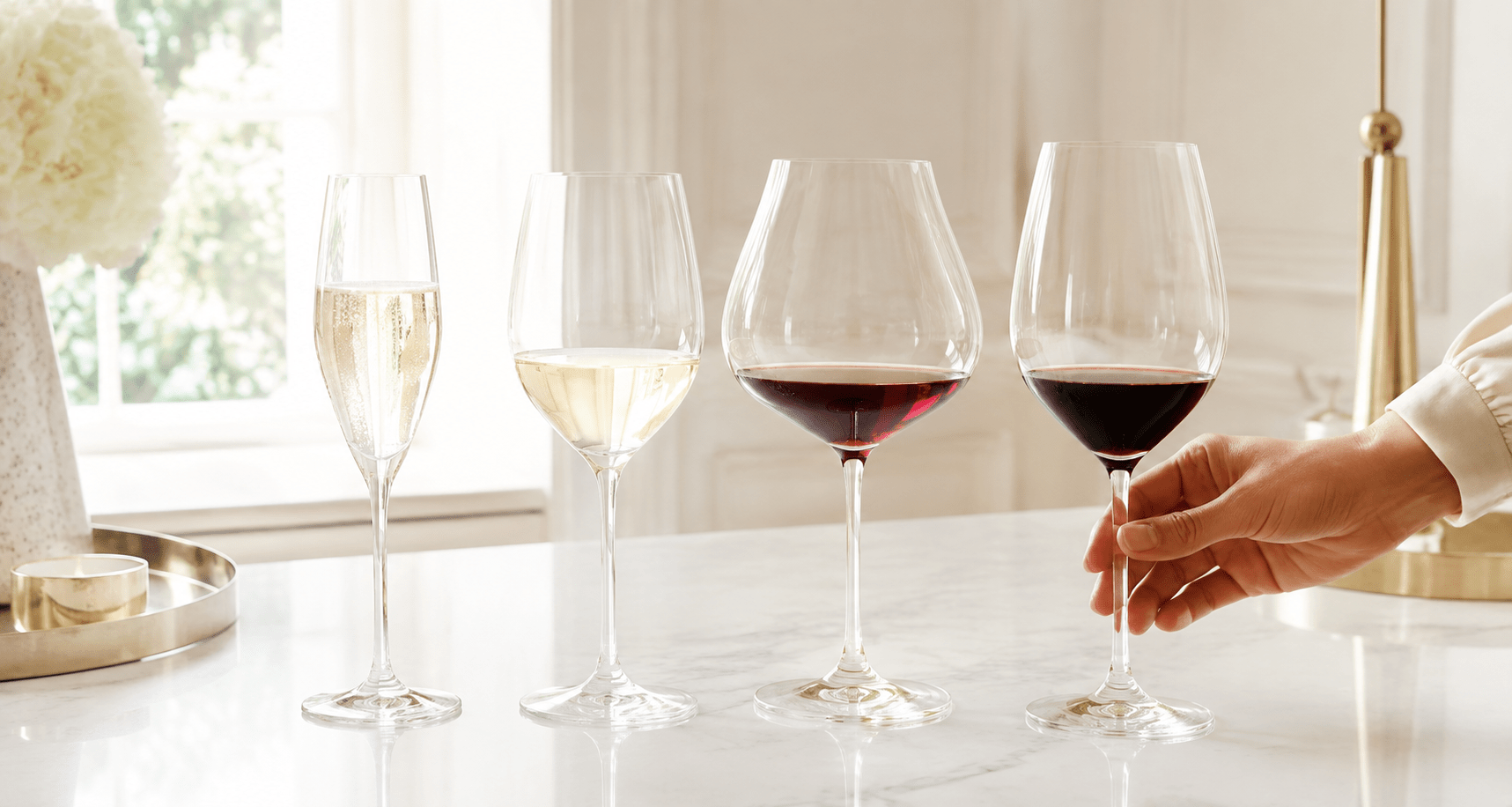
Light-bodied whites include Pinot Grigio, Muscadet, Vinho Verde, and dry German Riesling. Light-bodied reds include Gamay from Beaujolais, many Pinot Noir, and Zweigelt. In the medium-bodied middle sit Sauvignon Blanc, unoaked Chardonnay, Merlot, Sangiovese from Chianti, Grenache, and Barbera. Full-bodied whites include oaked Chardonnay and Viognier. Full-bodied reds include Cabernet Sauvignon, Syrah, Malbec, Zinfandel, and Nebbiolo. These are typical cases, not fixed rules. A Pinot Noir from a hot site can feel medium, and a Chardonnay from Chablis feels far lighter than one aged in new oak. The table below gives a quick reference for the most common styles, and our wine types guide goes deeper into each family.
The most reliable pairing rule in wine is to match weight with weight. Delicate food wants a light wine; rich food wants a full one. A light-bodied Pinot Grigio is lovely with a green salad or steamed fish, but a heavy ribeye would flatten it. A full-bodied Cabernet Sauvignon shines with steak, yet it overwhelms a piece of sole. Medium-bodied wines are the most flexible, which is why Merlot, Sangiovese, and Sauvignon Blanc show up on so many dinner tables. Think about the sauce, not just the protein. Chicken in lemon sauce suits a lighter white, while chicken in a cream sauce can handle a full oaked Chardonnay. If you are unsure, pick medium body and you will rarely miss. Our wine and food pairing guides apply this idea dish by dish.
The biggest myth is that full-bodied means better. It does not. A light Beaujolais can be just as balanced and delicious as a powerful Barolo; they simply suit different moments. Another myth is that body equals sweetness. A bone-dry Syrah can be very full, and a sweet Moscato d’Asti can feel featherlight because it is low in alcohol and fizzy. People also confuse body with flavor intensity. Sauvignon Blanc has loud, aromatic flavors, yet it is usually only medium in body. Finally, serving temperature changes how body feels. A cold wine seems leaner and a warm wine seems heavier and more alcoholic, so check the serving temperature before you judge a bottle.
The fastest way to learn is side by side. Pour a small glass of a light, a medium, and a full wine of the same color, such as Pinot Grigio, Sauvignon Blanc, and oaked Chardonnay. Taste them from lightest to fullest. Hold each sip in your mouth and notice how it presses on your tongue and how long the feeling lingers after you swallow. Some people also look at the legs on the glass, which hint at alcohol, but your palate is the better judge. Repeat the exercise with reds, such as Gamay, Merlot, and Cabernet Sauvignon. After two or three rounds you will start describing wines by body without thinking, and you can learn more tasting techniques in our guide on how to taste wine.
Choose a light, medium, and full wine of the same color, such as Pinot Grigio, Sauvignon Blanc, and oaked Chardonnay.
Chill whites to 45–50°F and serve reds at 60–65°F so temperature does not distort the feel.
Sip each wine in order, holding it in your mouth for a few seconds to feel its weight.
Ask yourself whether each sip feels like skim milk, whole milk, or cream, and note how long it lingers.
Compare the alcohol percentage on each bottle. The highest number is usually the fullest-bodied wine.
| Body | Typical Wines | Great With |
|---|---|---|
| Light white | Pinot Grigio, Muscadet, Vinho Verde | Salads, oysters, light fish |
| Medium white | Sauvignon Blanc, unoaked Chardonnay | Goat cheese, chicken, herbs |
| Full white | Oaked Chardonnay, Viognier | Lobster, cream sauces, roast chicken |
| Light red | Gamay, Pinot Noir, Zweigelt | Salmon, mushrooms, charcuterie |
| Medium red | Merlot, Sangiovese, Grenache | Pasta, pizza, roast pork |
| Full red | Cabernet Sauvignon, Syrah, Malbec | Steak, lamb, hard cheeses |
Under 12.5% ABV usually means light body; over 14% usually means full body.
Pair light wines with delicate dishes and full wines with rich, fatty foods.
Medium-bodied wines like Merlot and Sauvignon Blanc work with the widest range of meals.
Learn Your Taste
Answer a few simple questions and discover styles that fit your palate.
Take the Wine QuizA full-bodied wine feels heavy, rich, and mouth-coating, more like cream than water. These wines are usually 13.5% alcohol or higher. Cabernet Sauvignon, Syrah, Malbec, and oaked Chardonnay are classic examples.
Light-bodied reds have thin skins, soft tannins, and moderate alcohol. Gamay from Beaujolais, most Pinot Noir, and Austrian Zweigelt are the easiest to find. They taste great slightly chilled and pair well with salmon or roast chicken.
Merlot is usually medium to full-bodied. Cooler-climate Merlot from Bordeaux tends toward medium, while riper versions from warm regions like California or Washington State can feel quite full and plush.
No. Body describes weight and texture, while sweetness describes sugar. Sugar can add some body, but a dry Cabernet can be very full and a sweet, low-alcohol Moscato d'Asti can feel very light.
Usually, yes. Alcohol is the main source of body, so full-bodied wines tend to have higher alcohol by volume. Check the label: wines above about 14% ABV almost always feel full in the mouth.
Many beginners enjoy medium-bodied wines first, such as Merlot, Pinot Noir, or Sauvignon Blanc. They are smooth without being heavy and work with most foods. From there, explore lighter or fuller styles to find your preference.