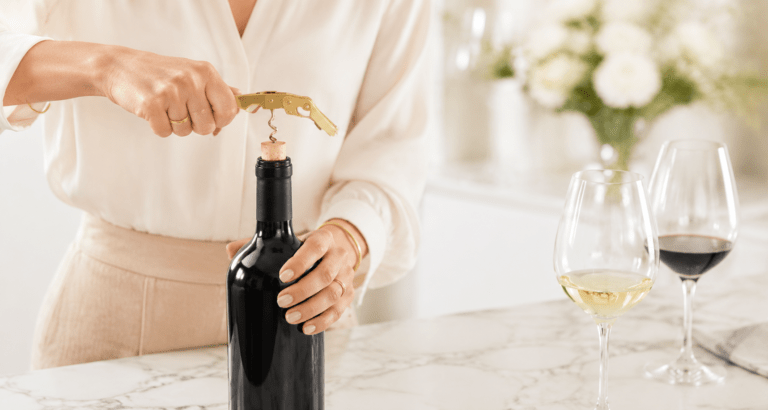
Ease the Cork Out Quietly
Hold the cork firmly and turn the bottle slowly for a quiet, safe opening.

Understand Wine. Enjoy Every Glass.
Wine Types
Champagne is only one branch of the bubbly family. Meet the main sparkling wine types, learn what the label terms mean, and pick the right bottle for any toast.
Start Learning
Bubbles are carbon dioxide, a natural byproduct of fermentation. To keep it in the wine, winemakers trap it under pressure. In the traditional method, a still base wine is bottled with a little sugar and yeast, then sealed. A second fermentation happens inside each bottle. The wine then rests on the spent yeast, called lees, which adds flavors of bread, brioche, and toasted nuts. In the tank method, also called Charmat, the second fermentation happens in a large pressurized tank, which keeps the wine fresh and fruity and costs less. The ancestral method bottles wine before the first fermentation finishes, giving rustic, lightly fizzy pét-nat. The cheapest bubbly is simply injected with CO2, like soda. Method shapes the bubble size, flavor, and price more than almost anything else, which is why it is the key to the different sparkling wine types.
Champagne comes only from the Champagne region of France, made by the traditional method from Chardonnay, Pinot Noir, and Pinot Meunier. Expect lemon, apple, brioche, and fine, persistent bubbles. Prosecco is from northeast Italy, made mostly from the Glera grape in tanks, with pear, green apple, and white flower notes. Cava is Spain’s traditional-method sparkler, mostly from Catalonia, using native grapes like Macabeo, Xarel-lo, and Parellada; it is often crisp, citrusy, and a great value. Crémant is traditional-method bubbly from French regions outside Champagne, such as Alsace, Burgundy, and the Loire. Franciacorta is Italy’s answer to Champagne, from Lombardy. Pét-nat is cloudy, fruity, and casual. Red Lambrusco proves bubbles come in red too.
Sparkling wine labels list sweetness with terms that confuse almost everyone. From driest to sweetest, the main levels are Brut Nature (no added sugar), Extra Brut, Brut, Extra Dry, Dry or Sec, Demi-Sec, and Doux. The tricky part is that Extra Dry is actually sweeter than Brut. Brut is by far the most common style and tastes dry to most people, because the high acidity balances the small amount of sugar. Extra Dry is popular in Prosecco and feels softer and fruitier. Demi-Sec pairs well with desserts and fruit tarts. Sweetness is adjusted after the second fermentation with a small dose of wine and sugar called the dosage. Moscato d’Asti and Asti are naturally sweet, low-alcohol sparklers. See dry vs. sweet wine for more on how sugar shows up in taste.
All Champagne is sparkling wine, but not all sparkling wine is Champagne. The name is protected and refers only to wine from the Champagne region of France made by the traditional method. Champagne tends to have higher acidity, finer bubbles, and more toasty, bready flavor from longer aging on lees. Non-vintage Champagne must age at least 15 months, and vintage Champagne at least three years. Prosecco is lighter, fruitier, and less complex, with larger, frothier bubbles, and it usually costs much less. Cava and Crémant use the same method as Champagne and can be surprisingly close in style for a fraction of the price. For deeper side-by-side detail, read Champagne vs. Prosecco and Champagne vs. sparkling wine.
Chill sparkling wine well, to about 40–45°F for Prosecco and simple bubbly, and 45–50°F for vintage Champagne, which shows more flavor slightly warmer. Three hours in the fridge or 20–30 minutes in an ice-and-water bucket works. To open, remove the foil and cage while keeping a thumb on the cork, tilt the bottle at 45 degrees away from people, and twist the bottle, not the cork. You want a soft sigh, not a loud pop. Our bottle-opening guide covers it step by step. A tulip-shaped glass is ideal; it keeps bubbles while giving aromas room. Flutes are fine for toasts, while wide coupes lose bubbles fast. Pour a little, let the foam settle, then top up. A sparkling wine stopper keeps an open bottle lively for a day or two.
Bubbly is one of the most versatile food wines. High acidity and carbonation cut through fat and salt, so it is fantastic with fried foods, potato chips, and fried chicken. Brut Champagne and Cava are classic with oysters, sushi, and shellfish. Toasty vintage Champagne handles richer dishes like roast chicken, mushrooms, and creamy cheeses such as Brie. Prosecco suits light appetizers, prosciutto with melon, and brunch dishes. Sparkling rosé works with salmon, charcuterie, and berries. Sweeter Demi-Sec and Moscato d’Asti match fruit desserts and cake, while Brut tastes sour next to anything sweet. Avoid pairing dry bubbly with chocolate. For hosting ideas, see our New Year’s Eve wine picks and brunch pairings.
| Sparkling Wine | How It's Made | What to Expect |
|---|---|---|
| Champagne (France) | Traditional method, long lees aging | Lemon, apple, brioche, fine bubbles |
| Prosecco (Italy) | Tank method, mostly Glera grape | Pear, green apple, light and frothy |
| Cava (Spain) | Traditional method, native Spanish grapes | Crisp citrus, nutty notes, great value |
| Crémant (France) | Traditional method, outside Champagne | Champagne-like style at a lower price |
| Pét-nat | Ancestral method, one fermentation | Cloudy, fruity, gently fizzy, casual |
| Moscato d'Asti (Italy) | Partial fermentation, low pressure | Sweet peach and orange blossom, low alcohol |
Hold the cork firmly and turn the bottle slowly for a quiet, safe opening.
On sparkling labels, Extra Dry is sweeter than Brut. Choose Brut for the driest common style.
Want Champagne flavor for less? Crémant and Cava use the same traditional method.
Learn Your Taste
Answer a few simple questions and discover styles that fit your palate.
Take the Wine QuizChampagne is a sparkling wine from the Champagne region of France, made by the traditional method with second fermentation in the bottle. Sparkling wine is the broad term for any wine with bubbles, from anywhere in the world.
Brut Nature, also called Zero Dosage, is the driest, with no sugar added after fermentation. Extra Brut is next, followed by Brut. Any of these styles in Champagne, Cava, or Crémant will taste very crisp and dry.
Often a little. Much Prosecco is made in the Extra Dry style, which is sweeter than Brut, and its fruity flavor reads as sweeter too. Brut Prosecco exists and tastes about as dry as Brut Champagne.
Pét-nat, short for pétillant naturel, is a gently sparkling wine bottled before its first fermentation finishes. The trapped CO2 makes light bubbles. It is often cloudy, unfiltered, fruity, and lower in pressure than Champagne.
With a proper sparkling wine stopper in the fridge, usually one to three days. The wine stays drinkable longer, but it loses its fizz. A spoon in the bottle neck does not help; a tight-sealing stopper does.
Cava and Crémant offer the best value for Champagne-style wine, since both use the traditional method. Brut Prosecco is a great pick for fruity, easy bubbles. All three are widely available at modest prices.