Taste Light to Bold
Start with sparkling and whites, then reds, and finish with sweet wines.
Understand Wine. Enjoy Every Glass.
Wine Basics
Tasting wine is not about fancy words. It is a short routine that helps you notice more, remember what you liked, and pick better bottles next time.
Start Learning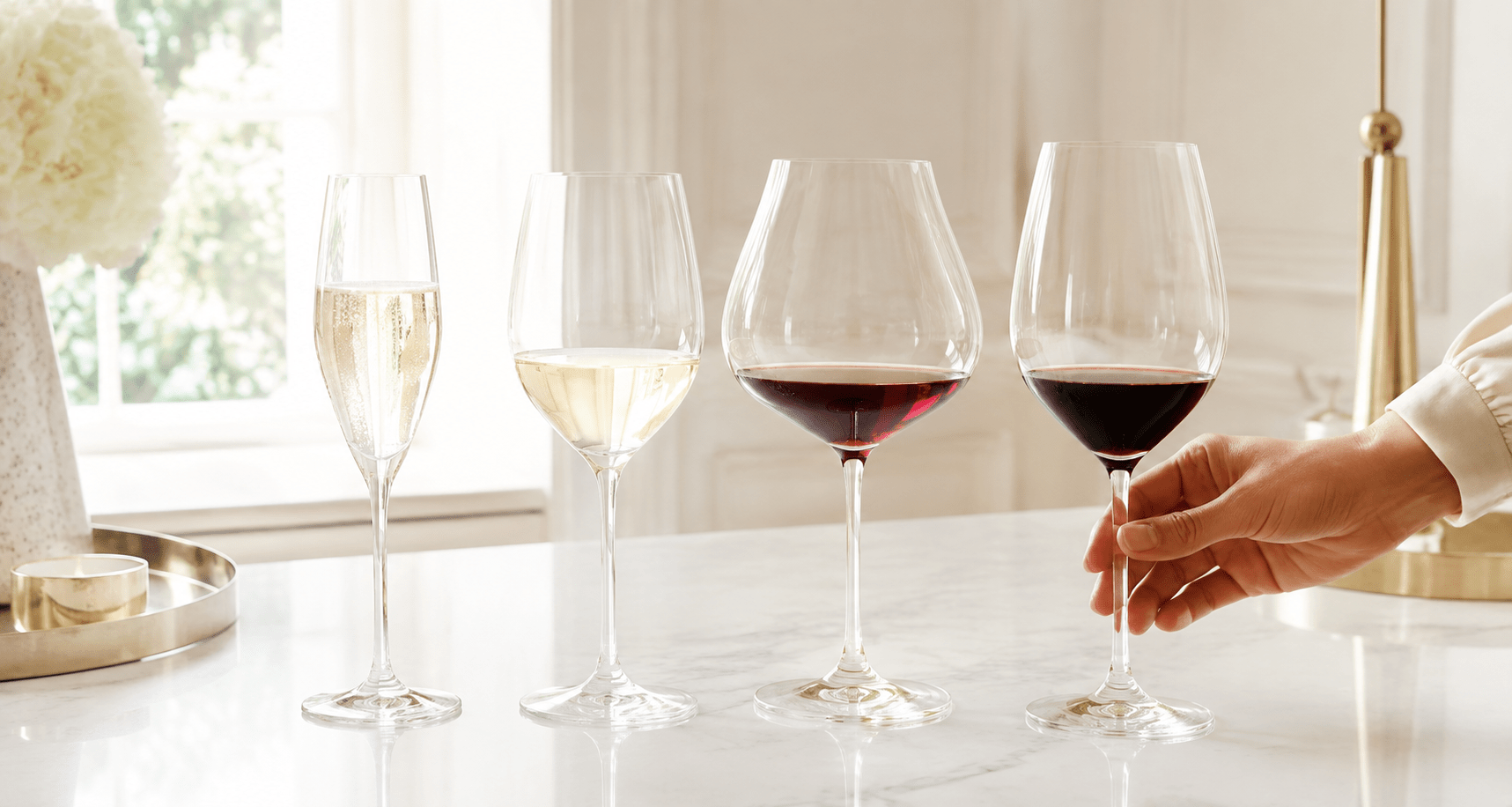
The easiest way to learn how to taste wine is a five-step routine: see, swirl, sniff, sip, and savor. Each step gathers a different clue. Looking tells you about grape, age, and concentration. Swirling and sniffing capture aromas, which make up most of what we think of as flavor. Sipping reveals structure — sweetness, acidity, tannin, alcohol, and body — that your tongue and mouth feel rather than smell. Savoring the finish tells you how long and pleasant the flavors are. The whole routine takes about a minute per wine. Use a glass with a bowl that narrows at the top, like those in the wine glass guide, and pour only about a third full so you have room to swirl. Serve each wine at its proper serving temperature, since a too-warm or too-cold wine hides its character.
Tilt the glass over a white napkin or sheet of paper and look at the edge of the wine. For whites, pale lemon usually means a young, unoaked, or cool-climate wine, while deep gold suggests oak aging, a sweet style, or age. For reds, purple tints signal youth, ruby is typical of wines a few years old, and brick or orange edges suggest maturity. Color depth hints at the grape: Pinot Noir is often translucent, while Syrah and Malbec can look nearly opaque. Check clarity too; a good wine looks bright, not cloudy, though some natural and unfiltered wines are intentionally hazy. The drips on the glass, called legs or tears, mostly reflect alcohol and sugar levels rather than quality. Learn more in wine legs explained.
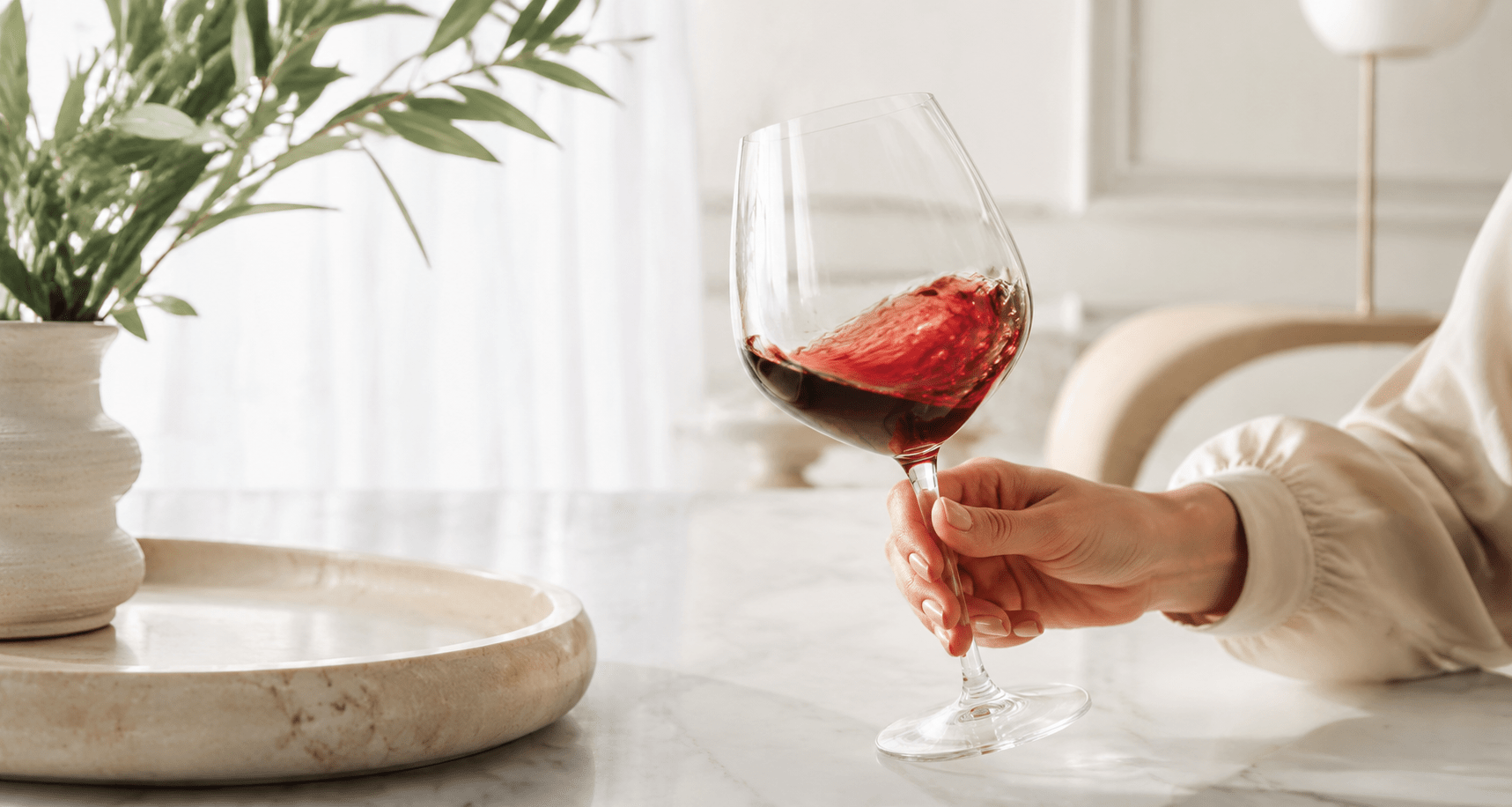
Swirl the glass gently, keeping its base on the table if you are new to it. Swirling adds air and lifts aroma compounds into the bowl. Then put your nose right in and take a couple of short sniffs. Start broad: is it fruity, floral, earthy, spicy, or oaky? Then narrow down. In whites, you might find lemon, green apple, peach, or pineapple. In reds, think red fruit like cherry and raspberry, or dark fruit like blackberry and plum. Oak barrels add vanilla, toast, or coconut. Aged wines show leather, mushroom, or dried fruit. Smells that suggest wet cardboard or a musty basement can signal a corked wine. Do not worry about matching published notes. Naming one honest smell is more useful than guessing ten.
Take a moderate sip and move it around your mouth so it touches every part of your tongue. Some tasters draw in a little air over the wine to boost aroma; it is optional. Now check structure. Sweetness shows up on the tip of your tongue; most wines are dry. Acidity makes your mouth water — the more saliva, the higher the acid; see acidity in wine. Tannin dries your gums and the inside of your cheeks, like over-steeped tea; see tannins in wine. Alcohol appears as warmth in your throat. Body is the overall weight, like the difference between skim and whole milk; wine body explained goes further. Flavors in the mouth often confirm what you smelled, but sometimes new notes appear.
After you swallow or spit, notice how long the flavors linger. That is the finish. A short finish fades in a few seconds; a long one can last ten seconds or more and is a common sign of quality. Then ask three simple questions. Is it balanced, meaning no part — acid, tannin, alcohol, sweetness — sticks out? Is it intense, with clear, expressive flavors rather than a watery taste? Is it complex, with several layers of aroma instead of just one? A wine can be simple and still delicious, so personal enjoyment always counts. To lock in what you learned, jot a few words down; how to write wine tasting notes gives an easy template.
Your setting matters more than you might think. Avoid perfume, scented candles, and strong cooking smells, which crowd out a wine’s aromas. Taste before brushing your teeth, not after, and skip mints or coffee just beforehand. When tasting several wines, go from light to bold and dry to sweet, so a big red or dessert wine does not flatten a delicate white. Drink water between wines, and nibble plain crackers or bread to reset your palate. At wineries and events, it is perfectly fine to use the spit bucket; see winery tasting etiquette. To practice with friends, a blind wine tasting at home is the fastest way to train your senses without label bias.
Tilt your glass over white paper. Note the color, depth, and rim: purple or pale lemon suggests youth, brick or gold suggests age.
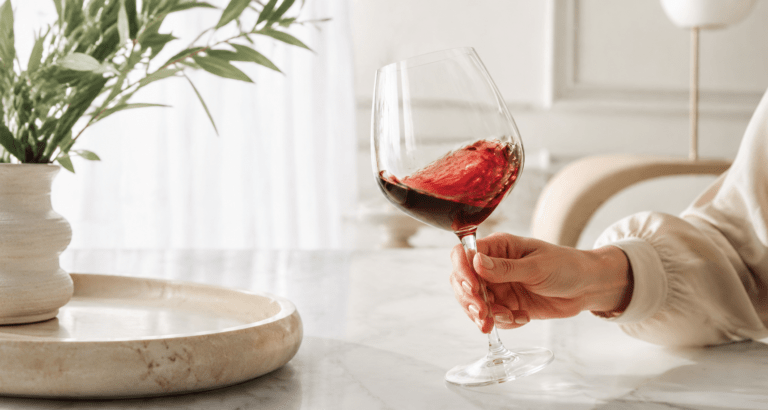
Swirl gently for a few seconds with the base on the table to release aromas into the bowl.
Take short sniffs. Decide if it is fruity, floral, earthy, or oaky, then name one specific smell.
Take a moderate sip and roll it around. Judge sweetness, acidity, tannin, alcohol, and body.
Swallow or spit, then count how many seconds the flavor lasts. Longer usually means higher quality.
Record the wine's name and three words, plus whether you would buy it again.
Start with sparkling and whites, then reds, and finish with sweet wines.
Skip perfume, mints, and coffee before tasting; they mask delicate aromas.
Spitting is normal at tastings and keeps your palate sharp through many wines.
Learn Your Taste
Answer a few simple questions and discover styles that fit your palate.
Take the Wine QuizSee, swirl, sniff, sip, and savor. You look at the color, swirl to release aromas, smell the wine, taste it while judging structure, and then notice how long the finish lasts.
Swirling adds oxygen and helps aroma compounds evaporate into the glass, so you can smell more. It is especially helpful for young, tight wines and is harmless for any still wine.
Either is fine. At home, most people swallow. At wineries, trade tastings, or any event with many wines, spitting is normal and helps you stay clear-headed and taste accurately.
Describe aromas first, such as citrus, cherry, or vanilla, then structure: sweet or dry, high or low acidity, soft or firm tannin, and light or full body. Finish with how long the flavor lasts.
It means the flavors linger after you swallow, often for ten seconds or more. A long finish usually reflects concentrated, high-quality grapes and careful winemaking.
Taste wines side by side, smell fresh fruits and spices to build an aroma memory, and write short notes. Blind tastings with friends quickly sharpen your ability to recognize grapes and styles.