Follow the Sauce
Red sauce, red wine. White or cream sauce, white wine. Mushrooms can go red.

Understand Wine. Enjoy Every Glass.
Wine Pairings
Pasta itself is mild. The sauce is what you are really pairing, and once you know that, choosing the right bottle takes about ten seconds.
Start Learning
Plain pasta is just wheat and water, so it barely affects the glass. Finding a great wine with pasta is really about the sauce, and sauces fall into a few families: tomato, meat, cream, oil and herbs, and seafood. Each family has a structure you can match. Tomato is very acidic, so it needs a wine with equally high acidity, or the wine will taste flat and flabby. Cream and cheese are rich, so they want a wine with body and enough acid to cut through. Herbs and green sauces bring freshness that crisp, aromatic whites echo. Meat sauces add fat and protein, which allow a red with more tannin. A handy shortcut is to drink Italian wine with Italian pasta. Italian grapes evolved alongside these dishes, and most have the bright acidity tomato-based cooking demands.
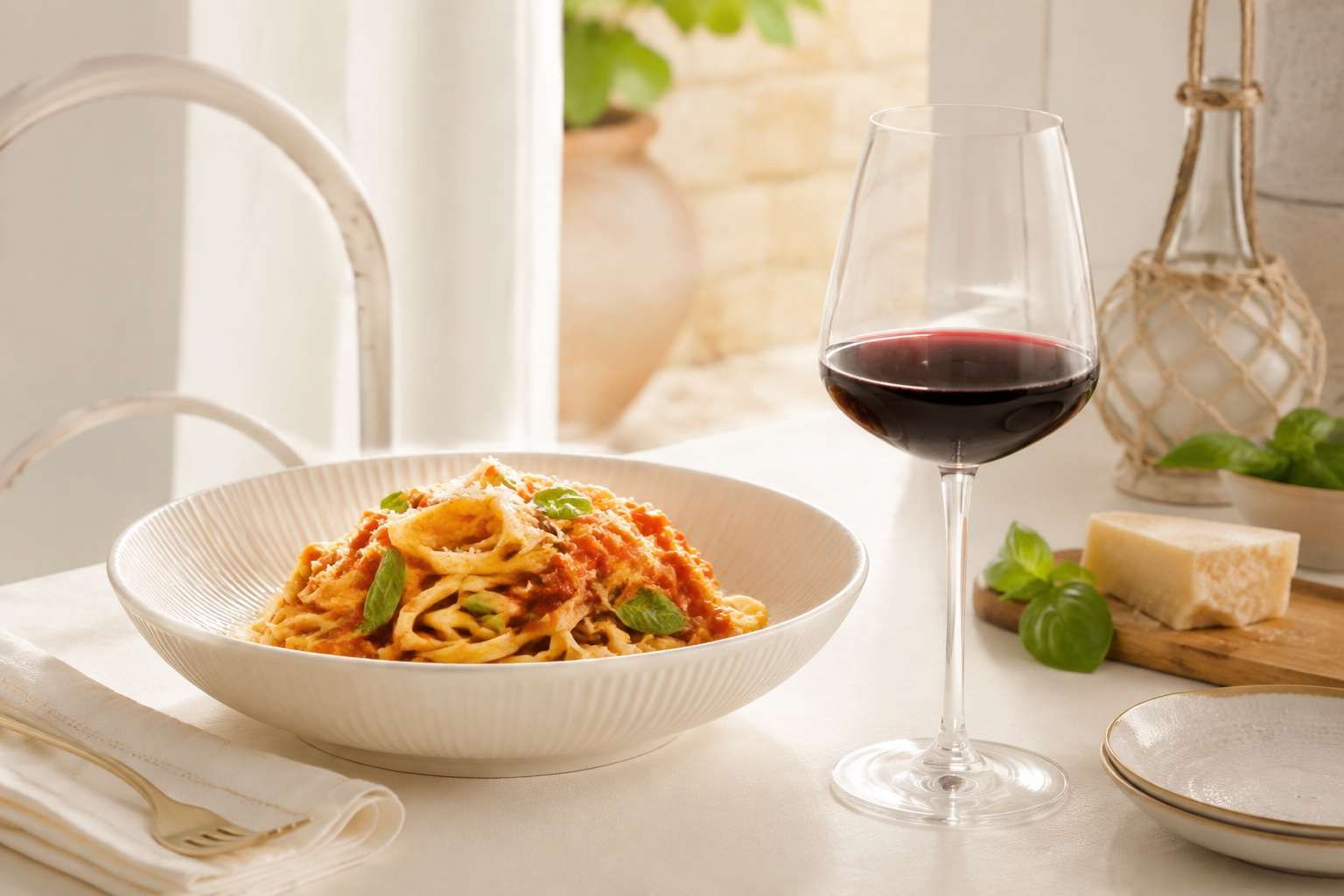
Marinara and simple tomato sauces pair best with medium-bodied, high-acid reds. Sangiovese, the grape of Chianti, has cherry, herb, and tomato-leaf notes that seem made for it. Barbera from Piedmont is juicy and low in tannin, and Montepulciano d’Abruzzo is a soft, affordable everyday choice. Bolognese and meat sauces have more richness, so step up to Chianti Classico, Rosso di Montalcino, or a Nebbiolo-based Langhe Rosso. Spicy arrabbiata wants a fruity, lower-alcohol red such as Barbera or a chilled rosé, since alcohol fans the flames. Amatriciana, with tomato and cured pork, loves Montepulciano or Cesanese from central Italy. Baked pasta like lasagna and baked ziti brings melted cheese and meat; see our wine with lasagna and wine with meatballs guides for full detail.
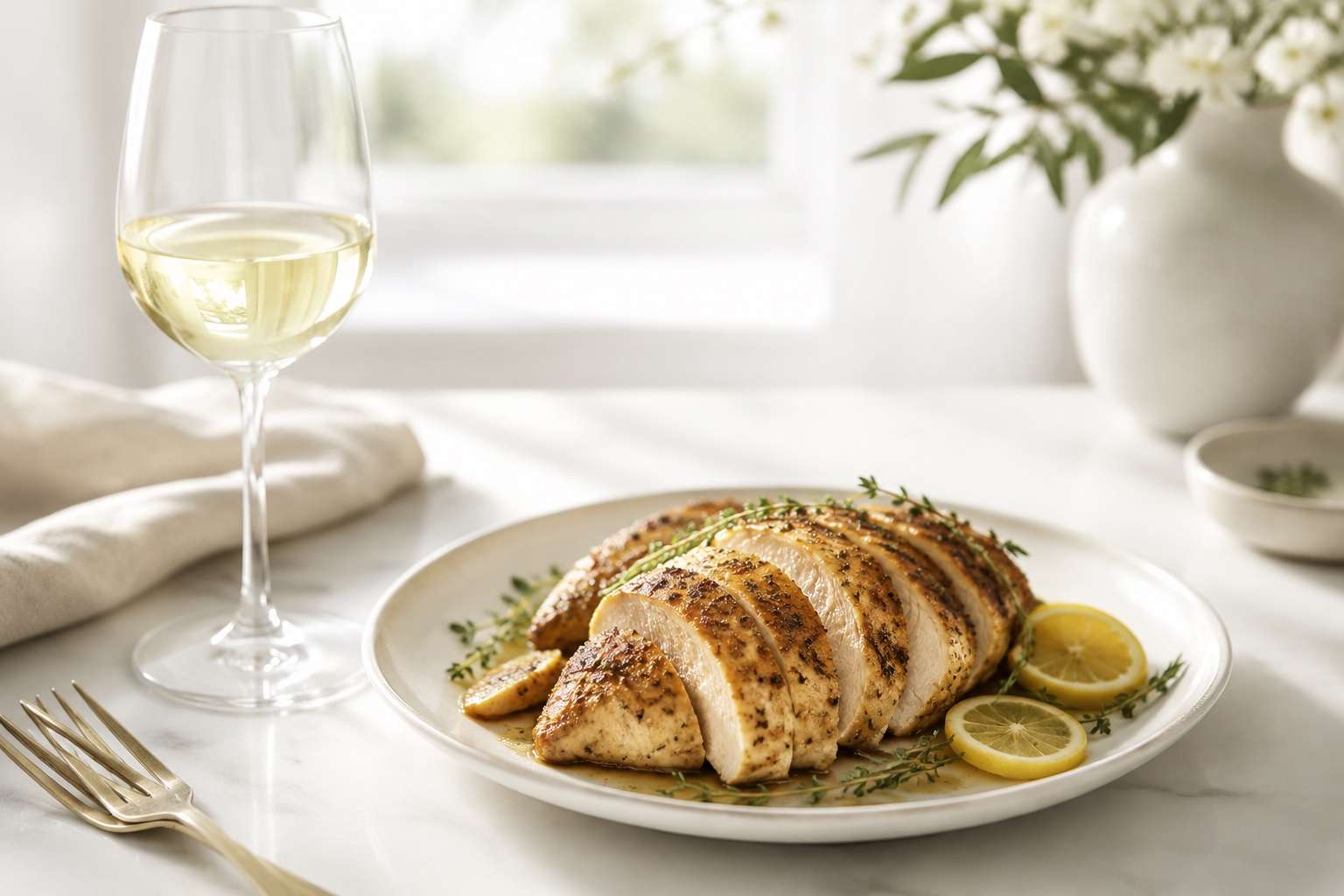
Cream sauces are where white wine takes over. Fettuccine Alfredo is rich with butter and Parmesan, so pour a full, gently oaked Chardonnay whose creamy texture matches the sauce, or a white Burgundy for more freshness. Carbonara combines egg, cheese, and cured pork; the Roman tradition is a crisp local white, and Verdicchio or a dry Soave from Garganega grapes works beautifully, cutting through the richness with lemony acidity. Mac and cheese with sharp cheddar pairs well with Chardonnay or a dry sparkling wine. Cacio e pepe, just cheese and black pepper, likes a crisp white such as Verdicchio or Pinot Grigio. Mushroom cream sauces are the exception that welcomes a red: earthy Pinot Noir or Nebbiolo picks up the forest-floor notes of porcini and truffle.
Pesto comes from Liguria, on Italy’s coast, and the local white, Vermentino, is the perfect partner. Its herbal, citrusy, slightly salty character mirrors basil, pine nuts, and Parmesan. Sauvignon Blanc is a good substitute. Aglio e olio, with garlic, olive oil, and chile flakes, pairs with crisp, unoaked whites such as Pinot Grigio or Verdicchio. Linguine with clams is a classic for Vermentino, Verdicchio, or a Vinho Verde, all bright enough to match the briny broth. Shrimp scampi, made with butter and lemon, pairs with a round Pinot Grigio or a lightly oaked Chardonnay. Seafood pasta in tomato sauce, such as linguine fra diavolo, can go either way: a dry rosé or a light red like Frappato bridges seafood and tomato. Primavera with spring vegetables suits Sauvignon Blanc.
The most common mismatch is a low-acid red with tomato sauce. A soft, jammy, high-alcohol red can taste dull and slightly bitter next to acidic tomato, while a bright Italian red tastes juicy. Big, tannic reds such as young Cabernet Sauvignon, Barolo, or Amarone overwhelm light sauces and turn harsh with spicy dishes; save them for slow-cooked ragù or a short rib sauce. On the white side, heavily oaked Chardonnay can clash with delicate pesto or seafood, and very light whites can disappear under cream and cheese. Sweet wines rarely suit savory pasta. Finally, avoid pouring a robust red with pasta that features lemon, delicate fish, or fresh herbs. As a rule of thumb, red sauce means red wine and white sauce means white wine, with mushroom and meat sauces leaning red.
Serve Italian reds slightly cool, around 60–65°F; lighter ones like Barbera and Montepulciano are lovely at about 60°F. Serve whites at 45–50°F. Most pasta wines do not need decanting, though a young Chianti Classico or Nebbiolo benefits from 20 to 30 minutes of air. Pasta night is the perfect time for value. Montepulciano d’Abruzzo, Chianti, Barbera d’Asti, Nero d’Avola from Sicily, and Italian Pinot Grigio often sell for under $15 to $20 and pair better than costly bottles from elsewhere. If you cook the sauce with wine, add a splash of what you plan to drink so the two flavors align; our cooking with wine guide explains how much to use. For a dinner with several pastas, one Chianti and one Vermentino will cover almost everything.
| Pasta Sauce | Best Wine | Why It Works |
|---|---|---|
| Marinara or tomato | Chianti, Barbera, or Montepulciano | High acid matches acidic tomato |
| Bolognese or meat ragù | Chianti Classico or Nebbiolo | More tannin suits meat and fat |
| Alfredo or cream | Oaked Chardonnay | Rich texture matches butter and cheese |
| Carbonara | Verdicchio or Soave | Crisp acid cuts egg, cheese, and pork |
| Pesto | Vermentino | Herbal, citrusy notes echo basil |
| Clams or seafood | Vermentino or Pinot Grigio | Bright, briny whites match the broth |
| Mushroom or truffle | Pinot Noir or Nebbiolo | Earthy flavors mirror the sauce |
Red sauce, red wine. White or cream sauce, white wine. Mushrooms can go red.
Italian reds have the high acidity tomato sauce needs, often at great prices.
Add a splash of your dinner wine to the sauce so flavors connect.
Learn Your Taste
Answer a few simple questions and discover styles that fit your palate.
Take the Wine QuizChianti or another Sangiovese is the classic pick. Its high acidity matches the tomato, and moderate tannin stands up to ground meat. Barbera, Montepulciano d'Abruzzo, and Nero d'Avola are excellent, affordable alternatives.
A full-bodied Chardonnay, especially one with a touch of oak, matches Alfredo's cream and butter. For a lighter feel, try Soave, Pinot Grigio, or a dry sparkling wine, which cut through the richness with bright acidity.
Vermentino is the top match because it comes from Liguria, where pesto was born, and has herbal, citrusy notes. Sauvignon Blanc, Pinot Grigio, and Verdicchio also work well with basil and garlic.
It depends on the sauce. Tomato and meat sauces call for red wine. Cream, butter, olive oil, pesto, and seafood sauces call for white wine. Mushroom sauces work with either, leaning toward Pinot Noir.
A crisp Italian white like Verdicchio or Soave is ideal, since acidity cuts the egg and cheese. Light, fruity reds such as Montepulciano d'Abruzzo also work, especially if the dish has plenty of guanciale or pancetta.
Montepulciano d'Abruzzo is one of the best budget pasta wines, soft and juicy and often under $15. Basic Chianti, Barbera d'Asti, Sicilian Nero d'Avola, and Italian Pinot Grigio are also reliable, inexpensive choices.