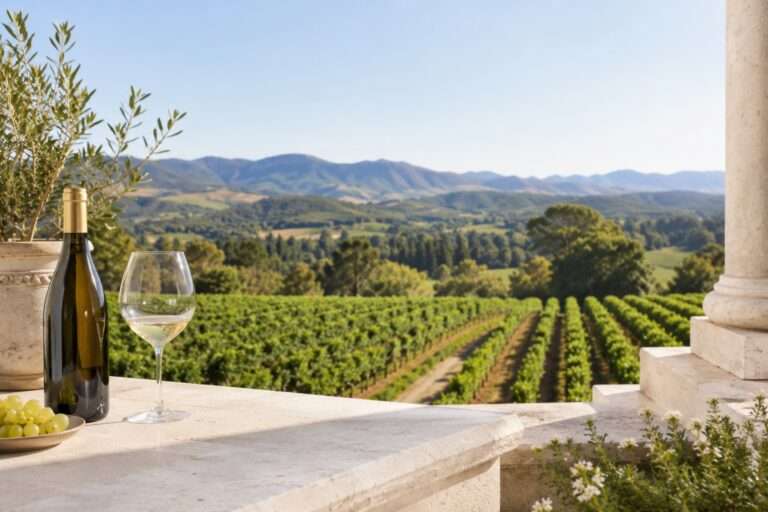
Buy the Latest Sauvignon Blanc Vintage
Sauvignon Blanc's bright grapefruit and passion fruit fade within a few years.

Understand Wine. Enjoy Every Glass.
Grape Varieties
Sauvignon Blanc is the zesty, aromatic white that tastes like a squeeze of lime and freshly cut grass. Here is what to expect and where to find your style.
Start Learning
Sauvignon Blanc wine is bright, tangy, and intensely aromatic. Citrus leads the way: grapefruit, lime, and lemon zest, joined by green apple and gooseberry. Riper styles add passion fruit, guava, and white peach. What sets it apart is the green, herbal streak: freshly cut grass, green bell pepper, jalapeño, tomato leaf, and fresh herbs. Those notes come from natural compounds called pyrazines, the same family that gives Cabernet Sauvignon its herbal edge. Some cool-climate versions show a flinty, smoky, or chalky character. On the palate it is dry and light- to medium-bodied, usually 12–13.5% alcohol, with mouthwatering acidity. Most Sauvignon Blanc is fermented in stainless steel to preserve freshness. A few styles, such as white Bordeaux and California’s Fumé Blanc, use oak for a rounder, smokier, creamier wine.

The grape comes from France. In the Loire Valley, Sancerre and Pouilly-Fumé make lean, mineral, citrusy Sauvignon Blanc from chalk and flint soils; Touraine offers lighter, cheaper versions. Learn the difference in Sancerre vs Sauvignon Blanc. In Bordeaux, it is blended with Sémillon for white Bordeaux, both dry and sweet. The style that turned it into a global favorite comes from Marlborough, New Zealand: explosive passion fruit, grapefruit, and cut grass with racy acidity. California offers riper, melon-scented styles. Chile’s Casablanca Valley and other coastal valleys make zesty, herbal wines at bargain prices, and South Africa produces a balance of green and tropical notes. Northern Italy and Austria’s Styria grow elegant examples too.

Serve Sauvignon Blanc cold, at 45–50°F. That keeps its acidity crisp and its aromas sharp. Two to three hours in the fridge gets it there; if you are in a hurry, an ice bucket filled with ice and water chills a bottle in about 15 minutes. Do not over-chill, though; straight from a very cold fridge, the aromas can be muted, so let the glass sit a few minutes. Oaked styles such as Fumé Blanc or white Bordeaux show better a touch warmer, around 50–55°F. A white wine glass with a slightly narrow rim concentrates its bright aromas. Most Sauvignon Blanc comes under screw cap and is meant to be drunk young, within one to three years of the vintage, while its fruit is vivid. Opened bottles last three to five days in the fridge.
Sauvignon Blanc’s high acidity and herbal notes make it one of the most flexible food wines. The classic match is goat cheese: Sancerre and Loire goat cheese come from the same region, and the wine’s tang cuts the creamy cheese perfectly. It is one of the few wines that handle tricky green foods such as asparagus, artichokes, peas, and green herbs, so it is ideal with salads. Seafood is another strength: oysters, shrimp, ceviche, and grilled white fish. Herb-heavy dishes like pesto, tabbouleh, and Thai or Vietnamese food with lime and cilantro work well too, and zesty Sauvignon Blanc pairs nicely with fish tacos. Skip heavy red-meat dishes and very creamy sauces, which overwhelm it.
If you like Sauvignon Blanc, the next stop is Spain’s Albariño, which shares the citrus and zip with a salty, peachy twist; compare them in Albariño vs Sauvignon Blanc. Rueda’s Verdejo is another herbal, zesty white. Austria’s Grüner Veltliner offers lime and white pepper. Greece’s Assyrtiko brings even more minerality and acidity. For a softer, more neutral option, see Sauvignon Blanc vs Pinot Grigio. If you want something with more body, try Sauvignon Blanc’s Bordeaux partner Sémillon or an oaked white Bordeaux blend.
Decide which style you want first. For bold, tropical, grassy flavor, pick Marlborough; it is widely available and consistent. For a leaner, more mineral and food-friendly style, choose Sancerre or Pouilly-Fumé, or save money with Touraine Sauvignon or Quincy from the wider Loire. Chile and South Africa deliver crisp, lively bottles for very little money, and Sauvignon Blanc is a regular on our list of best white wines under $20. Choose the most recent vintage you can find, since freshness is the point. “Fumé Blanc” on a California label usually means some oak, giving a smokier, rounder wine. Screw caps are normal and a good sign for preserving freshness, not a mark of low quality.
| Region | Style | What to Expect |
|---|---|---|
| Marlborough, New Zealand | Bold and aromatic | Passion fruit, grapefruit, cut grass, racy acid |
| Sancerre & Pouilly-Fumé, France | Lean and mineral | Lemon, flint, chalk, gooseberry |
| Bordeaux, France | Blended with Sémillon | Citrus, beeswax, sometimes oaked |
| California | Riper, sometimes oaked | Melon, lime, softer acidity |
| Casablanca Valley, Chile | Zesty and herbal | Lime, green pepper, great value |
| South Africa | Balanced green and tropical | Guava, gooseberry, fresh herbs |
Sauvignon Blanc's bright grapefruit and passion fruit fade within a few years.
That range keeps its zesty acidity crisp and its grassy aromas lively.
It handles asparagus, herbs, and goat cheese that clash with most wines.
Learn Your Taste
Answer a few simple questions and discover styles that fit your palate.
Take the Wine QuizSauvignon Blanc is almost always dry. Its tropical fruit can taste sweet, but most bottles are fermented fully dry. Sweet versions exist, mainly in Bordeaux's Sauternes, where it is blended with Sémillon.
Natural aroma compounds called pyrazines give Sauvignon Blanc its cut-grass, green pepper, and herbal notes. They are stronger in cooler climates and in grapes picked less ripe.
Yes. White Sancerre, from France's Loire Valley, is made from Sauvignon Blanc. It is usually leaner and more mineral than New Zealand versions. Sancerre also comes in red and rosé, but those use a different grape, so check that the label says Sancerre Blanc.
Fresh goat cheese is the classic match because the wine's acidity balances the cheese's tang and creaminess. Feta, fresh mozzarella, and young Manchego also work well.
It keeps three to five days in the fridge with a stopper or screw cap. After that, its bright fruit and aromas fade noticeably, though it is still fine for cooking.
Fumé Blanc is a name used mostly in California for Sauvignon Blanc, often aged in oak. It tends to be rounder, smokier, and richer than unoaked styles.