Match the Region
Pair dishes with wines from the same Italian region for an easy, reliable match.

Understand Wine. Enjoy Every Glass.
Wine Pairings
Italy grows wine to drink with dinner. Learn the simple trick of matching each dish with the wines of its home region, and Italian food becomes easy to pair.
Start Learning
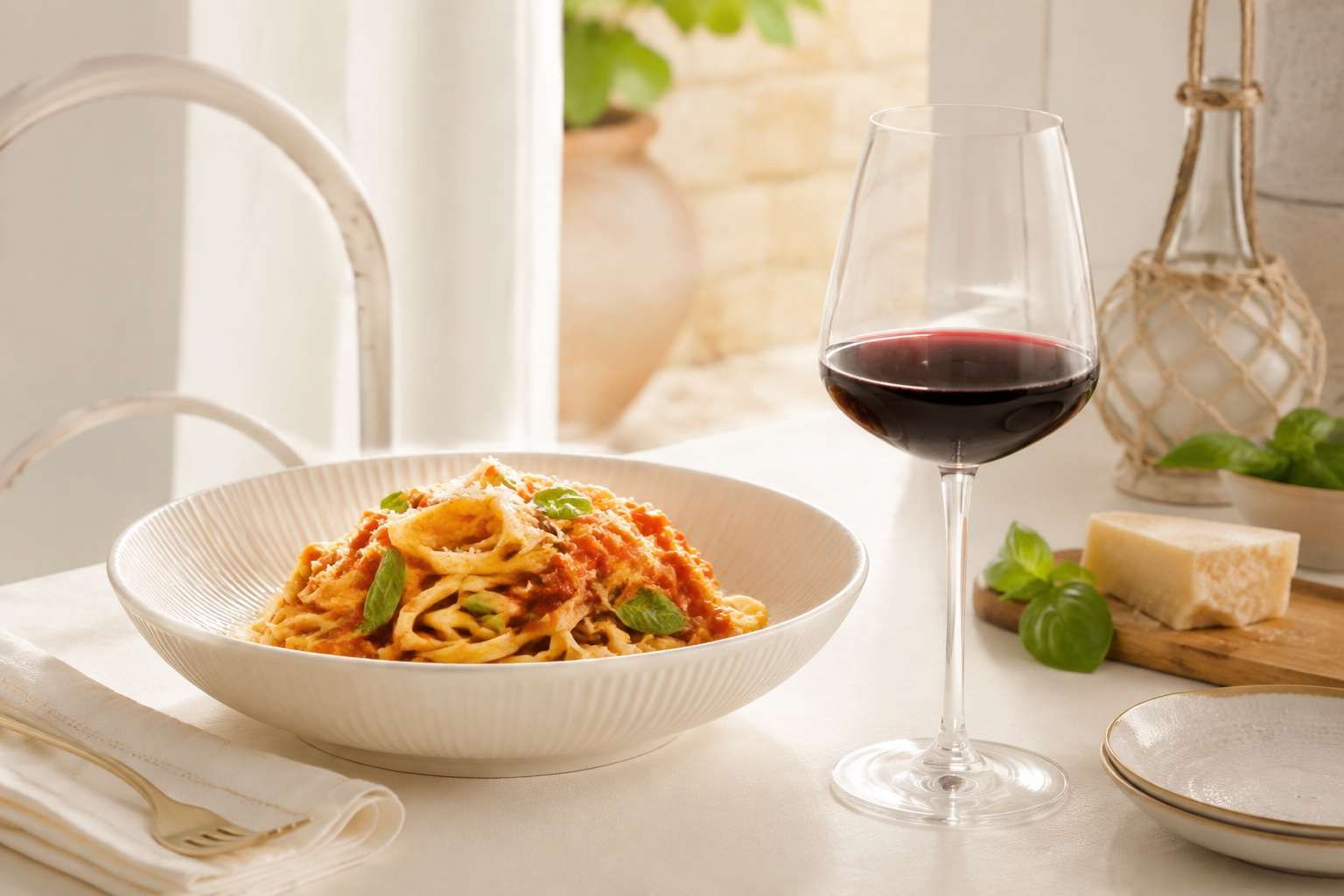
Italians rarely drink wine on its own; it is made to be part of a meal. That is why the best wine with Italian food is almost always Italian. Most Italian grapes have high acidity, which matches the sharpness of tomato, cuts through olive oil and cheese, and keeps rich dishes from feeling heavy. Many Italian reds also have savory, earthy, slightly bitter notes, such as dried herbs, sour cherry, and leather, that flatter food more than they impress on their own. The simplest rule is “what grows together goes together.” Each region’s wines and dishes developed side by side, so a Tuscan red suits Tuscan cooking and a coastal white suits the local seafood. Learn a handful of regions and you can pair almost any Italian menu with confidence, from a simple pizza to a long Sunday feast.
Tuscany is the home of Sangiovese, the grape behind Chianti, Brunello di Montalcino, and Vino Nobile di Montepulciano. Its cherry, herb, and earthy flavors are made for Tuscan food: bistecca alla fiorentina, white beans with sage, ribollita soup, wild boar ragù, and pecorino cheese. Chianti Classico handles everyday dishes, while Brunello is a splurge for grilled steak and roasts. Piedmont, in the northwest, makes Nebbiolo, the grape of Barolo and Barbaresco. These powerful, tannic wines smell of roses and tar, and they shine with the region’s rich food: white truffles, braised beef in Barolo, and egg-yolk tajarin pasta with butter. For weeknights, Piedmont’s juicy Barbera and soft Dolcetto are friendlier, cheaper choices that suit salumi, pasta, and pizza.
The Veneto, around Venice and Verona, offers something for every course. Soave, made from Garganega, is a lovely dry white for risotto and seafood. Light, cherry-scented Valpolicella from Corvina grapes suits liver and onions, polenta, and cured meats, while rich, dried-grape Amarone is a match for braised beef and aged cheese. Prosecco is the region’s famous sparkling aperitivo. In the south, look for Aglianico from Campania and Basilicata with lamb and hearty ragù, and Primitivo from Puglia with grilled sausage and meatballs. Sicily brings plush Nero d’Avola for eggplant dishes like caponata and pasta alla Norma, plus the elegant reds and whites of Mount Etna for swordfish and grilled seafood. Sardinia’s Vermentino and Cannonau round out the island options.
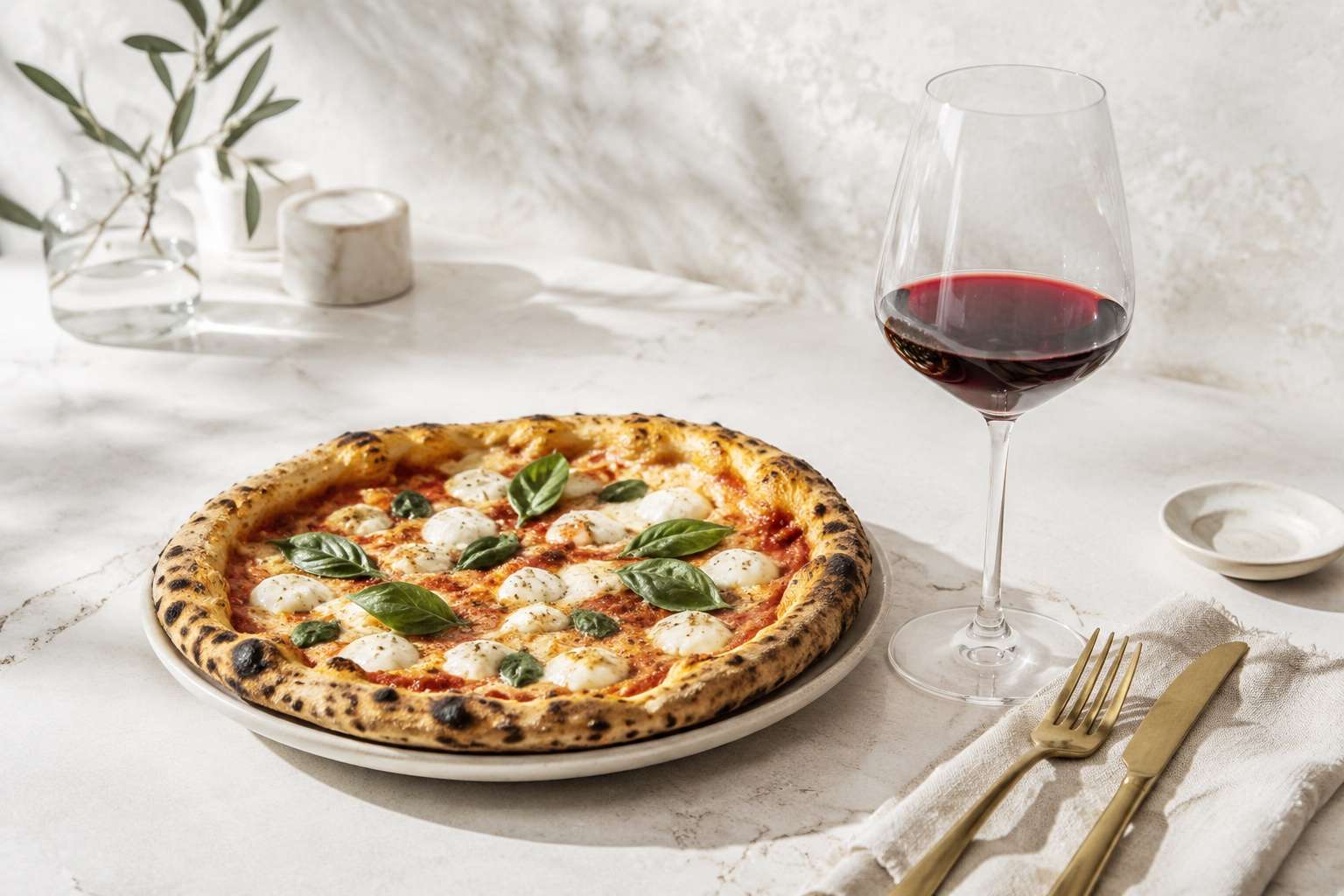
For pasta, the sauce is the guide, and our wine with pasta guide covers each one. Risotto follows its flavoring: Soave or Pinot Grigio with seafood, Nebbiolo or Barbera with mushrooms, and Champagne-method Franciacorta with Parmesan risotto; see wine with risotto. Osso buco, braised veal shanks from Milan, pairs with Barbera or a Nebbiolo-based Langhe red. Chicken or eggplant Parmesan, Italian-American favorites with tomato and cheese, love Chianti or Montepulciano d’Abruzzo. Lasagna wants a medium-bodied red like Chianti Classico; read wine with lasagna for more. Saltimbocca, with veal, prosciutto, and sage, is great with Vermentino or a light red. Pizza is a job for Chianti, Barbera, or sparkling Lambrusco. Antipasti such as cured meats, olives, and marinated vegetables pair with Prosecco, a dry rosé, or a crisp Italian white.
Italy is not only about reds. Pinot Grigio from the northeast is crisp and light, an easy choice for antipasti and simple fish. Vermentino from Liguria and Sardinia has herbal, salty notes that love pesto and seafood. Verdicchio from the Marche is zesty, with a slightly bitter almond finish that suits fried fish and clams. Fiano from Campania is fuller and nutty, great with shellfish pasta. For rosé, look for Cerasuolo d’Abruzzo, a deep pink Montepulciano that handles tomato dishes and grilled vegetables. Italian sparkling wines include Prosecco, fruity and light for aperitivo; Franciacorta, a richer bottle-fermented style from Lombardy; and Lambrusco, the sparkling red that pairs with Parmigiano and salumi. Sweet Moscato d’Asti is a light, low-alcohol way to finish with fruit desserts.
With Italian food, the wine to avoid is a soft, low-acid, heavily oaked red. It can taste dull against tomato sauce and overwhelming with lighter dishes. Very tannic young Barolo can also be harsh with simple tomato pasta; save it for rich meat. Serve Italian reds slightly cool, at 60–65°F, and decant young Barolo, Brunello, or Aglianico for an hour; our how to decant wine guide shows how. Serve whites at 45–50°F and Prosecco colder, at about 40–45°F. For value, Italy is a treasure chest. Montepulciano d’Abruzzo, basic Chianti, Barbera d’Asti, Dolcetto, Nero d’Avola, Soave, and Verdicchio often sell for under $20. Look for the DOCG or DOC labels as a sign of traditional style. Save Brunello, Barolo, and Amarone for special dinners.
| Region | Signature Wine | Pair It With |
|---|---|---|
| Tuscany | Chianti Classico, Brunello di Montalcino | Grilled steak, white beans, wild boar ragù |
| Piedmont | Barolo, Barbaresco, Barbera | Truffles, braised beef, butter-and-egg pasta |
| Veneto | Soave, Valpolicella, Amarone | Risotto, polenta, braised beef, aged cheese |
| Emilia-Romagna | Lambrusco | Parmigiano, prosciutto, mortadella, lasagna |
| Liguria | Vermentino | Pesto, focaccia, grilled seafood |
| Southern Italy | Aglianico, Primitivo | Lamb, sausage, hearty ragù |
| Sicily | Nero d'Avola, Etna Rosso | Caponata, pasta alla Norma, swordfish |
Pair dishes with wines from the same Italian region for an easy, reliable match.
Tomato needs high-acid wine, so pick Sangiovese or Barbera over soft, oaky reds.
Open Prosecco or Lambrusco with antipasti to begin the meal the Italian way.
Learn Your Taste
Answer a few simple questions and discover styles that fit your palate.
Take the Wine QuizChianti and other Sangiovese wines are the most versatile, thanks to high acidity and cherry fruit. Barbera, Montepulciano d'Abruzzo, and Nero d'Avola are also excellent everyday choices. Save Barolo and Brunello for rich meat dishes.
Pinot Grigio, Vermentino, Verdicchio, and Soave are all great Italian whites. They are crisp and food-friendly, perfect for seafood pasta, pesto, risotto, and antipasti. Fiano is a fuller option for richer dishes.
Not all, but many dishes. Chianti pairs beautifully with tomato sauces, pizza, grilled meat, and Tuscan beans. With delicate seafood, cream sauces, or pesto, a crisp Italian white such as Vermentino or Verdicchio is the better choice.
A medium-bodied northern Italian red is the classic match for osso buco. Barbera d'Alba or a Langhe Nebbiolo has the acidity to cut the rich marrow and braising sauce without overpowering the tender veal. If it comes with saffron risotto alla milanese, a textured white such as Soave Classico also works nicely.
Prosecco, dry rosé, or a crisp white like Pinot Grigio work best with cured meats, olives, cheese, and marinated vegetables. Sparkling Lambrusco is a fun red option, especially with salumi and Parmigiano.
No, but it usually works best. Italian wines have the high acidity Italian food needs. Good non-Italian options include Spanish Tempranillo, French Côtes du Rhône, and Sauvignon Blanc from the Loire Valley or New Zealand.