Open Champagne With a Quiet Sigh
Hold the cork, twist the bottle slowly, and aim for a soft sigh, not a pop.

Understand Wine. Enjoy Every Glass.
Grape Varieties
Champagne is sparkling wine from one specific region in France, made by a slow, labor-intensive method. Here is how it is made, what the label terms mean, and how to enjoy it.
Start Learning
Champagne is a sparkling wine that can only come from the Champagne region of northeastern France, about 90 miles east of Paris. The name is legally protected, so sparkling wine made anywhere else, even by the same method, cannot be called Champagne in the EU and many other markets. The region is one of the coolest places in the world where grapes ripen, which gives the base wines high acidity, perfect for sparkling wine. Chalky soils help vines hold water and add a lean, mineral feel. Three grapes do most of the work: Chardonnay for elegance and citrus, Pinot Noir for body and red fruit, and Pinot Meunier for fruity roundness. Visit the region itself on our Champagne, France guide, and see how it compares with other bubbles in Champagne vs sparkling wine.

Champagne gets its bubbles inside the bottle you buy. Winemakers first make still, dry, high-acid base wines and blend them, often mixing grapes, villages, and older reserve wines for a consistent house style. The blend is bottled with a little sugar and yeast and sealed with a crown cap. A second fermentation then takes place in the bottle, creating alcohol and carbon dioxide that cannot escape, so it dissolves into the wine as bubbles. The bottles then rest on the dead yeast cells, called lees, for a minimum of 15 months for non-vintage and three years for vintage Champagne. This is what creates the bready, brioche flavors. Next comes riddling, slowly tilting bottles neck-down, then disgorging, which freezes and ejects the yeast plug. Finally a small dose of wine and sugar, the dosage, sets the sweetness level. Learn the basics in how wine is made.

Young non-vintage Champagne tastes of lemon, green apple, and pear, layered with brioche, toast, and almond from its time on the lees. The bubbles, or mousse, should be fine and persistent rather than coarse. Acidity is high, the body is light to medium, and alcohol is usually about 12%. Style changes the picture. Blanc de Blancs, made only from white Chardonnay, is crisp, citrusy, and chalky. Blanc de Noirs, made from the red Pinot grapes, is fuller with red-apple and berry notes. Rosé Champagne adds strawberry and cherry. Vintage Champagne, made from one year’s harvest in good years, is richer and more complex. With extra age, Champagne develops honey, toasted nuts, and mushroom. Sweetness ranges widely, from bone-dry Brut Nature to sweet Doux, so check the label.
The sweetness term on a Champagne label reflects the dosage. From driest to sweetest: Brut Nature (no added sugar), Extra Brut, Brut (the most common and still tastes dry), Extra Dry (confusingly, slightly sweeter than Brut), Sec, Demi-Sec (noticeably sweet, good with dessert), and Doux (the sweetest and rare). “NV” or no year means a non-vintage blend from several harvests, while a year on the label means vintage Champagne. “Grand Cru” and “Premier Cru” refer to top-rated villages. Small letters on the label tell you who made it: “RM” (récoltant-manipulant) is a grower who makes wine from their own grapes, while “NM” (négociant-manipulant) is a house that buys grapes. For more label decoding, see how to read a wine label.
Serve non-vintage Champagne cold, at 45–48°F; richer vintage Champagne can go to 50°F. Chill the bottle for three hours in the fridge or 20 to 30 minutes in an ice bucket. To open it safely, point the bottle away from people, hold the cork, and twist the bottle, not the cork, for a gentle sigh rather than a pop; see how to open a wine bottle. Many experts prefer a tulip-shaped or white wine glass over a narrow flute, because it shows more aroma. Champagne is wonderfully food-friendly. Its acidity and bubbles cut through salt and fat, which makes it brilliant with oysters, caviar, popcorn, potato chips, and fried chicken. Blanc de Blancs suits sushi and shellfish, rosé suits salmon and duck, and Demi-Sec suits fruit desserts.
Real Champagne is rarely cheap, because of its long aging and the high cost of grapes in the region. Non-vintage Brut from a large house is the usual starting point; grower Champagnes marked “RM” can offer character and value. If you want similar quality for less, look to other traditional-method sparkling wines. France’s Crémant uses the same method in regions such as Burgundy, Alsace, and the Loire. Spain’s Cava is another bargain; compare in Cava vs Champagne. Italy’s Franciacorta is a close Italian cousin. Prosecco is lighter, fruitier, and made differently; see Champagne vs Prosecco. For celebrations, plan on about six glasses per 750 ml bottle.
| Style | What It Means | What to Expect |
|---|---|---|
| Brut Nature / Extra Brut | Little or no added sugar | Bone-dry, razor-sharp, mineral |
| Brut | Most common sweetness level | Dry, citrus, apple, toasty brioche |
| Blanc de Blancs | 100% Chardonnay | Crisp lemon, chalk, elegant and lean |
| Blanc de Noirs | Pinot Noir and/or Meunier | Fuller body, red apple, berries |
| Rosé | Red wine blended in or skin contact | Strawberry, cherry, more weight |
| Vintage | Single excellent harvest, aged longer | Richer, nutty, honeyed complexity |
| Demi-Sec | Noticeably sweet | Ripe fruit, good with fruit desserts |
Hold the cork, twist the bottle slowly, and aim for a soft sigh, not a pop.
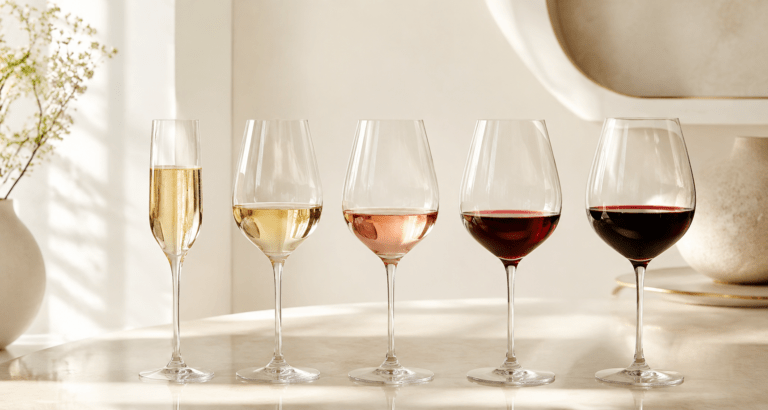
A tulip or white wine glass shows Champagne's aromas better than a narrow flute.
Chips, popcorn, and fried chicken make Champagne taste even better.
Learn Your Taste
Answer a few simple questions and discover styles that fit your palate.
Take the Wine QuizNo. Only sparkling wine from the Champagne region of France, made under its strict rules, can be called Champagne. Other sparkling wines include Cava, Prosecco, Crémant, and Franciacorta.
Mainly Chardonnay, Pinot Noir, and Pinot Meunier. A few other old varieties are permitted but rarely used. Many Champagnes blend all three, though Blanc de Blancs uses only Chardonnay.
No. Brut tastes dry, though it may contain a small amount of added sugar. For no added sugar, look for Brut Nature. Extra Dry is actually slightly sweeter than Brut.
Grapes from the region are costly, the traditional method is labor-intensive, and the wine must age on its yeast for at least 15 months, often much longer. All of that adds cost.
With a proper sparkling wine stopper in the fridge, about two to three days. The bubbles fade gradually, so it is best enjoyed the day it is opened.
Champagne gets its bubbles from a second fermentation in each bottle and tastes toasty and fine-bubbled. Prosecco is fermented in large tanks, so it is fruitier, lighter, and usually less expensive.