Read the Sweetness Word
Extra Brut is drier than Brut, and Extra Dry is actually a touch sweeter.

Understand Wine. Enjoy Every Glass.
Wine Regions
Real Champagne comes from one cool corner of northeast France. Here is why the name is protected, what makes the region special, and how to pick your first bottle.
Start Learning
Champagne is a place before it is a wine. Since the 1930s, French appellation law has defined exactly where Champagne grapes may grow, which grapes are allowed, how vines are pruned, and how the wine is made. European Union law and many trade agreements extend that protection abroad, so a sparkling wine from Spain, Italy, or California generally cannot use the name. The rules require the traditional method: a still base wine gets a dose of yeast and sugar, then ferments a second time inside the sealed bottle to create bubbles. Non-vintage Champagne must rest on its spent yeast, the lees, for at least 15 months, and vintage Champagne for at least three years. The result is a precise style that the champagne region guards closely. Our Champagne vs sparkling wine guide covers the differences in depth.
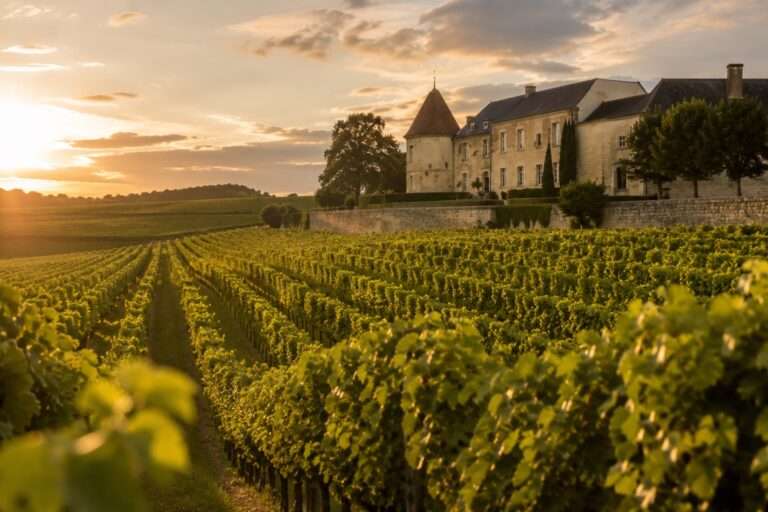
The Champagne region lies roughly 90 miles northeast of Paris, centered on the cities of Reims and Épernay. It is one of the coldest major wine regions in France, so grapes struggle to ripen and keep very high acidity. That would make harsh still wine, but it is perfect for sparkling wine, where crisp acidity gives freshness and lift. The other secret is chalk. Deep chalk soils drain well yet hold just enough water for dry spells, and they reflect warmth back to the vines. Winemakers also carved miles of cellars into the chalk, which stay cool and steady all year for slow aging. Because the weather varies so much, most Champagne is a blend of several years, called non-vintage, to keep the house style consistent.
Three grapes dominate. Chardonnay brings citrus, finesse, and elegance; Pinot Noir adds body, red fruit, and structure; and Meunier gives fruity, approachable charm. Each has a favorite home. The Montagne de Reims is known for Pinot Noir, the Vallée de la Marne for Meunier, and the Côte des Blancs for Chardonnay, while the Côte des Bar in the south grows mostly Pinot Noir. Styles to know: Blanc de Blancs is all white grapes, usually Chardonnay, and tastes lean and lemony; Blanc de Noirs uses black grapes for a richer white wine; rosé adds red-fruit flavor; and vintage Champagne comes from a single excellent year. Learn more in our guide to the Champagne wine style.
Start with a non-vintage Brut, the region’s signature style. It is dry, with flavors of green apple, lemon, and toasted bread, and it shows what makes Champagne different from fruitier sparkling wines. Then try a Blanc de Blancs to taste pure Chardonnay finesse, and a rosé for strawberry and cherry notes. Check the sweetness word on the label: Brut Nature and Extra Brut are the driest, Brut is dry, and Extra Dry, confusingly, is slightly sweeter than Brut. Demi-Sec is noticeably sweet and good with dessert. Look for small grower Champagnes too; an “RM” code on the label means the grower made the wine from their own grapes. Champagne usually costs $40 or more, so for everyday bubbles, try French Crémant or compare styles in Champagne vs Prosecco.
Champagne is one of the most food-friendly wines there is, because high acidity and bubbles cut through salt and fat. Oysters are the classic match, but salty, crunchy foods may be even better: potato chips, popcorn, tempura, and fried chicken are all brilliant. Blanc de Blancs suits sushi, crab, and delicate fish. Richer Blanc de Noirs and vintage Champagne can handle roast chicken, mushroom risotto, and creamy pasta. Rosé works with salmon, duck, and charcuterie. The region’s own soft, bloomy cheeses, like Chaource and Brie, are lovely with Brut. Serve Champagne at 45–50°F in a tulip-shaped or white-wine glass rather than a narrow flute so the aromas can open. Our tips on opening a wine bottle include how to remove a Champagne cork safely.
Champagne is one of the easiest wine regions to visit from Paris, with fast trains reaching Reims in under an hour. Reims has a grand Gothic cathedral and many large Champagne houses offering cellar tours, while Épernay’s Avenue de Champagne is lined with historic houses above miles of chalk cellars. The hillsides, houses, and cellars together form a UNESCO World Heritage site. Book big-house tours in advance, and expect a tasting at the end. To meet small grower-producers, drive the villages of the Côte des Blancs or Montagne de Reims and book appointments ahead. Bring a light jacket for the cellars, which stay cool year-round. Harvest in early fall is lively but busy for winemakers.
| Style | Character | Try It With |
|---|---|---|
| Non-vintage Brut | Dry, green apple, lemon, toasty brioche | Potato chips or fried chicken |
| Blanc de Blancs | All Chardonnay, lean, citrus, chalky | Oysters or sushi |
| Blanc de Noirs | Pinot Noir and Meunier, fuller, red apple | Roast chicken or mushroom risotto |
| Rosé Champagne | Strawberry, cherry, dry, fine bubbles | Salmon or duck |
| Vintage Champagne | Single year, richer, nutty, complex | Lobster or aged hard cheese |
| Demi-Sec | Noticeably sweet, honeyed, fresh | Fruit tarts or mildly sweet desserts |
Extra Brut is drier than Brut, and Extra Dry is actually a touch sweeter.
A tulip or white-wine glass lets Champagne's toasty aromas open up.
An RM code marks grower Champagne made from the producer's own grapes.
Learn Your Taste
Answer a few simple questions and discover styles that fit your palate.
Take the Wine QuizBecause Champagne is a protected appellation. French law, EU rules, and international agreements reserve the name for sparkling wine made in the Champagne region of France, from approved grapes, using the traditional method of second fermentation in the bottle.
The Champagne region is in northeast France, about 90 miles northeast of Paris. Its main towns are Reims and Épernay, and its vineyards spread across chalky slopes along the Marne River and south into the Aube.
No. A few American wineries that used the word before a 2006 US-EU wine agreement may keep using it, but the label must also show the true origin, such as "California Champagne." It is sparkling wine, not Champagne from France.
Yes. Many Champagne houses in Reims and Épernay offer cellar tours, usually by reservation. In Reims, some cellars run through ancient chalk pits deep underground, and Épernay's Avenue de Champagne is lined with famous houses. Reims is about 45 minutes from Paris by fast train.
Both use the traditional method, but Crémant comes from other French regions, such as Burgundy, Alsace, and the Loire, and has shorter minimum aging. Crémant often tastes fresher and fruitier and usually costs much less than Champagne.
Most Champagne is dry. Brut, the most common style, has very little sugar, and Extra Brut and Brut Nature are drier still. Extra Dry and Sec are slightly sweet, while Demi-Sec and Doux are noticeably sweet.