Magnums for Parties
One magnum serves a table of eight to ten and makes a festive centerpiece.

Understand Wine. Enjoy Every Glass.
Wine Basics
Most wine comes in a standard 750 ml bottle, but wine bottle sizes range from single-serve splits to giants that pour 100 glasses. Here is what each one holds and when to use it.
Start Learning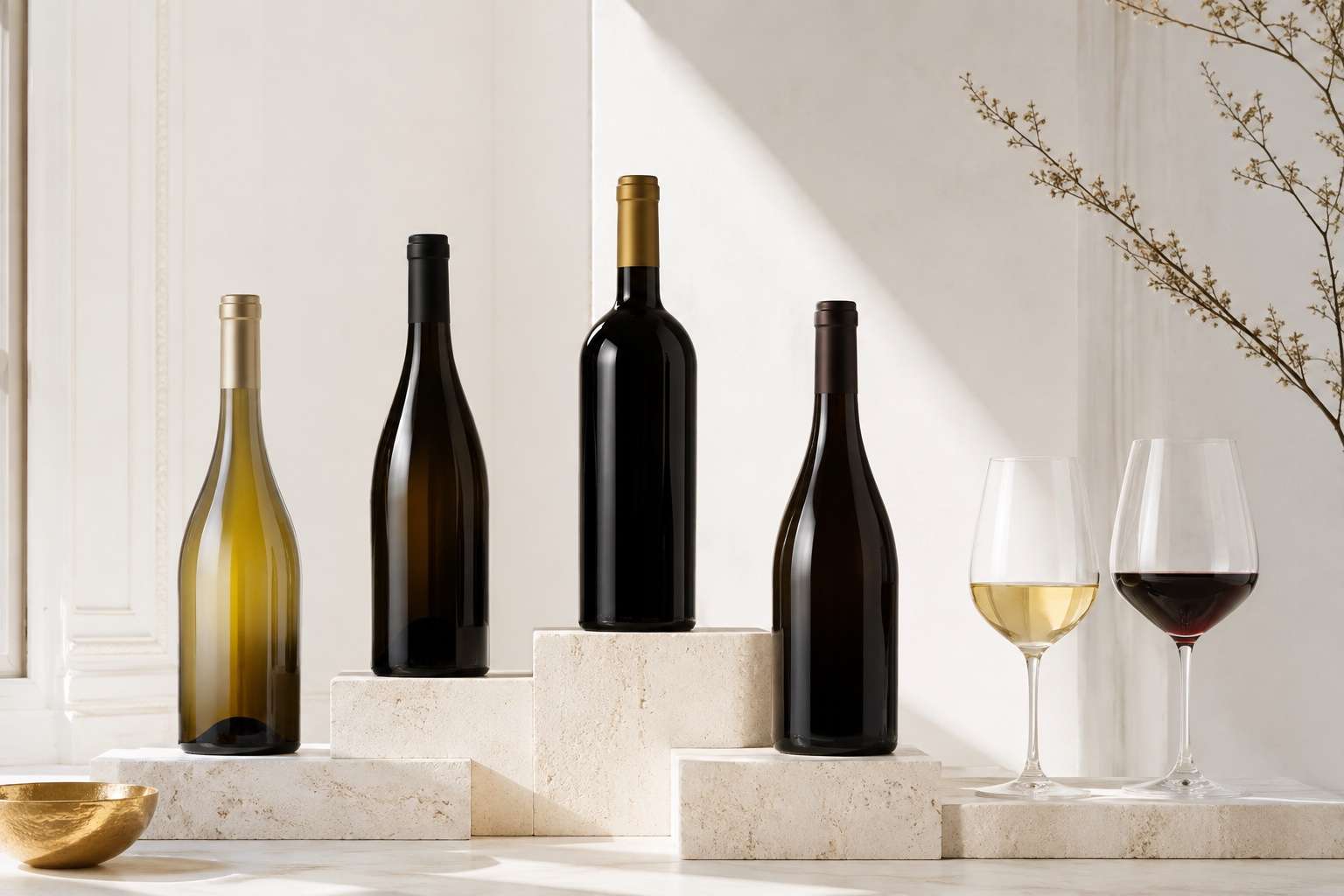
The standard bottle holds 750 milliliters, about 25 ounces, and pours five 5-ounce glasses. It became the global norm over the last century, and most wine everywhere is sold in it. Smaller wine bottle sizes are useful when you want less. The split or piccolo holds 187.5 ml, a quarter of a standard bottle, or about one generous glass; you see it often with sparkling wine and on airlines. The half bottle, also called a demi, holds 375 ml, about two and a half glasses, which is perfect for a dinner for one or two. Many dessert wines, such as Sauternes, come in half bottles because a little goes a long way. A 500 ml bottle, sometimes called a Jennie, is common for sweet wines like Tokaji. One-liter bottles show up for some everyday wines, especially in Austria and Germany.
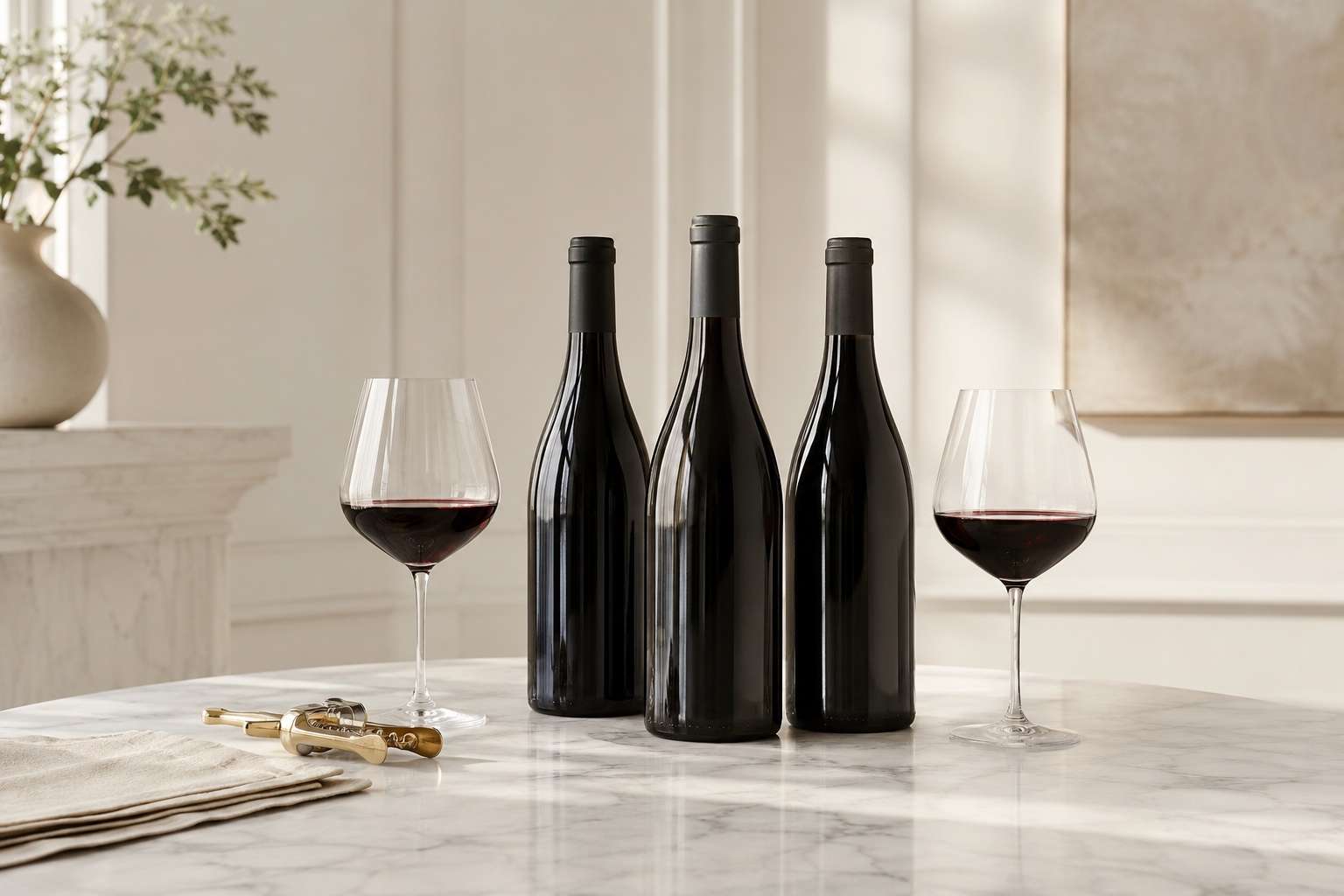
Anything bigger than 750 ml is called large format. The magnum holds 1.5 liters, or two standard bottles, and is the most common big size. Above that, names vary by region. In Champagne and Burgundy, a 3-liter bottle is a Jeroboam; in Bordeaux, 3 liters is a double magnum and the name Jeroboam is used for a larger 4.5-liter bottle. Next come the Rehoboam at 4.5 liters in Champagne, the Methuselah at 6 liters in Champagne (called an Imperial in Bordeaux), the Salmanazar at 9 liters, the Balthazar at 12 liters, and the Nebuchadnezzar at 15 liters, equal to twenty standard bottles. Even larger bottles exist but are rare. Many of these names come from biblical kings and figures, a tradition whose exact origin is uncertain.
Many collectors believe wine ages more slowly and gracefully in a magnum, and there is a simple reason. Every bottle has a small air pocket between the wine and the cork, and roughly the same amount of oxygen gets through the closure regardless of size. In a magnum, that oxygen is shared by twice as much wine, so the wine changes more slowly. Larger bottles also hold temperature more steadily, protecting the wine from small swings. The result is often a wine that stays fresher for longer and develops more gradually. This matters most for age-worthy wines such as Bordeaux, Barolo, and vintage Champagne. For everyday wines meant to be drunk young, the size makes little difference to flavor. Our guide to starting a wine collection explains how to store large formats properly.
Splits and half bottles suit solo dinners, trying a new wine without committing, picnics, and gifts. They also let a couple share a white and a red at dinner. Magnums are perfect for dinner parties of eight to ten, since one bottle serves the whole table and makes a festive centerpiece. Double magnums and larger are showstoppers for weddings, milestone birthdays, and big celebrations; a 3-liter Jeroboam of sparkling wine fills about 25 toast flutes. Large formats can cost more per glass than standard bottles because they are made in small numbers, and they are heavier, harder to chill, and difficult to pour. Plan ahead and see our guide on how much wine per person to decide what size and how many you need. For ideas, see our wine gift guide.
Big bottles need extra planning. Chilling: a magnum of white or sparkling wine takes longer to chill than a standard bottle, so start several hours ahead in the fridge or use a large tub of ice and water; our tips on how to chill wine fast still apply. Opening: corks in large bottles can be longer, so use a corkscrew with a long spiral and work slowly. Pouring: hold a magnum with two hands, one under the base and one around the body. For anything bigger, it is easier to decant into smaller carafes, or ask a strong helper. Sediment: older reds in large formats throw sediment too, so stand them upright a day before serving. Our guide on how to pour wine covers clean, drip-free technique for any size.
A few regions use unusual sizes. The Jura in France bottles its nutty vin jaune in a 620 ml clavelin, said to represent what remains of a liter after years of aging and evaporation. Some cans and mini bottles hold 250 ml, about one-third of a standard bottle, which suits picnics and festivals. Boxed wine typically holds 3 liters, the same as four bottles, and stays fresh for weeks after opening. Bottle shapes also vary by tradition: Bordeaux bottles have high shoulders, Burgundy bottles have gently sloping shoulders, and German and Alsace wines often come in tall, slender flutes. Sparkling wine bottles use thicker glass to handle pressure. The shape can hint at the style inside, a clue explained further in our guide on how to read a wine label.
Estimate how many adults will share the wine and roughly how many glasses each will have.
Divide total glasses by five to find how many standard 750 ml bottles you need.
Choose halves for one or two people, magnums for eight to ten, and larger formats for big parties.
Allow extra chilling time and fridge or cooler space for large bottles of white or sparkling wine.
Pour magnums with two hands, and decant bigger bottles into carafes for easier serving.
| Bottle Name | Volume | Standard Bottles and Glasses |
|---|---|---|
| Split or piccolo | 187.5 ml | 1/4 bottle, about 1 glass |
| Half bottle (demi) | 375 ml | 1/2 bottle, about 2.5 glasses |
| Standard | 750 ml | 1 bottle, about 5 glasses |
| Magnum | 1.5 L | 2 bottles, about 10 glasses |
| Jeroboam or double magnum | 3 L | 4 bottles, about 20 glasses |
| Methuselah or Imperial | 6 L | 8 bottles, about 40 glasses |
| Nebuchadnezzar | 15 L | 20 bottles, about 100 glasses |
One magnum serves a table of eight to ten and makes a festive centerpiece.
A 375 ml half bottle gives two people a glass or two without leftovers.
Large formats take hours to chill. Start well before guests arrive.
Learn Your Taste
Answer a few simple questions and discover styles that fit your palate.
Take the Wine QuizAbout five, using the standard 5-ounce pour for a 750 ml bottle. With larger 6-ounce restaurant pours you get about four, and with small 2-ounce tasting pours you get roughly twelve.
A magnum holds 1.5 liters, the same as two standard bottles, and pours about ten 5-ounce glasses. It is the most common large-format size and a favorite for dinner parties and aging fine wine.
The Nebuchadnezzar, at 15 liters, is the largest commonly named size, equal to twenty standard bottles. A few even larger bottles exist, such as the Melchior and Solomon, but they are very rare and mostly made for display or special events.
Often, yes, for parties or for cellaring. Magnums are festive and can age more slowly and gracefully than standard bottles. They sometimes cost a bit more per glass and take longer to chill, so plan ahead.
A split, or piccolo, is a 187.5 ml bottle, a quarter of a standard bottle, or about one glass. Splits are common for sparkling wine and are handy for single servings, toasts, or trying a wine before buying a full bottle.
No single reason is certain. Explanations include historical glassblowing limits, old trade measures, and the convenience of twelve bottles equaling nine liters. Whatever the origin, 750 ml became the international standard during the twentieth century.