
Decant Before Cooking
Open young bold reds when you start cooking so they are ready by dinner.

Understand Wine. Enjoy Every Glass.
Wine Basics
Decanting sounds fancy, but it is just pouring wine into another container. Done right, it softens young reds and rescues old bottles from gritty sediment.
Start Learning
There are two reasons to learn how to decant wine. The first is aeration. Pouring wine into a wide vessel exposes it to oxygen, which softens firm tannins, lets aromas open up, and blows off odd smells that can appear when a bottle is first opened, such as a faint struck-match note. This mainly helps young, bold reds. The second is sediment. As red wines age, color pigments and tannins bind together and drop out as dark, gritty particles. Some unfiltered young wines and vintage Port also throw sediment. Decanting separates the clear wine from that grit so your glass stays clean. Decanting is not required for most everyday wines, but when it helps, the difference is easy to taste. For more on how air works, see the wine aeration guide.
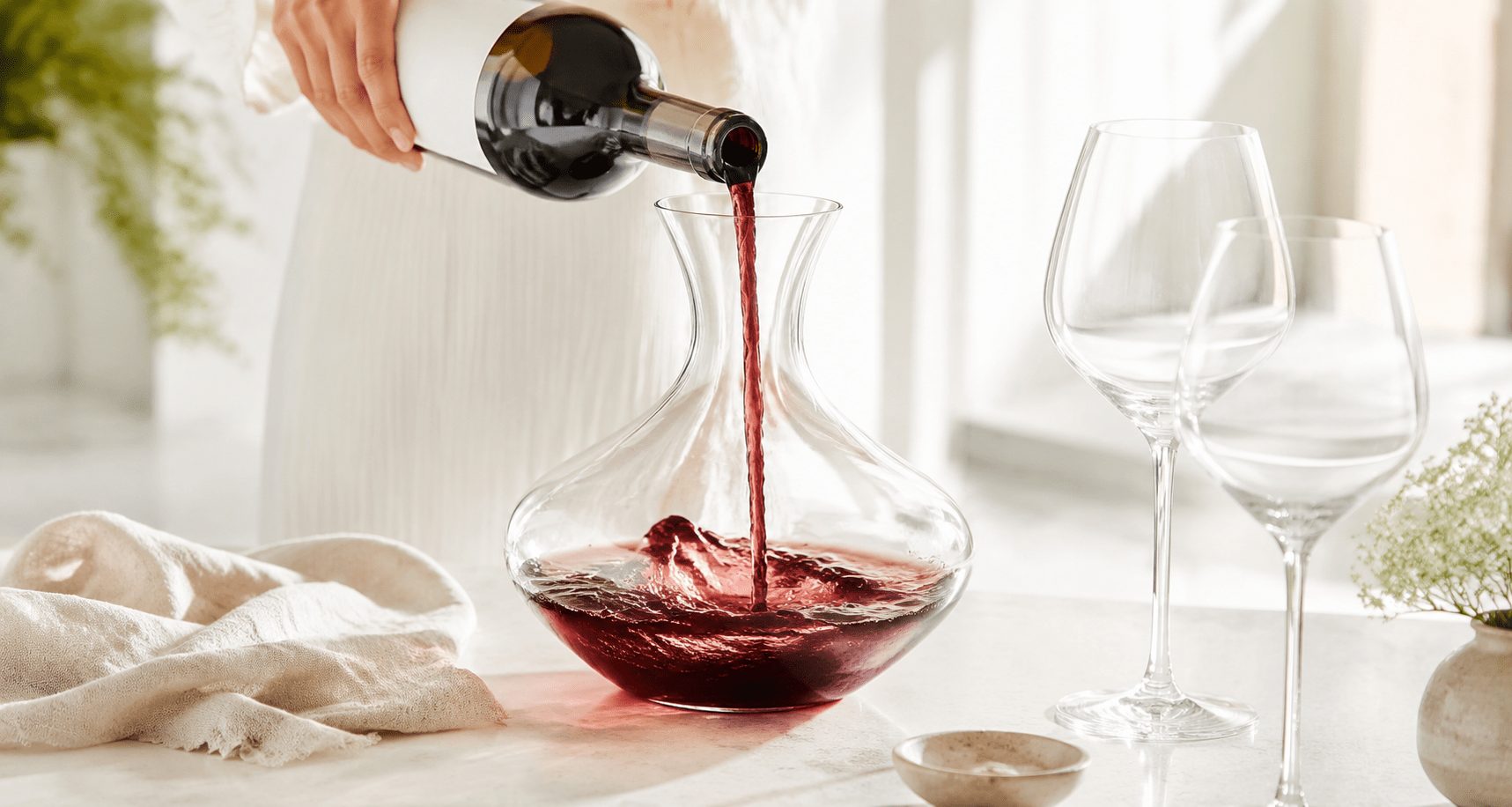
Young, full-bodied reds gain the most. Think Cabernet Sauvignon and Bordeaux blends, Syrah, Barolo and Barbaresco made from Nebbiolo, Malbec, Tannat, and young Rioja Reserva. Their tannins and aromas can feel tight straight from the bottle and soften noticeably with air. Older reds, roughly ten years or more, and vintage Port often need decanting for sediment, but gently. Light reds like Pinot Noir and Beaujolais rarely need it; a few minutes in the glass is enough, and long decanting can flatten their delicate aromas. Most white and rosé wines do not need decanting, though rich whites such as white Burgundy or aged Chenin Blanc can open up with brief air. Do not decant sparkling wine; you will lose the bubbles.
Timing depends on the wine’s age and power. Young, tannic reds usually do well with 30 minutes to two hours; the biggest, most structured wines, like young Barolo, can handle even longer. Medium-bodied reds such as Merlot, Chianti, or Rioja Crianza typically need 20 to 30 minutes. Mature reds, around ten to fifteen years old or more, should be decanted just before serving, mostly to remove sediment; their aromas are delicate and can fade within an hour. Rich whites need only 15 to 30 minutes, if any. The best guide is your own palate. Taste a little when you first pour, then every 15 to 20 minutes. When the wine tastes smoother and smells more expressive, it is ready. If it starts to taste flat, it has had enough air. Learn why tannin softens in tannins in wine.
With older wine, patience is everything. Stand the bottle upright for at least a few hours, ideally a day, so sediment settles to the bottom. Open it carefully; old corks can crumble, so a two-prong cork puller or slow, gentle corkscrew technique helps, as covered in how to open a wine bottle. Hold a light source, such as a flashlight or candle, under the neck of the bottle. Tilt the bottle and pour slowly and steadily into the decanter in one continuous motion, without tipping it back upright, which would stir the sediment. Watch the neck. When you see a dark, cloudy streak approaching, stop pouring. The last inch or so of wine stays in the bottle. You can strain it through a coffee filter for cooking if you like.
You do not need an expensive crystal decanter. Any clean, odor-free glass pitcher, carafe, or even a large jar works for aeration. For a quick boost, pour the wine into the vessel and swirl it a few times. Some people use “double decanting”: pour the wine into a pitcher, rinse the bottle to remove sediment, then pour the wine back into the original bottle so guests can still see the label. Aerating pourers, which attach to the bottle neck and mix air in as you pour, give a modest version of decanting glass by glass. Swirling wine in a large-bowled glass also helps; see the wine glass guide. A wide-bottomed decanter gives the most air contact for young wines, while a narrower one is gentler for older bottles.
The most common mistake is over-decanting delicate wine. An old Burgundy or mature Rioja can lose its charm within an hour of air, so pour it shortly before drinking. Another is decanting at the wrong temperature: a decanter left on a warm counter lets wine heat up, so serve reds around 60–65°F and keep the decanter somewhere cool; check wine serving temperature. Pouring old wine too quickly or in stops and starts stirs up sediment. Using a decanter that smells of soap or dust will taint the wine, so rinse it with water, or a splash of the wine itself, first. Finally, do not leave wine in a decanter overnight without a stopper; it oxidizes quickly. Return leftovers to the bottle and refrigerate. For a style-by-style timeline, see how long wine lasts after opening.
For older wines, stand the bottle upright for several hours or overnight so sediment settles to the bottom.
Remove the cork slowly, using a two-prong puller for fragile corks, and wipe the bottle neck.
Place a flashlight or candle beneath the bottle neck so you can see the wine as it pours.
Tilt the bottle and pour in one continuous stream into a clean decanter without tipping back upright.
When a dark, cloudy streak reaches the neck, stop. Leave the last inch in the bottle.
Taste right away and every 15 to 20 minutes, and serve when the wine tastes open and smooth.
| Wine Style | Decanting Time | Main Reason |
|---|---|---|
| Young Cabernet Sauvignon, Syrah, Malbec | 30 minutes to 2 hours | Soften tannins and open aromas |
| Young Barolo or Barbaresco | 1 to 3 hours | Tame firm tannin and high acidity |
| Medium reds like Merlot or Chianti | 20 to 30 minutes | Gentle aeration |
| Mature reds, 10+ years | Just before serving | Remove sediment without losing aroma |
| Vintage Port | Decant, then serve within hours | Remove heavy sediment |
| Light reds like Pinot Noir or Beaujolais | Usually none, or a few minutes | Delicate aromas fade with too much air |
Open young bold reds when you start cooking so they are ready by dinner.
Swirl a splash of the wine in the decanter first to remove any off odors.
Do not let a decanter sit in sun or near the stove; warm wine tastes boozy.
Learn Your Taste
Answer a few simple questions and discover styles that fit your palate.
Take the Wine QuizNo. Most everyday reds are fine poured straight into the glass. Decanting helps young, tannic reds and older wines with sediment, while light reds like Pinot Noir usually need little or no decanting.
Yes. Too much air can make wine taste flat and dull, especially older or delicate bottles. Young bold reds handle a few hours, but taste periodically and serve when the wine tastes best.
Usually not. Most whites are best poured fresh. A rich white Burgundy, oaked Chardonnay, or aged white wine can benefit from 15 to 30 minutes in a decanter to open up its aromas.
Aerating means exposing wine to air to soften and open it. Decanting is pouring wine into another vessel, which aerates it and can also separate the wine from sediment in older bottles.
Use any clean glass pitcher, carafe, or large jar. Pour the wine in slowly, swirl a few times, and let it rest. You can pour it back into the rinsed bottle to serve.
Vintage Port, and other unfiltered Ports, usually need decanting to remove heavy sediment. Tawny Port and most Ruby Port are filtered and can be poured directly from the bottle.

