Go Easy on Soy
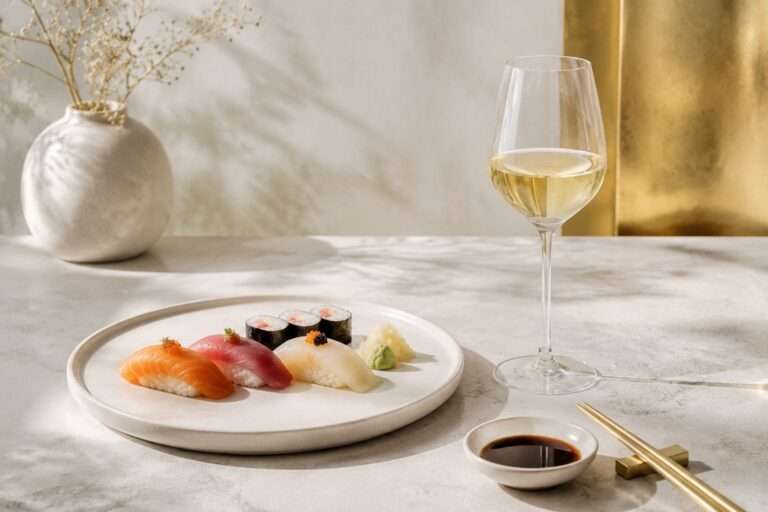
Too much soy sauce flattens wine; a light dip keeps flavors balanced.

Understand Wine. Enjoy Every Glass.
Wine Pairings
Sushi is delicate, salty, and full of umami, which knocks many wines off balance. A few crisp, refreshing styles make it taste even better.
Start Learning
Sushi combines several challenges in one bite. Raw fish is delicate and easily overwhelmed. Seasoned rice is slightly sweet and tangy from rice vinegar. Soy sauce adds salt and deep umami, wasabi adds sharp heat, and pickled ginger adds spice and sugar. Umami in particular makes tannin taste more bitter and can give red wine a metallic edge with fish. That is why the best wine with sushi is usually crisp, light, and low in tannin. High acidity refreshes the palate like a squeeze of citrus, and unoaked wines keep the clean, pure flavors that make sushi special. A touch of sweetness helps with soy sauce and spicy mayo. Bubbles add another bonus, scrubbing your palate between pieces and handling fried tempura with ease.
Match the wine to the fish. Lean white fish such as fluke, sea bream, and yellowtail wants delicate, mineral wines: Muscadet, Chablis, or a dry Grüner Veltliner. Salmon is richer, so try dry Riesling, a Provence rosé, or Champagne. Tuna, especially fatty toro, is meaty enough for a dry rosé or a very light, chilled Pinot Noir. Shellfish such as shrimp, scallop, and sweet crab love Albariño or Sauvignon Blanc. Uni, the rich sea urchin, is a classic with Champagne or Chablis. Eel (unagi) is grilled with a sweet, savory glaze, so pair it with off-dry Riesling or a fruity Pinot Noir. The California roll, with crab, avocado, and cucumber, is easy with Grüner Veltliner or a crisp, unoaked Chardonnay.
What you dip in changes the pairing. Soy sauce is very salty and savory, which makes wine taste less fruity and more bitter. Wines with a hint of sweetness, like off-dry Riesling, balance that salt beautifully. Go light on soy and the delicate wines shine more. Wasabi brings sharp, nasal heat that can make high-alcohol wine burn, so keep alcohol low, ideally under about 12.5 percent. German Riesling Kabinett and Vinho Verde are naturally light. Spicy rolls, such as spicy tuna or rolls with sriracha mayo, love off-dry Riesling or Gewürztraminer, whose sweetness and floral fruit cool the heat. Pickled ginger is meant as a palate cleanser between pieces, not as a topping, so it rarely affects the wine. For more on heat, see our wine with spicy food guide.
Dry sparkling wine is the most versatile sushi wine of all. Champagne’s high acidity, fine bubbles, and toasty notes work with nigiri, rolls, and especially tempura, where the fizz cuts through the batter. Cava and Crémant offer the same benefits for less money, and a dry Prosecco works with simple rolls. Dry rosé is another all-rounder; its red-berry fruit suits salmon and tuna, and its crispness handles soy. Red wine is trickier, but it can work. Choose a light, low-tannin red such as Pinot Noir, Gamay from Beaujolais, or Austrian Zweigelt, and serve it lightly chilled. These suit tuna, eel, and seared or grilled items best. Sake is the traditional partner, and if you enjoy it, it makes a great comparison, but crisp wines are a delicious alternative.
Avoid big, tannic red wines such as Cabernet Sauvignon, Malbec, Syrah, and Nebbiolo. Their tannin clashes with umami and fish oils, creating a bitter, metallic taste, and their power crushes delicate raw fish. High-alcohol wines of any color make wasabi and spicy rolls burn. Heavily oaked, buttery Chardonnay is another poor match; its vanilla and toast notes cover the clean flavors of the fish and feel heavy next to light rice. Very sweet dessert wines are too much for savory sushi. Strongly aromatic wines can also overwhelm delicate white fish, though they work with spicy rolls. If you are ordering a big mixed platter, the safest move is a dry sparkling wine or a dry Riesling, both of which handle the full range of flavors without clashing.
Serve sushi whites and rosé well chilled, at about 45–50°F, and sparkling wine at 40–45°F. Light reds such as Pinot Noir taste best around 55°F, after about 30 minutes in the fridge. Use smaller white-wine glasses to keep the wine cold. Some of the best sushi wines are affordable. German Riesling Kabinett, Austrian Grüner Veltliner, Spanish Albariño, Portuguese Vinho Verde, Muscadet, and Spanish Cava often cost under $20. A Provence rosé is a reliable mid-priced choice. For a special dinner with fine nigiri or uni, a bottle of Champagne or a premier cru Chablis is worth the splurge. For takeout, a single bottle of dry Riesling or Cava covers everything from California rolls to spicy tuna.
| Sushi | Best Wine | Why It Works |
|---|---|---|
| White fish nigiri or sashimi | Muscadet, Chablis, or Grüner Veltliner | Lean, mineral wines respect delicate fish |
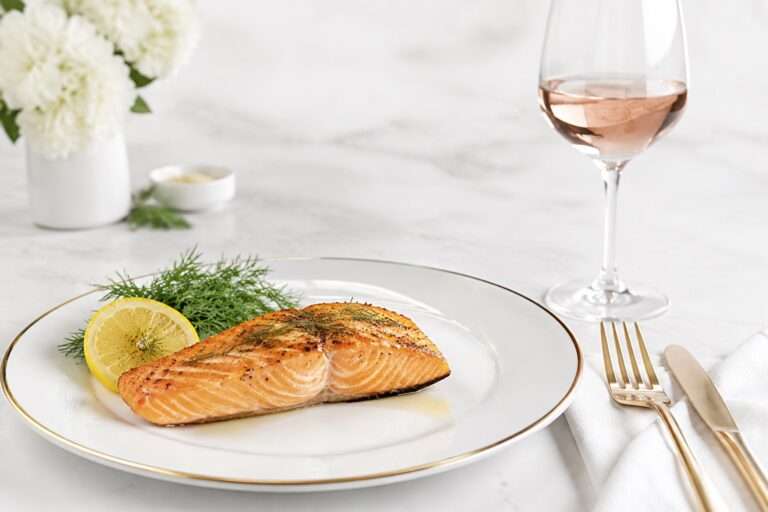
| Salmon nigiri | Dry Riesling or dry rosé | Acid and fruit balance rich, oily fish |
| Tuna or toro | Dry rosé or chilled Pinot Noir | Light tannin suits meaty fish |
| Spicy tuna roll | Off-dry Riesling or Gewürztraminer | Slight sweetness cools the heat |
| Eel with sweet sauce | Off-dry Riesling or Pinot Noir | Fruit matches the sweet, savory glaze |
| Tempura roll | Champagne or Cava | Bubbles cut through the fried batter |
Too much soy sauce flattens wine; a light dip keeps flavors balanced.
Riesling or Grüner under about 12.5% ABV handles wasabi heat without burning.
Dry sparkling wine pairs with nearly every roll on the platter.
Learn Your Taste
Answer a few simple questions and discover styles that fit your palate.
Take the Wine QuizDry or off-dry Riesling is the top choice, with high acidity and a touch of fruit that balances soy sauce. Grüner Veltliner, Albariño, Muscadet, and Sauvignon Blanc are also excellent, crisp whites for sushi.
Yes, if it is light. A chilled Pinot Noir, Gamay, or Zweigelt works with tuna, salmon, and eel. Avoid heavy, tannic reds like Cabernet Sauvignon, which clash with umami and taste metallic with raw fish.
Yes. Champagne is one of the best sushi wines. Its high acidity and bubbles refresh the palate and cut through salt and tempura batter. Cava and Crémant offer a similar style at a lower price.
Off-dry Riesling is ideal. Its slight sweetness and low alcohol calm the chile heat and spicy mayo. Gewürztraminer and a fruity dry rosé are good alternatives for spicy sushi rolls.
Yes, especially with shellfish, white fish, and vegetable rolls. Its zesty citrus acidity works like a squeeze of lime. Choose a lighter, less pungent style, such as one from the Loire Valley, for delicate sashimi.
Yes. Dry rosé is a versatile sushi wine, with enough red-berry fruit for tuna and salmon and enough acidity for soy sauce. Pale, crisp Provence-style rosés are a reliable choice.