Cook with Your Wine
Use the same dry white in the risotto that you plan to serve with dinner.

Understand Wine. Enjoy Every Glass.
Wine Pairings
Risotto is creamy, rich, and endlessly flexible. The wine should follow the main flavor stirred into the rice. Here is what to pour for every classic version.
Start Learning
Every risotto shares the same base: short-grain rice slowly cooked in stock, then finished with butter and Parmesan. That makes it rich, creamy, and savory, with plenty of umami from the cheese. The best wine with risotto has enough acidity to cut through that creaminess and refresh your palate, so each spoonful tastes as good as the first. A flabby, low-acid wine makes the dish feel heavy. Beyond acidity, follow the star ingredient. The rice is a blank canvas, and the mushrooms, seafood, saffron, squash, or vegetables decide the flavor. Earthy additions point toward reds or richer whites. Delicate seafood and green vegetables point toward crisp whites. Italian wines are a natural starting point, since risotto comes from northern Italy, but the logic works with wines from anywhere.
Mushroom risotto is earthy and savory, which makes it a perfect match for Pinot Noir, whose forest-floor notes echo the mushrooms. Piedmont’s juicy Barbera and an oaked Chardonnay also work. Risotto alla Milanese, golden with saffron and bone marrow, suits a rich Italian white such as Soave, made from Garganega. Seafood risotto with shrimp, clams, or squid wants a crisp coastal white: Vermentino or Verdicchio. Risotto primavera with asparagus and peas loves Sauvignon Blanc or Grüner Veltliner. Butternut squash risotto pairs with a creamy Viognier or Chardonnay. Truffle risotto is the time to open Nebbiolo from Piedmont, where white truffles and Nebbiolo grow side by side. Risotto al Barolo, cooked in red wine, obviously wants Nebbiolo too.
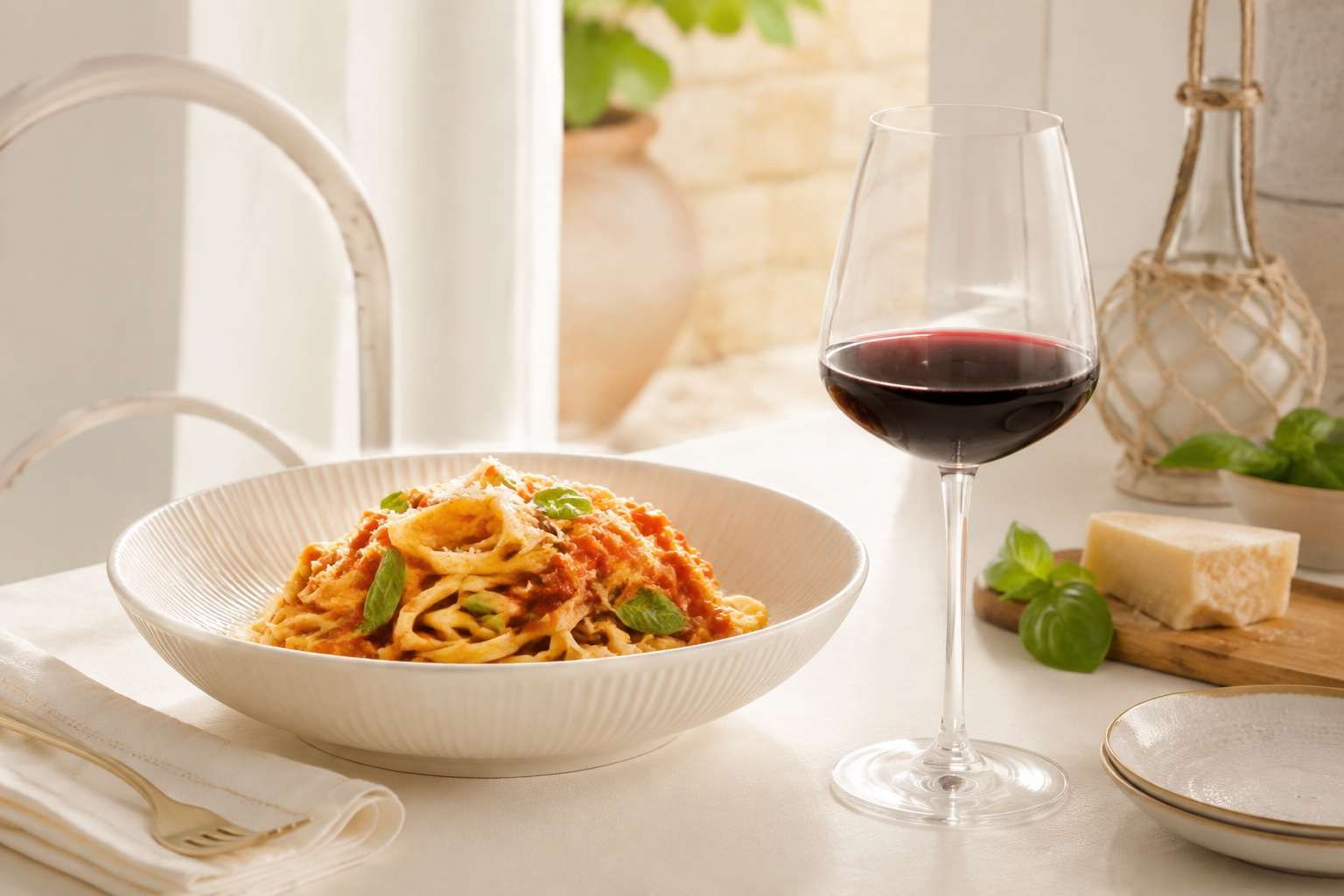
Small details change the pairing. A heavy hand with Parmesan adds salt and umami, which flatters medium-bodied reds and softens their tannins. Extra butter or mascarpone makes the dish richer, so lean toward a fuller white or more acidity. Lemon zest brightens risotto and makes crisp whites shine. Sausage or pancetta adds fat and smoke, opening the door to Barbera, Dolcetto, or a Chianti. Gorgonzola risotto is pungent and salty, and it pairs well with a slightly off-dry white or a fruity red. One useful habit: most risotto recipes add a splash of dry white wine after toasting the rice. Use a wine you would happily drink, then pour the rest with dinner. The flavors will tie together naturally. Our guide to cooking with wine explains which styles to use and which to skip.
White wine is the most flexible choice, especially for seafood, vegetable, lemon, and saffron risottos. Medium-bodied Italian whites and lightly oaked Chardonnay match the creamy texture without overpowering it. Red wine works when the risotto is earthy or meaty: mushrooms, truffles, sausage, red wine, or radicchio. Keep reds medium-bodied with moderate tannin; Pinot Noir, Barbera, and Nebbiolo-based Langhe reds are reliable. Dry rosé is a good middle path for tomato, beet, or summer vegetable risotto. Sparkling wine is an underrated partner. Franciacorta or Champagne cuts through butter and cheese like a knife, and the toasty, bready notes of traditional-method bubbles suit mushroom and Parmesan risottos especially well. Prosecco is a lighter, fruitier option for vegetable and seafood versions.
Big, tannic reds such as young Cabernet Sauvignon or Malbec usually overwhelm risotto and clash with its creamy texture; the tannins taste harsh without the protein of a steak to soften them. Heavily oaked Chardonnay can be too much for seafood or green-vegetable versions, where it hides delicate flavors. Low-acid wines make every bite feel heavier. Very sweet wines throw off a savory dish. Watch out for tannic reds with seafood risotto, where they can taste metallic. Finally, avoid cooking with any wine you would not drink. Cheap, oxidized, or salted cooking wine adds off-flavors that no pairing in the glass can fix.
Risotto waits for no one, so open and chill the wine before you start stirring. Serve whites at 45–55°F, with richer styles toward the warmer end, and reds like Pinot Noir and Barbera slightly cool at 55–60°F; our wine serving temperature chart has the details. One bottle serves about four people over a risotto dinner. For value, Soave, Vermentino, Barbera d’Asti, and Langhe Nebbiolo deliver Italian character without big prices, often under $25. Save Barolo or Barbaresco for a truffle risotto splurge. Looking for more Italian matches? Our guide to wine with Italian food covers pasta, pizza, and beyond.
| Risotto Type | Best Wine | Why It Works |
|---|---|---|
| Mushroom risotto | Pinot Noir or Barbera | Earthy notes echo the mushrooms |
| Risotto alla Milanese | Soave or white Burgundy | Rich whites match saffron and butter |
| Seafood risotto | Vermentino or Verdicchio | Crisp coastal whites suit shellfish |
| Risotto primavera | Sauvignon Blanc or Grüner Veltliner | Green notes pair with asparagus and peas |
| Butternut squash risotto | Viognier or Chardonnay | Creamy texture matches sweet squash |
| Truffle risotto | Nebbiolo | Earthy aromas mirror truffle |
Use the same dry white in the risotto that you plan to serve with dinner.
Pair to the mushrooms, seafood, or vegetables, not to the rice itself.
Butter and Parmesan need a high-acid wine to keep each bite fresh.
Learn Your Taste
Answer a few simple questions and discover styles that fit your palate.
Take the Wine QuizPinot Noir is the classic match because its earthy, forest-floor notes echo the mushrooms. Barbera, Langhe Nebbiolo, and oaked Chardonnay are excellent alternatives, depending on whether you prefer red or white.
Italian whites such as Soave, Vermentino, and Verdicchio are top picks, along with unoaked or lightly oaked Chardonnay. They have the acidity to cut butter and Parmesan without overpowering delicate ingredients.
Yes, when the risotto is earthy or meaty. Mushroom, truffle, sausage, and red wine risottos pair well with medium-bodied reds like Pinot Noir, Barbera, and Nebbiolo. Avoid big, tannic reds.
Crisp coastal whites like Vermentino, Verdicchio, or Albariño. They suit shrimp, clams, and squid, and their acidity balances the creamy rice. Avoid red wine and heavy oak, which clash with shellfish.
A dry, unoaked white you would enjoy drinking, such as Pinot Grigio, Soave, or Sauvignon Blanc. Add it after toasting the rice and let it cook off before adding stock. Skip sweet or salted cooking wine.
Viognier or a lightly oaked Chardonnay. Their creamy texture and stone-fruit flavors match the sweet, nutty squash. A dry Riesling also works if the dish includes sage or warm spices.