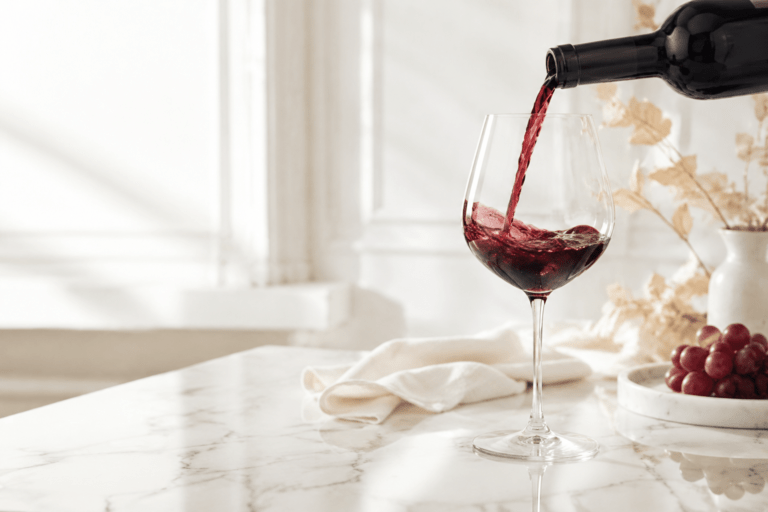
Fill Only a Third
A partly filled glass is easier to hold, swirl, and smell.

Understand Wine. Enjoy Every Glass.
Wine Basics
Holding a wine glass by the stem is not just etiquette. It keeps your wine at the right temperature, keeps the bowl clean, and makes swirling easy.
Start Learning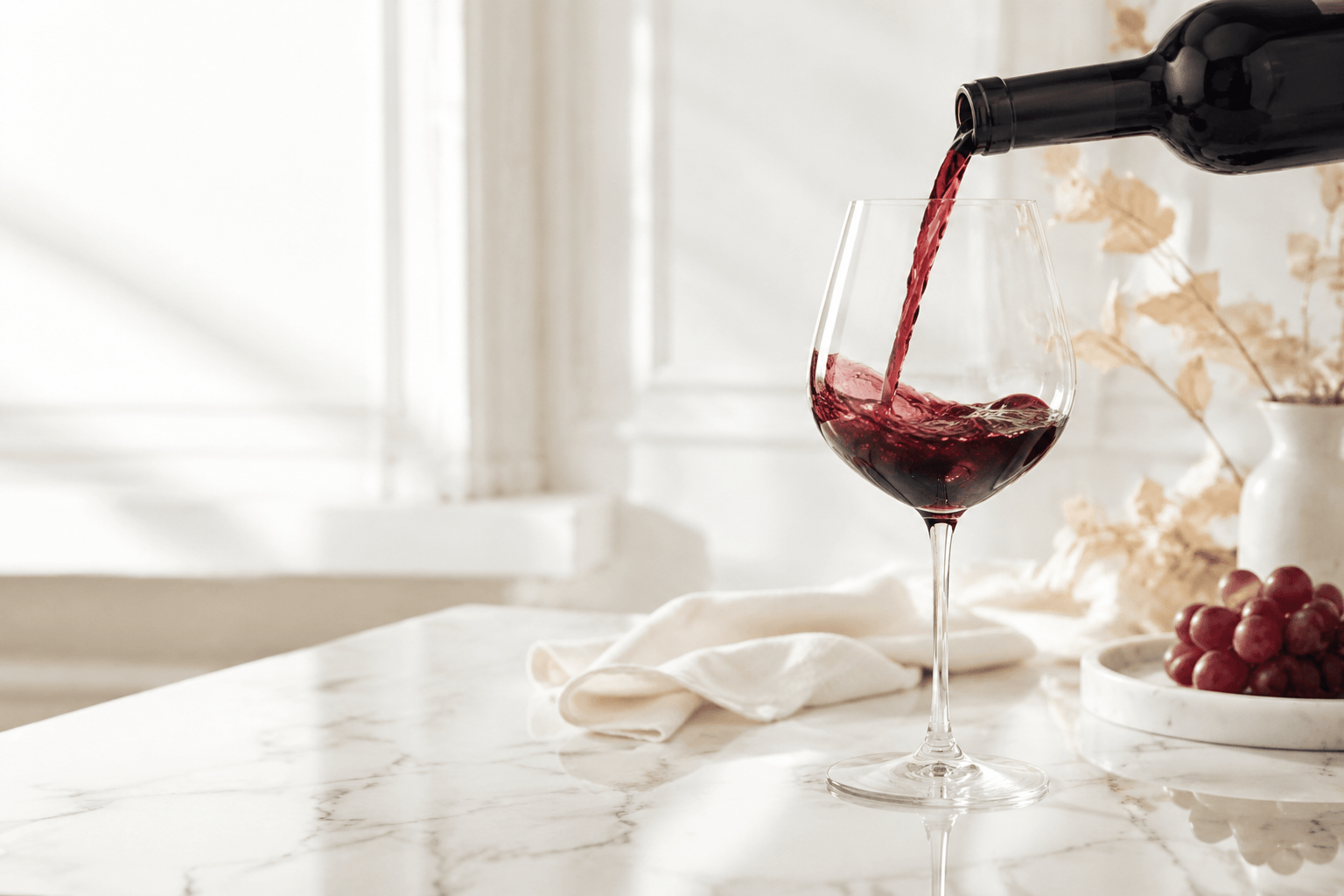
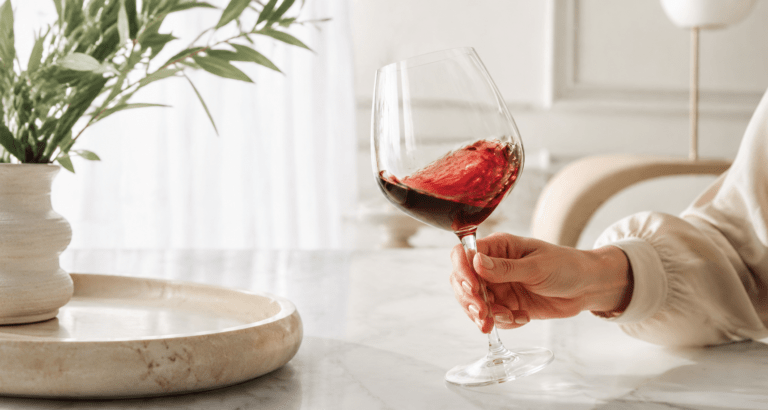
The standard answer to how to hold a wine glass is simple: hold it by the stem. Pinch the stem between your thumb and your index and middle fingers, roughly a third to halfway up from the base. Let your ring finger and pinky rest lightly on the stem or on top of the base for balance. Your grip should be relaxed, not white-knuckled; a stemmed glass is lighter than it looks. This grip has three practical benefits. It keeps your warm hand away from the bowl, so chilled wine stays at the right serving temperature. It keeps fingerprints off the bowl so you can see the wine’s color. And it gives you control for swirling, which releases aromas, as covered in how to taste wine.
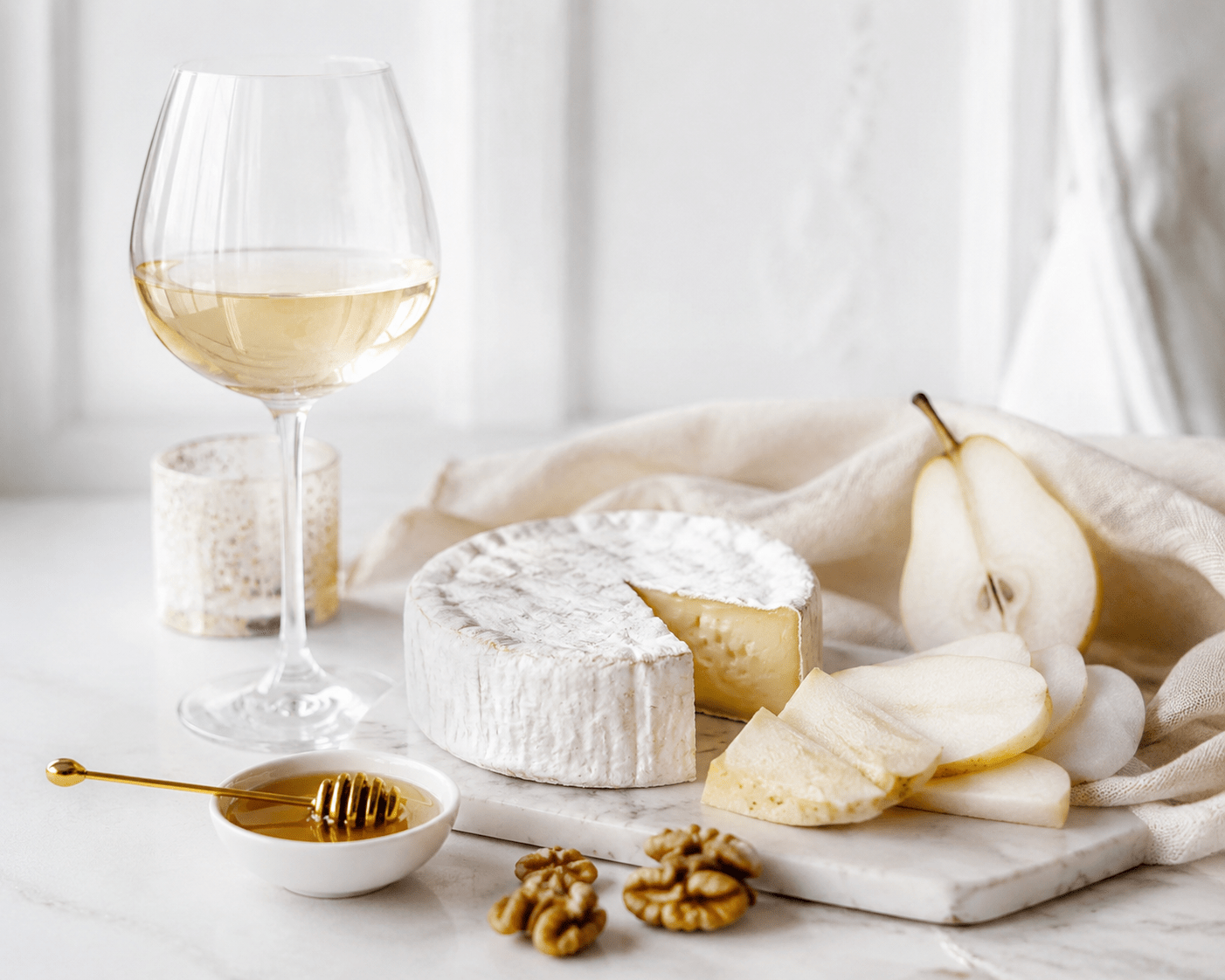
Your hand is around 90°F or more, while a white wine is ideally served at 45–50°F and a red at 60–65°F. Wrap your palm around the bowl and that heat transfers quickly into the wine. Within a few minutes, a crisp Sauvignon Blanc can lose its zesty freshness, and a red can start tasting more alcoholic and less fruity. The effect is strongest with thin glasses and chilled wines like whites, rosés, and sparkling wine, which also lose bubbles faster as they warm. There is one useful exception: if a red or rich white is served too cold, cupping the bowl for a minute is a handy way to warm it gently. Otherwise, stick to the stem. For more on how temperature shapes flavor, see red vs white wine.
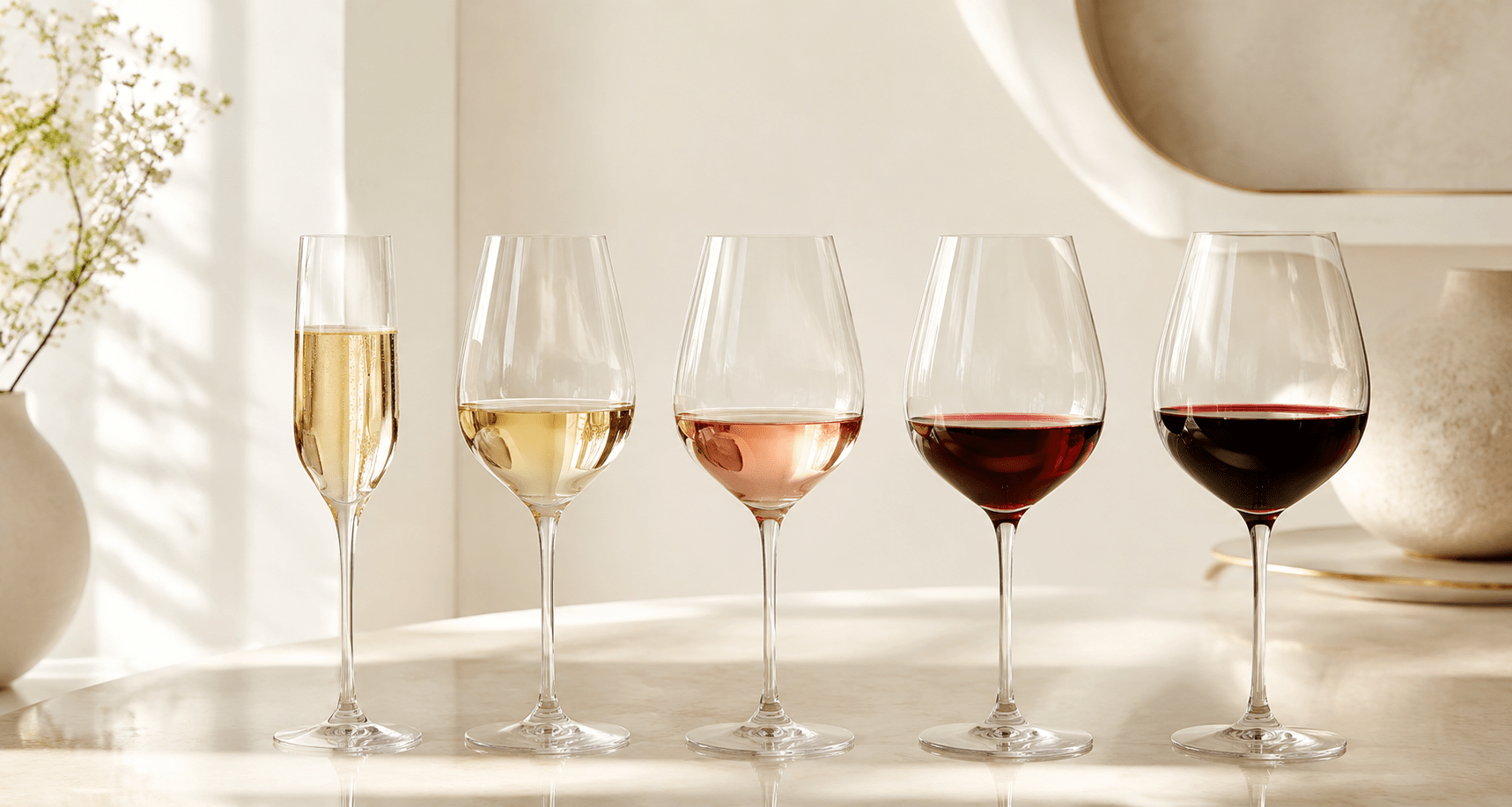
The stem grip is the standard, but there are alternatives. Some wine professionals use the base pinch: thumb on top of the foot of the glass and fingers underneath. It keeps the bowl completely clear for judging color and looks polished, but it feels less secure with a full glass, so practice with water first. For stemless glasses, hold the glass low, near the base, with your fingertips rather than your full palm. This limits warming and smudging. Because the wine still warms faster, pour smaller amounts and top up more often. Stemless glasses are sturdy and great for casual meals or outdoor gatherings. For more on shapes and what suits each wine, see the wine glass guide.
Flutes and tulip glasses are held exactly like other stemmed glasses: pinch the stem, not the bowl. With sparkling wine, this matters even more. Warmth from your hand makes bubbles escape faster and dulls the crisp freshness that makes sparkling wine appealing. When toasting, lift the glass by the stem and clink gently at the widest part of the bowl, bowl-to-bowl rather than rim-to-rim, to avoid chipping delicate glassware. For small dessert or Port glasses, the stem is short, so pinch it with your thumb and index finger and support the base with your other fingers. These wines are often served slightly warmer, so a light touch on the bowl is less of a problem. Smaller pours help too; see how to pour wine.
Swirling adds air to the wine and lifts aromas into the glass, and a good grip makes it easy. Start with your glass no more than one-third full. Beginners should keep the base on the table: hold the stem low and move the glass in small, quick circles, as if drawing a coin-sized loop. The wine will rise up the sides. Once that feels natural, try lifting the glass and making the same small circles in the air. Keep the motion from your wrist, not your whole arm. Swirl for a few seconds before smelling, not continuously. Never swirl sparkling wine hard, since it drives off bubbles. If you want to see what swirling reveals, read wine legs explained and how to decant wine.
At a dinner party or restaurant, a few small habits look polished. Hold your glass by the stem when drinking and toasting, and set it down between sips rather than holding it the whole time. Place your wine glass to the right of your water glass, above your knife. If you do not want a refill, a light hand hovering over the glass signals “no, thank you” to a server or host; turning the glass upside down is not necessary. Make eye contact during toasts. At wineries, hold your glass by the stem and pour out or spit any wine you do not want to finish; see winery tasting etiquette. Above all, do not stress: comfort and enjoyment matter more than perfect form.
Locate the middle of the stem, about a third to halfway up from the base of the glass.
Hold the stem between your thumb and your index and middle fingers with a relaxed grip.
Let your ring finger and pinky rest lightly on the stem or on top of the base for balance.
Keep the base on the table and make small circles until the wine moves smoothly.
Rest your glass on the table between sips so your hand does not warm the wine.
| Glass Type | How to Hold It | Why |
|---|---|---|
| Standard stemmed glass | Pinch the stem with thumb and two fingers | Keeps wine cool and the bowl clean |
| Base pinch (pro style) | Thumb on top of the foot, fingers below | Clear view of color, very stable on the table |
| Stemless glass | Fingertips near the base | Limits warming from your palm |
| Flute or tulip | Pinch the stem, never the bowl | Preserves bubbles and chill |
| Small dessert glass | Pinch the short stem, support the base | Steady grip for small, rich pours |
A partly filled glass is easier to hold, swirl, and smell.
Toast at the widest part of the bowl to avoid chipping rims.
If a red is too cold, cup the bowl briefly to warm it.
Learn Your Taste
Answer a few simple questions and discover styles that fit your palate.
Take the Wine QuizHolding the stem keeps your hand's warmth away from the wine, so it stays at the right temperature. It also keeps fingerprints off the bowl and makes swirling easier.
Not rude, just less ideal. Most people will not notice or care. Holding the bowl warms the wine faster and leaves smudges, which matters most with chilled whites and sparkling wine.
Hold it near the base with your fingertips rather than wrapping your whole palm around it. Pour smaller amounts, since stemless glasses let your hand warm the wine more quickly.
Pinch the stem between your thumb and first two fingers, just like a regular wine glass. Avoid holding the bowl, since warmth makes the bubbles fade faster.
No, the stem grip works for both. Holding the stem matters slightly more with whites, since they are served colder and warm up faster. Red glasses are larger, so simply hold the stem a little lower for balance.
Fill the glass no more than one-third full, keep the base on the table, and make small, quick circles from your wrist. Once comfortable, try swirling with the glass lifted.