Serve Orange Wine at Cellar Temp
Pour at 50–55°F. Too cold makes the tannin taste harsh and mutes the aroma.

Understand Wine. Enjoy Every Glass.
Wine Types
Orange wine has nothing to do with oranges. It is white wine made the way red wine is made, and it has a flavor and texture all its own.
Start Learning
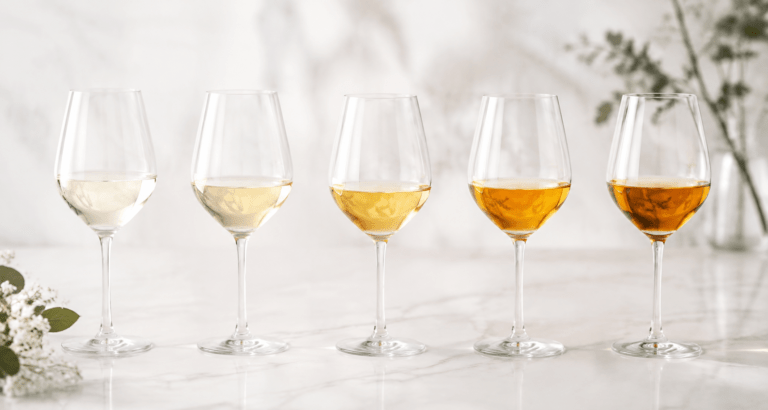
Orange wine is a white wine that spends time fermenting with its grape skins. In normal white wine production, grapes are pressed right away and only the juice is fermented. For orange wine, crushed white grapes sit with their skins, and sometimes seeds and stems, much like a red wine. That contact can last a few days or stretch to many months. The skins release color, aroma, and tannin, turning the wine shades of gold, amber, copper, or deep orange. You may also see it called amber wine or skin-contact wine. It is neither a blend of red and white nor flavored with fruit. Think of orange wine as a fourth color of wine alongside red, white, and rosé, with its own unique taste.
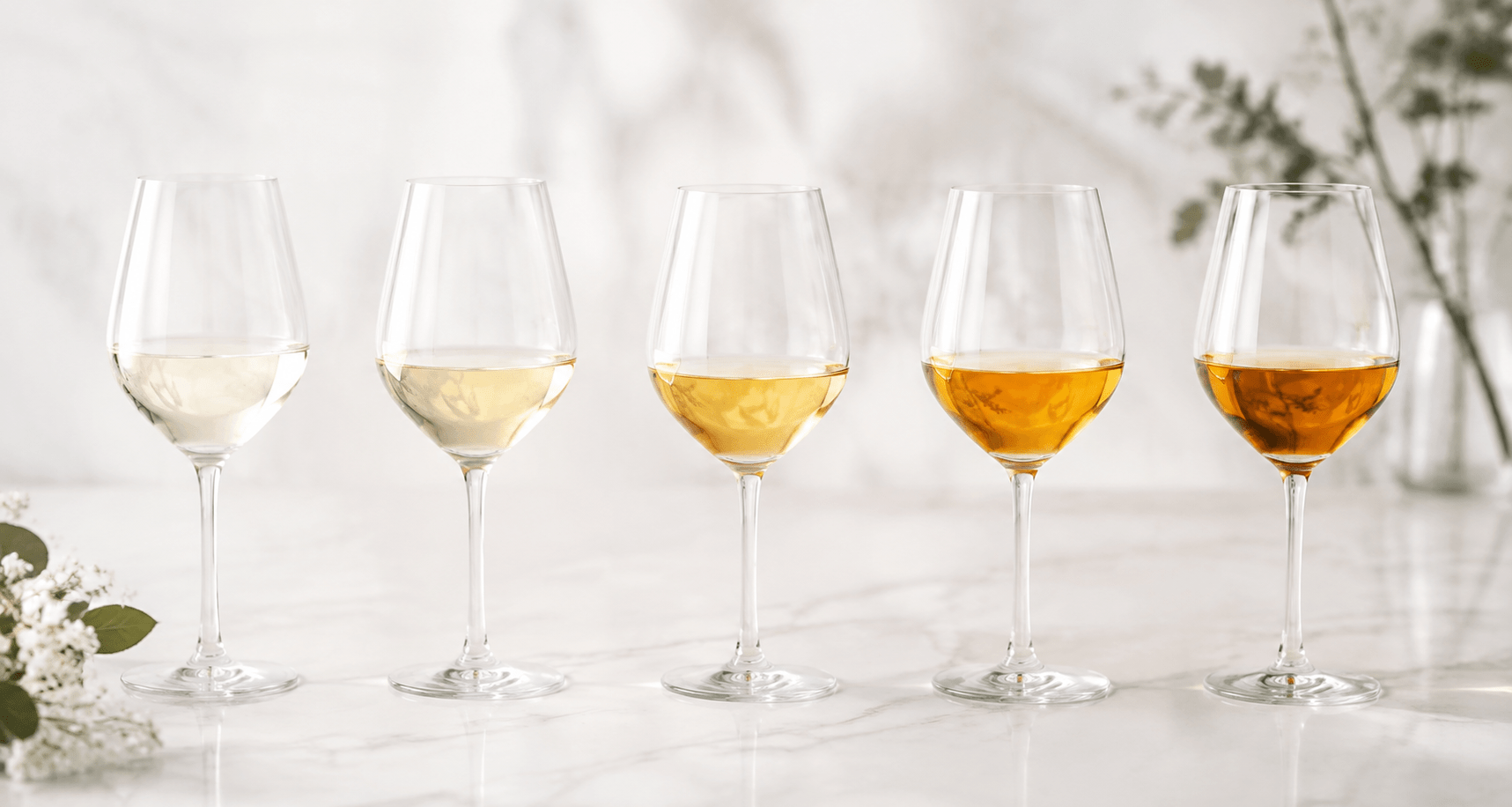
The process is simple, which is part of its appeal. White grapes are crushed and left with their skins in a vessel, such as a clay amphora, a large wooden vat, or a stainless steel tank. Fermentation often starts with native yeasts. As it goes, the skins are punched down or soaked to extract flavor. Short contact of a few days gives a pale gold wine that is fresh and lightly textured. Weeks or months on the skins create a deep amber wine with firm tannin and savory complexity. After pressing, the wine may age in amphora, oak, or steel. Many orange wines are made in a low-intervention way, so there is a big overlap with natural wine, but not every orange wine is natural. Some are clean, polished, and made with modern methods.
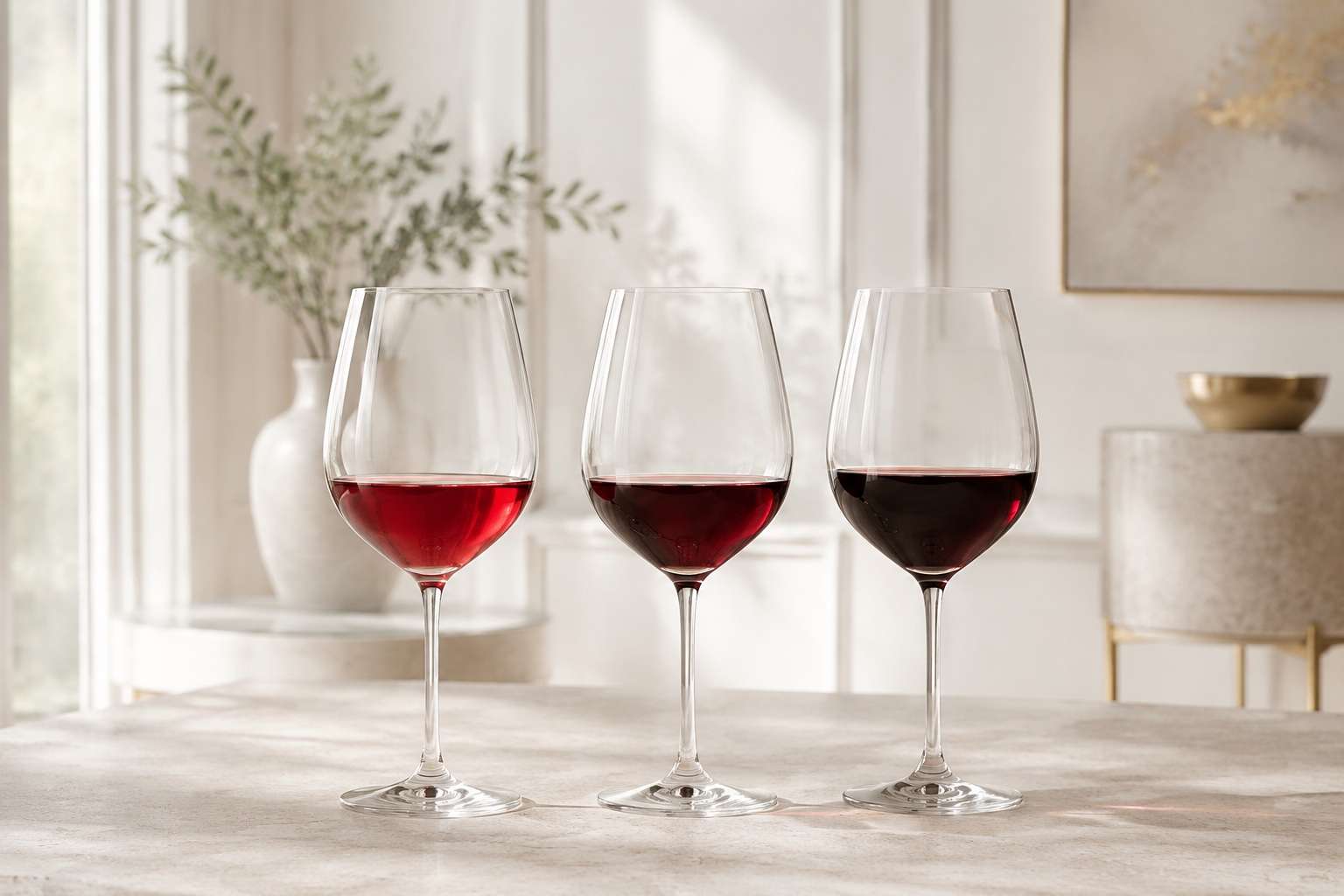
Orange wine tastes like a bridge between white and red. It has the fruit family of a white wine, but with the grip and savoriness of a red. Common flavors include dried apricot, orange peel, quince, bruised apple, and honey, along with nutty, tea-like, and herbal notes such as chamomile and black tea. Many have a sour, tangy edge, a bit like cider or kombucha. On the palate, you will notice tannin, the drying feel usually found in red wine, which gives orange wine a firm, structured texture. Most orange wines are dry. Aromatic grapes show up clearly: skin-contact Gewürztraminer or Muscat smells intensely floral, while neutral grapes take on more nutty and earthy flavors. Expect bold, unusual flavors, and give your palate a few sips to adjust.
Orange wine is ancient. In Georgia, especially the eastern Kakheti region, winemakers have fermented white grapes like Rkatsiteli and Mtsvane on their skins in clay qvevri, large egg-shaped jars buried underground, for thousands of years. The modern revival began in northeast Italy and western Slovenia, around Friuli’s Collio area and Slovenia’s Brda, where grapes like Ribolla Gialla are made with long skin contact. Friuli and the Veneto also make ramato, a copper-tinted Pinot Grigio made with brief skin contact. Today orange wine is produced worldwide, including in Austria, France, Australia, South Africa, California, and Oregon. Each region brings its own grapes and style, from light and juicy to deep and tannic.
Orange wine is a fantastic food wine because it has the acidity of a white and the tannin of a red. It shines with bold, savory, and spiced dishes that overwhelm many wines. Try it with Indian food, Moroccan tagines, Middle Eastern mezze, Korean dishes with kimchi, and Japanese food with miso. Its tannin handles roast pork, chicken thighs, and grilled lamb, while its earthy notes are excellent with mushrooms, roasted root vegetables, and lentils. Orange wine also loves cheese, especially aged hard cheeses and washed-rind styles. Fermented foods like pickles, sauerkraut, and sourdough echo its tangy edge. Avoid very delicate dishes, such as plain poached fish, which can be bulldozed by a deeply tannic amber wine.
Serve orange wine cool but not cold, around 50–55°F, about the same as a light red or rich white. Too cold, and the tannin feels hard and the aromas shut down. Take it from the fridge about 30 minutes before pouring. A large-bowled white-wine glass or even a red-wine glass lets the complex aromas open up. Deeper, more tannic orange wines can benefit from 20–30 minutes in a decanter. Expect some haze or sediment if the wine is unfiltered; it is harmless. Thanks to its tannin, orange wine often holds up well after opening, staying fresh in the fridge for several days. Start with a lightly skin-contacted wine or a ramato Pinot Grigio before trying long-macerated Georgian styles. For exact temperatures by style, see our wine serving temperature chart.
| Style | Skin Contact and Color | What to Expect |
|---|---|---|
| Ramato Pinot Grigio (Italy) | Hours to a few days; copper-pink | Light, fresh, hint of tannin |
| Light skin-contact white | A few days; pale gold | Citrus, stone fruit, soft texture |
| Friuli and Slovenia amber | Weeks to months; deep amber | Dried apricot, nuts, firm tannin |
| Georgian qvevri wine | Months in clay; amber to orange | Tea, dried fruit, savory, grippy |
| Aromatic skin-contact (Muscat, Gewürztraminer) | Days to weeks; gold to orange | Very floral, orange blossom, spice |
Pour at 50–55°F. Too cold makes the tannin taste harsh and mutes the aroma.
Copper-hued Pinot Grigio is a gentle introduction before deeper amber wines.
Spiced, savory, and fermented dishes bring out the best in orange wine.
Learn Your Taste
Answer a few simple questions and discover styles that fit your palate.
Take the Wine QuizNo. Orange wine is made from white wine grapes. The orange or amber color comes from leaving the juice in contact with the grape skins during fermentation, the same way red wine gets its color.
Usually not. Most orange wine is fermented dry. Its dried fruit and honey aromas can seem sweet, but on the palate it tends to be tangy, savory, and slightly tannic. Some aromatic grapes can make it feel fruitier.
Often, but not always. Many orange wine producers use native yeast and minimal additives, so the styles overlap. However, orange wine simply means skin-contact white wine, and some are made with conventional, modern techniques.
Orange wine is made from white grapes with long skin contact, giving amber color and tannin. Rosé is made from red grapes with brief skin contact, giving pink color, red-fruit flavors, and very little tannin.
Lightly. Serve it around 50–55°F, slightly cooler than room temperature but warmer than a crisp white. That keeps it refreshing while letting the tannin stay smooth and the aromas show.
It offers something new for curious drinkers: savory flavors, texture, and great food pairing range. It has spread through wine bars and the natural wine movement, while its ancient Georgian roots give it a compelling story.