Serve Fino Cold
Chill fino and manzanilla to about 45°F and finish within a week of opening.

Understand Wine. Enjoy Every Glass.
Wine Types
Sherry is far more than grandma's sweet sip. It is a fortified wine from southern Spain that ranges from bone-dry and salty to dark and syrupy.
Start Learning
Sherry is a fortified wine from a small corner of Andalusia known as the Sherry Triangle, formed by the towns of Jerez de la Frontera, Sanlúcar de Barrameda, and El Puerto de Santa María. True sherry wine can only come from this area. The main grape is Palomino, a neutral white grape that thrives in the region’s bright white chalky soil, called albariza, which holds water through the hot, dry summer. Two other grapes, Pedro Ximénez and Moscatel, are used mainly for sweet styles. Sherry is fortified with grape spirit after fermentation, which means most styles start fully dry. Alcohol usually ranges from about 15% for fino to around 17–20% for richer styles. Sherry comes in more distinct styles than almost any other wine.
After the Palomino grapes ferment into a dry white wine, the cellar master tastes each barrel and decides its path. Lighter, more delicate wines are fortified to about 15%, which allows a layer of yeast called flor to grow on the surface. Flor protects the wine from air and adds flavors of bread dough, almonds, and salty tang. This is called biological aging. Richer wines are fortified to around 17% or more, killing any flor, so they age in contact with air, called oxidative aging, and turn darker and nuttier. Sherry then matures in a solera, a system of barrels stacked by age. Wine for bottling is drawn from the oldest barrels, which are topped up from younger ones, and so on. Because of this blending, most sherry carries no vintage date.
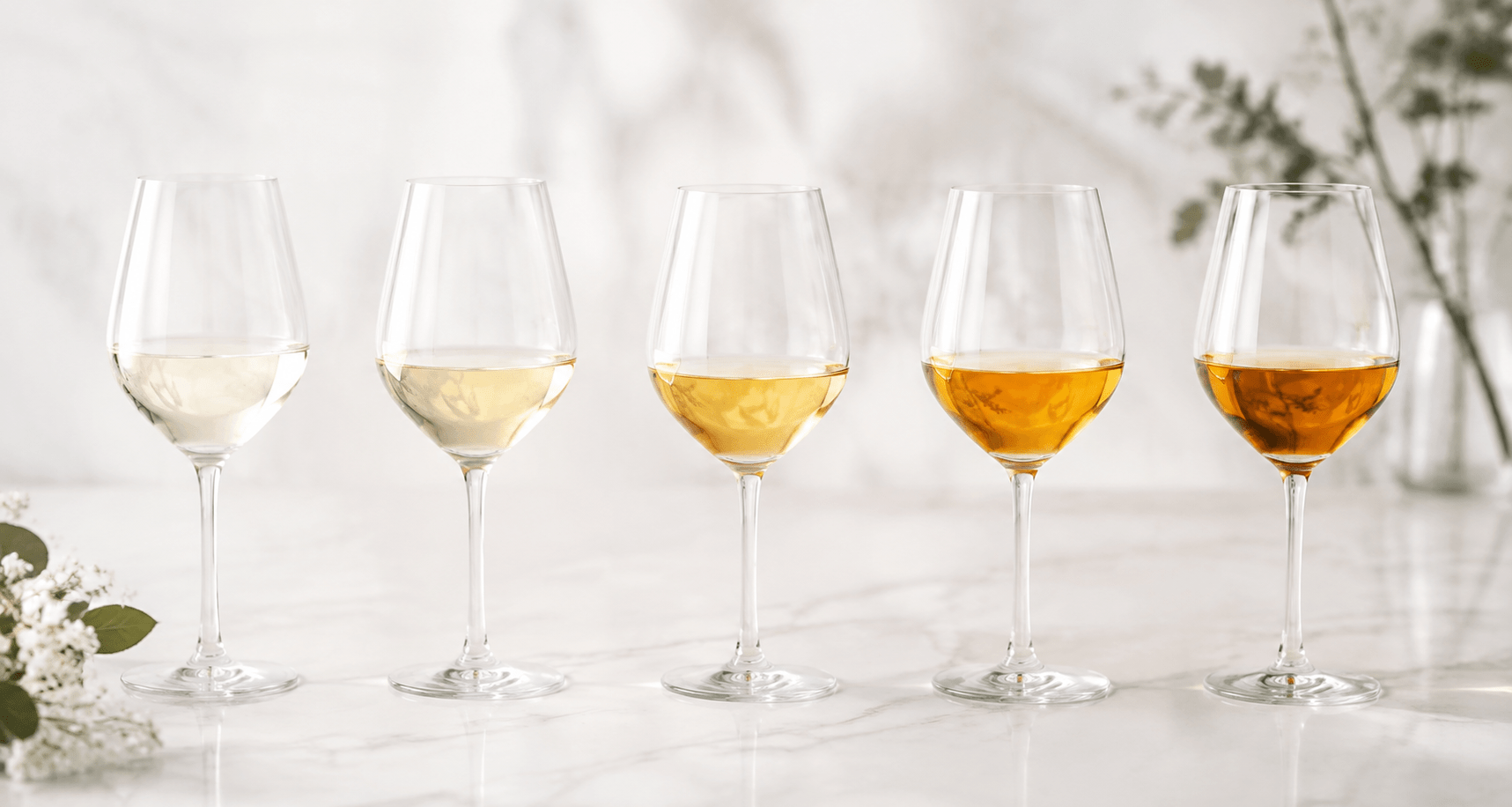
Fino is pale, bone-dry, and crisp, with almond and bread notes from flor aging. Manzanilla is a fino made in the seaside town of Sanlúcar, often lighter and more saline. Amontillado begins life under flor, then the flor fades and the wine continues aging with air, giving amber color and flavors of hazelnut and dried orange while staying dry. Oloroso ages oxidatively from the start, becoming dark, full-bodied, and rich with walnut, toffee, and leather, yet it is naturally dry. Palo cortado is a rare style with the elegance of amontillado and the richness of oloroso. Pedro Ximénez, or PX, is made from sun-dried grapes and tastes like liquid raisins, figs, and molasses. Cream sherry is usually oloroso sweetened with PX. See port vs. sherry for how it compares with port.
Sherry is one of the world’s great food wines, especially with Spanish tapas. Chilled fino and manzanilla love salty, savory bites: olives, salted almonds, jamón, fried fish, shrimp, and sushi. They are also one of the few wines that handle tricky foods like asparagus, artichokes, and eggs. Amontillado pairs with mushroom dishes, consommé, roast chicken, and aged Manchego. Oloroso works with hearty stews, game, and red meat, and makes a warming match for hard cheeses. Sweet Pedro Ximénez can be poured over vanilla ice cream or served with blue cheese, chocolate, or dried fruit. For more party ideas, see wine with charcuterie and wine with paella. Dry sherry is also a great splash in pan sauces and soups.
Temperature makes a huge difference. Serve fino and manzanilla very cold, around 45°F, just like a crisp white wine. Amontillado and palo cortado taste best lightly chilled, around 55°F. Oloroso can be served at about 55–60°F, and Pedro Ximénez slightly chilled, which keeps its sweetness from feeling heavy. Use a small white-wine glass rather than a tiny traditional sherry glass, so the aromas have room to develop. Pours are typically 2–3 ounces. Sherry is also excellent in cocktails: dry fino and amontillado add a savory, nutty edge to drinks like a sherry cobbler or a bamboo, which mixes dry sherry with dry vermouth. Light, dry sherry over ice with tonic water is a refreshing alternative to a gin and tonic.
Shelf life depends on style. Fino and manzanilla are the most delicate. Once their flor protection is gone, they behave like white wine, so buy fresh bottles, keep them in the fridge, and finish them within about a week after opening. Unopened, they are best within a year or so of bottling. Amontillado and palo cortado last a few weeks once opened. Oloroso, already aged with air, can stay pleasant for a month or more. Pedro Ximénez and cream sherry, thanks to their sugar, last the longest, often a couple of months. Store all sherry bottles upright, which is the traditional practice, in a cool, dark place. For comparison with other styles, see our guide to how long opened wine lasts.
| Sherry Style | Taste and Sweetness | Serve With |
|---|---|---|
| Fino | Bone dry; almond, bread, crisp | Olives, almonds, fried seafood |
| Manzanilla | Bone dry; salty, sea air, light | Shrimp, oysters, jamón |
| Amontillado | Dry; hazelnut, dried orange, amber | Mushrooms, soups, Manchego |
| Oloroso | Dry; walnut, toffee, full body | Stews, game, aged cheese |
| Pedro Ximénez | Very sweet; raisin, fig, molasses | Vanilla ice cream, blue cheese |
| Cream | Sweet; caramel, dried fruit | Cakes, nuts, after dinner |
Chill fino and manzanilla to about 45°F and finish within a week of opening.
Salty snacks like olives, almonds, and ham make dry sherry shine.
Drizzle Pedro Ximénez over vanilla ice cream for an easy, luxurious dessert.
Learn Your Taste
Answer a few simple questions and discover styles that fit your palate.
Take the Wine QuizMost sherry is dry. Fino, manzanilla, amontillado, palo cortado, and oloroso are all naturally dry. Sweet styles include Pedro Ximénez, Moscatel, and cream sherry, which is usually oloroso sweetened with PX.
Sherry comes from southern Spain, is mostly made from white Palomino grapes, and is fortified after fermentation, so most styles are dry. Port comes from Portugal, uses red grapes, and is fortified during fermentation, so it is sweet.
Yes, especially fino and manzanilla, which should be kept cold and finished within about a week. Richer styles like oloroso and Pedro Ximénez last longer, but the fridge still helps keep them fresh.
Cooking sherry is a low-quality product, usually with added salt and preservatives, sold in grocery stores. For cooking, a real dry sherry like fino or amontillado gives much better flavor in soups, sauces, and stir-fries.
Sherry typically contains about 15–20% alcohol. Fino and manzanilla sit near 15%, while oloroso and sweet styles are usually higher, often around 17–20%. Servings are smaller than table wine because of this.
A solera is a system of barrels arranged by age. Wine is bottled from the oldest barrels, which are refilled with slightly younger wine, and so on down the line. This blending keeps sherry's style consistent from year to year.