Look for Alto Maipo
Alto Maipo on the label signals structured, age-worthy Cabernet from the Andes foothills.

Understand Wine. Enjoy Every Glass.
Wine Regions
Right on Santiago's doorstep, the Maipo Valley makes Chile's most celebrated Cabernet Sauvignon. Learn why it is so good, what it tastes like, and how it compares with other Chilean regions.
Start Learning
The Maipo Valley surrounds Santiago, Chile’s capital, in the center of this long, narrow country. Of all the Chilean wine regions, it is the oldest center of quality winemaking, and many of the country’s historic estates were founded here. The valley follows the Maipo River west from the Andes toward the Pacific Coast Range. The climate is Mediterranean: long, hot, dry summers, almost no rain during the growing season, and plenty of sunshine. What keeps the wines balanced is the mountains. Every evening, cold air slides down from the snowy Andes, dropping temperatures sharply and preserving the grapes’ acidity and color. Soils are largely alluvial, a mix of gravel, stones, and sand washed down by the river, which drain well and keep vine vigor in check. Irrigation from mountain snowmelt is common, since summer rain is so scarce.

Cabernet Sauvignon is the undisputed king of Maipo. It shows ripe blackcurrant, black cherry, and cassis, with smooth but firm tannins, and often a fresh note of mint, eucalyptus, or dried herbs that many drinkers recognize as a Maipo trademark. The best are frequently blended with Merlot, Cabernet Franc, or Carmenère in a Bordeaux style. Carmenère is Chile’s signature grape. Long confused with Merlot in Chilean vineyards, it was correctly identified only in the 1990s. It gives plummy, spicy wine with a green-pepper and smoky edge, and it needs a warm site to ripen fully. Merlot adds soft, plush red fruit, while Syrah makes dark, peppery reds in the warmer spots. Some Chardonnay and Sauvignon Blanc grows here too, but cooler coastal regions handle whites better.

The Maipo divides into three zones, and each changes the wine. Alto Maipo, the high eastern part against the Andes foothills, includes areas such as Puente Alto and Pirque. Its rocky, poor soils and cold mountain nights produce the most structured, perfumed, and age-worthy Cabernet in Chile, and many of the country’s priciest reds come from here. Central Maipo, around the valley floor near towns like Buin and Isla de Maipo, is warmer and flatter. It makes riper, rounder, fruit-forward reds and much of the region’s good-value wine. Pacific Maipo, the western end toward the coast, is cooler thanks to ocean influence and is newer to quality winemaking; it suits fresher reds and some whites. If a label says Alto Maipo, expect a more serious, firmly built Cabernet that benefits from a few years in the bottle.
Chile’s vineyards stretch along hundreds of miles, and each valley has a specialty. Maipo is the reference point for Cabernet. Just to the west, the cool, foggy Casablanca Valley is famous for crisp Sauvignon Blanc, Chardonnay, and Pinot Noir. To the south, Colchagua makes rich, warm-climate Carmenère, Syrah, and red blends. Aconcagua, to the north, produces bold reds along with cool coastal whites. Farther south, Maule, Itata, and Bío Bío are known for old-vine País, Carignan, Cinsault, and cooler whites. A useful way to remember it: the Chilean wine regions near the coast make whites and Pinot Noir, the warm central valleys make big reds, and the Andes foothills, like Alto Maipo, make the most structured reds. Across the mountains, Argentina’s Mendoza makes Malbec under similar high-altitude conditions.
Start with a Maipo Valley Cabernet Sauvignon in the everyday price range. It is one of the best values in red wine and a great way to taste the region’s dark fruit and minty freshness. Then compare it with a Carmenère from the same valley to see Chile’s signature grape side by side. Maipo reds are made for grilled meat. Try Cabernet with a ribeye or flank steak, as you would in our guide to wine with steak, or with lamb chops rubbed in rosemary. Carmenère’s spice suits beef empanadas, chili, and smoky barbecue. A Merlot blend works with roast pork or a mushroom stew. Serve these reds at 60 to 65°F, and decant young Alto Maipo Cabernet for 30 to 60 minutes. Simple, fruity bottles are among the best red wines under $20.
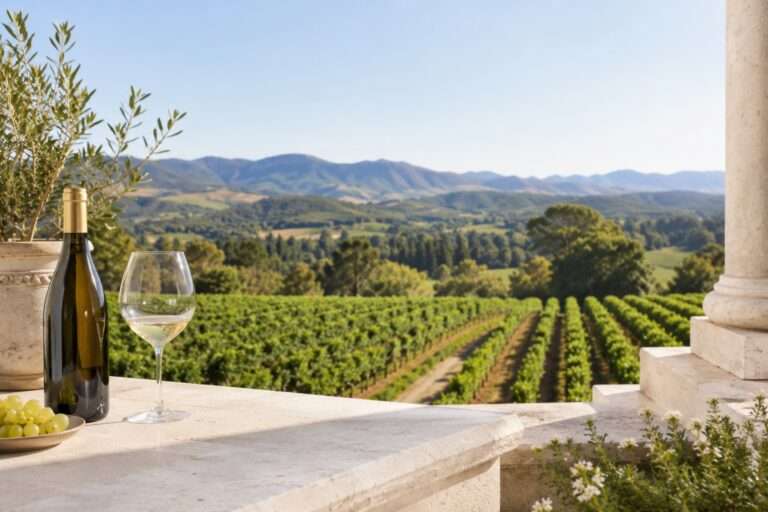
Maipo is one of the easiest wine regions in the world to visit because it starts at the edge of a capital city. Many wineries in Pirque, Puente Alto, and Buin are an hour or less from central Santiago, so a day trip is simple. Some can even be reached by public transport and a short taxi ride. Harvest runs roughly from March into May, which is a lively time to visit, but spring and fall offer pleasant weather and fewer crowds. Summer days can be very hot. Book tastings ahead, as many estates require reservations, and consider a driver or organized tour so no one has to drive after tasting. Pair your visit with a meal of grilled meats, and look up at the Andes rising behind the vines: that view explains the cool nights that make Maipo Cabernet so good.
| Grape or Style | Character | Try It With |
|---|---|---|
| Cabernet Sauvignon | Blackcurrant, cherry, mint, firm smooth tannins | Ribeye, lamb chops, hard cheese |
| Alto Maipo Cabernet | Structured, perfumed, built to age | Prime rib, braised short ribs |
| Carmenère | Plum, spice, green pepper, smoky edge | Empanadas, chili, barbecue |
| Merlot | Soft plum and red berry, plush texture | Roast pork, mushroom dishes |
| Syrah | Dark fruit, black pepper, meaty notes | Grilled sausages, burgers |
| Bordeaux-style blend | Layered black fruit, cedar, firm finish | Steak, roast beef, game |
Alto Maipo on the label signals structured, age-worthy Cabernet from the Andes foothills.
Pour them together to learn Chile's two key reds and spot Carmenère's green peppercorn note.
Many Maipo wineries sit within an hour of central Santiago; book tastings ahead.
Learn Your Taste
Answer a few simple questions and discover styles that fit your palate.
Take the Wine QuizCabernet Sauvignon. The Maipo Valley, especially Alto Maipo in the Andes foothills, makes Chile's most famous Cabernet, with ripe black fruit, firm tannins, and a fresh minty note. Bordeaux-style blends from the same area are also highly regarded.
The best known are Maipo for Cabernet, Casablanca and San Antonio for cool-climate whites and Pinot Noir, Colchagua for rich reds, Aconcagua for bold reds, and Maule, Itata, and Bío Bío in the south for old-vine and cooler-climate wines.
Many Maipo Cabernets show a mint or eucalyptus note. It is often linked to the region's cool nights, the grape's natural herbal character, and nearby native plants. It is a hallmark of the style, not a flaw.
Yes. Everyday Maipo Cabernet and Carmenère are some of the best values in red wine, often well under $20. Top Alto Maipo reds cost much more but still compare well with similar wines from Napa or Bordeaux.
Carmenère has more spice, a green-pepper or herbal note, and a smoky edge, while Merlot is rounder and softer with plum and cherry. Chile grew Carmenère for decades thinking it was Merlot until the vines were identified in the 1990s.
Yes, easily. Many wineries in Pirque, Puente Alto, and Buin are under an hour from central Santiago. Book tastings in advance and use a driver or tour so you can taste safely.