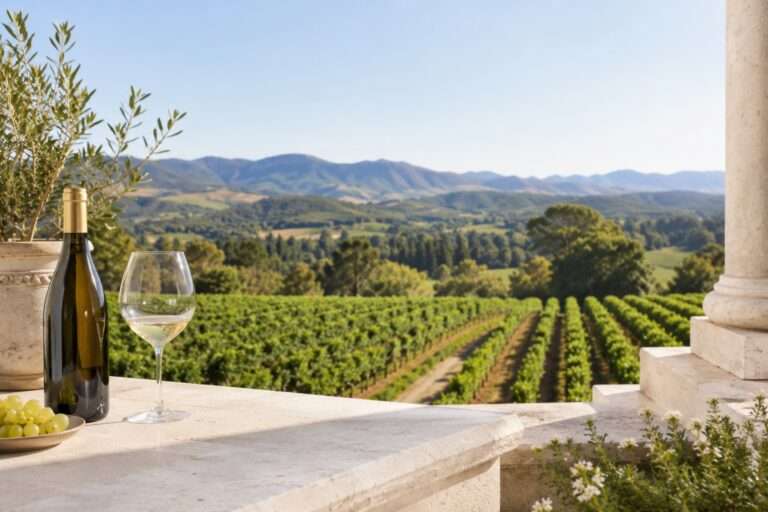
Slight Chill
Serve at 60–65°F so Merlot's soft fruit tastes fresh, not flabby.

Understand Wine. Enjoy Every Glass.
Grape Varieties
Merlot is the smooth, plummy red that wins over almost everyone. Learn what it tastes like, why Bordeaux's Right Bank prizes it, and how to pair it.
Start Learning
Merlot wine is all about plush fruit. Expect ripe plum, black cherry, raspberry, and blackberry, often wrapped in notes of milk chocolate, mocha, vanilla, and sometimes bay leaf or dried herbs. The texture is the big selling point. Merlot grapes are larger and thinner-skinned than Cabernet Sauvignon, so the tannins feel softer and rounder, more velvet than sandpaper. Acidity is moderate, and body runs from medium to full depending on climate. Cooler regions make a fresher, more savory Merlot with red fruit, cedar, and earth. Warmer regions make a riper, fuller style that tastes of fruitcake, cocoa, and sweet spice, often with 14% alcohol or more. Oak aging adds toast and vanilla. With age, the best Merlots develop truffle, leather, and forest-floor notes.

Merlot is the most planted grape in Bordeaux, and it shines on the Right Bank of the Dordogne River. In Pomerol and Saint-Émilion, cool clay and limestone soils give Merlot-led blends of silky texture, plum, and earth, with Cabernet Franc often blended in. Some of the most expensive wines in the world are Pomerol Merlot. In the United States, Washington’s Columbia Valley makes ripe yet fresh Merlot with structure and dark fruit, while Napa Valley and Sonoma give fuller, richer examples. Chile offers juicy, affordable Merlot. Northern Italy and Tuscany use it on its own and in blends, and it appears in southern France as a budget varietal wine. Long Island in New York grows a lighter, earthier style.

Serve Merlot at 60–65°F, a little cooler than room temperature. Warm Merlot can taste soft to the point of flabby, while a slight chill sharpens the fruit. Most everyday Merlot is made to drink young and needs no decanting; simply open and pour. Fuller, oak-aged examples from Pomerol, Saint-Émilion, or Napa benefit from 20 to 30 minutes of air, and older bottles should be poured gently off their sediment. A standard red wine glass or Bordeaux-style glass works well; see our wine glass guide for the details. An opened bottle keeps for three to four days in the fridge with the cork back in. Let it sit out for about 20 minutes before your next glass so the aromas wake up again.
Merlot’s soft tannins make it a flexible food wine that will not clash with lighter meats. Roast chicken, especially with herbs or a pan sauce, is an easy match. Pork tenderloin, duck, meatloaf, and burgers all suit its plummy fruit. Mushroom dishes, such as mushroom risotto or a wild mushroom pasta, bring out the earthy side of Right Bank Merlot. Tomato-based pasta works with fruitier styles. It is also a friendly choice for filet mignon, where big Cabernet would overpower the lean meat. For cheese, try semi-firm options like Gouda, Gruyère, or young Manchego. Skip very spicy dishes and delicate white fish, which make Merlot taste flat or metallic.
The classic comparison is Cabernet Sauvignon vs Merlot: Cabernet has firmer tannin, more acidity, and blackcurrant flavors, while Merlot is rounder and plummier. If you like Merlot’s softness but want a little more lift, try Cabernet Franc, Merlot’s parent and Right Bank blending partner, which brings red fruit and peppery herbs. Malbec is another plush, dark-fruited red; see Malbec vs Merlot for the differences. Chile’s Carmenère was long mistaken for Merlot in the vineyard and shares its softness, with more green pepper. For something lighter, compare Pinot Noir vs Merlot.
Merlot’s reputation dipped in the early 2000s because of a flood of bland, sweet-tasting bottles, but quality Merlot is easy to find if you know where to look. For classic, food-friendly elegance, choose a Right Bank Bordeaux: Saint-Émilion, Pomerol, or the more affordable satellites such as Lalande-de-Pomerol and Montagne-Saint-Émilion. For ripe fruit with structure, Washington State is one of the most reliable sources at fair prices. Chilean Merlot is a dependable bargain, often under $15. A bottle naming a specific region rather than a broad state usually signals more care. Check the alcohol: around 13.5% suggests a fresher style, while 15% points to a riper, richer one. Both can be excellent; it depends on what you enjoy.
| Region | Style | What to Expect |
|---|---|---|
| Pomerol & Saint-Émilion, France | Merlot-led blends, elegant | Plum, truffle, silky tannin, ages well |
| Columbia Valley, Washington | Ripe with structure | Black cherry, cocoa, fresh acidity |
| Napa Valley & Sonoma, California | Full and oaky | Dark plum, vanilla, mocha, plush texture |
| Chile | Fruity and affordable | Juicy red plum, soft tannin, easy drinking |
| Tuscany, Italy | Rich, polished | Dark fruit, sweet spice, often in blends |
| Long Island, New York | Lighter, earthy | Red cherry, herbs, moderate alcohol |
Serve at 60–65°F so Merlot's soft fruit tastes fresh, not flabby.
Saint-Émilion and its satellite appellations offer Merlot elegance at fair prices.
Merlot shines with chicken, pork, duck, and filet mignon rather than fatty ribeye.
Learn Your Taste
Answer a few simple questions and discover styles that fit your palate.
Take the Wine QuizNo. Most Merlot is dry. Its ripe plum and chocolate flavors and soft tannins can give an impression of sweetness, especially in warm-climate bottles, but there is little or no residual sugar.
Usually, yes. Merlot tends to have softer tannins and slightly less acidity, so it feels rounder and gentler. Ripe Merlot can still be full-bodied and high in alcohol, though.
A little. Serve Merlot at 60–65°F. If the bottle has been sitting in a warm kitchen, 15 minutes in the refrigerator brings it to the right temperature.
Roast chicken, pork, duck, burgers, mushroom dishes, and tomato-based pasta are all reliable. It also works with filet mignon and semi-firm cheeses such as Gouda and Gruyère.
Yes. Its smooth texture, ripe fruit, and gentle tannin make Merlot one of the most approachable reds. A Washington or Chilean bottle is an easy, affordable place to start.
It is the area east of the Dordogne River, including Saint-Émilion and Pomerol. Merlot dominates the blends there, giving wines that are softer and plummier than Cabernet-led Left Bank Bordeaux.