Think Silk, Not Power
Pick reds with soft tannins; lean filet cannot tame a big Cabernet.

Understand Wine. Enjoy Every Glass.
Wine Pairings
Filet mignon is the most tender steak there is, but also the leanest and mildest. That changes the wine rules: silk and elegance beat raw power here.
Start Learning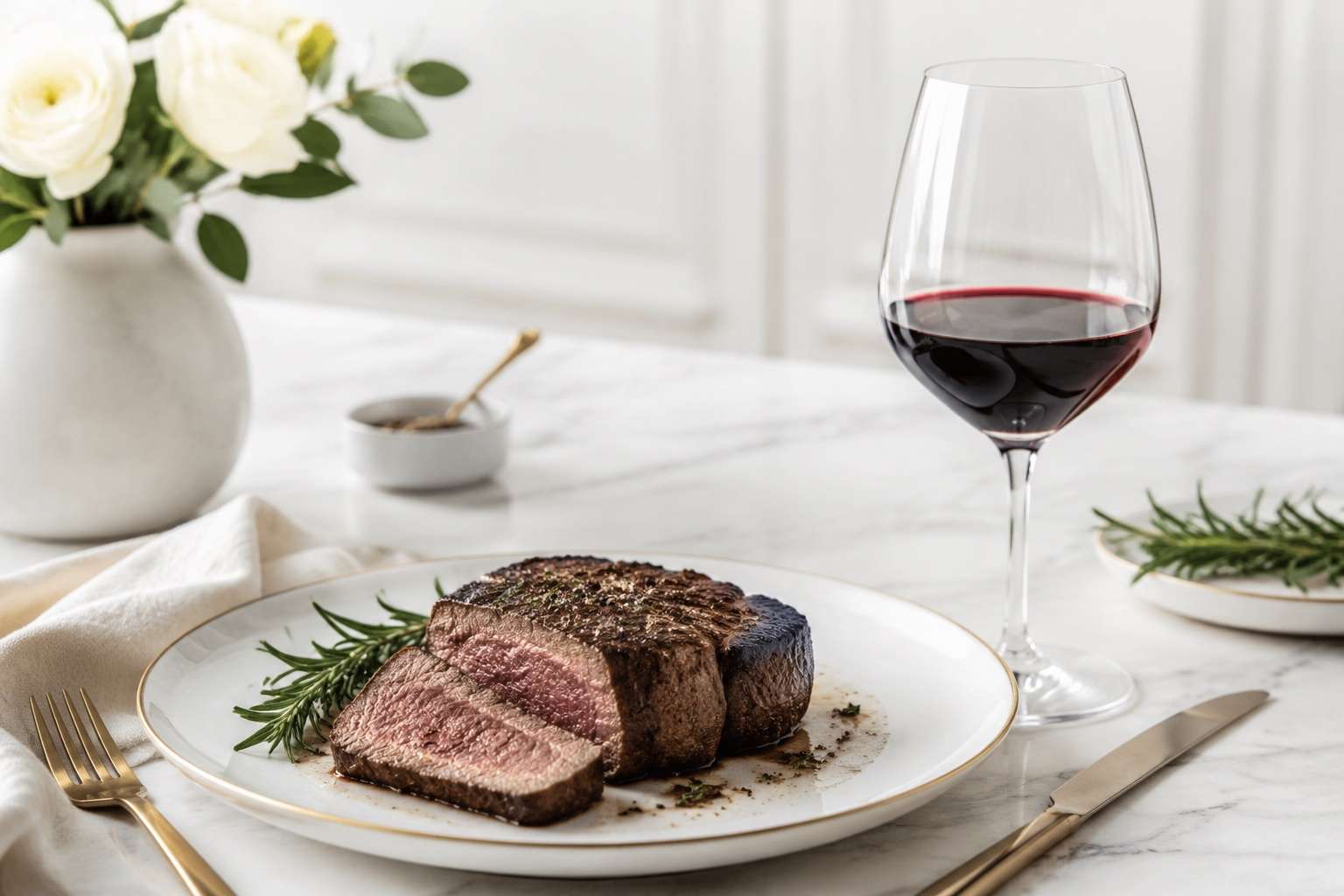
Most steak pairings lean on big, tannic reds, because tannins bind to fat and soften against rich, marbled meat. Filet mignon is different. Cut from the tenderloin, it has very little fat and a mild, buttery flavor. Without much fat to tame them, strong tannins can feel harsh and drying, and a powerful wine simply drowns the delicate beef. The best wine with filet mignon has gentle tannins, a silky texture, and moderate body. Pinot Noir is the star match, with red cherry, raspberry, and earthy, forest-floor notes that flatter the meat without dominating it. Merlot is the other top choice, rounder and plummier, with velvety tannins. Our Pinot Noir vs. Merlot guide explains how they differ.
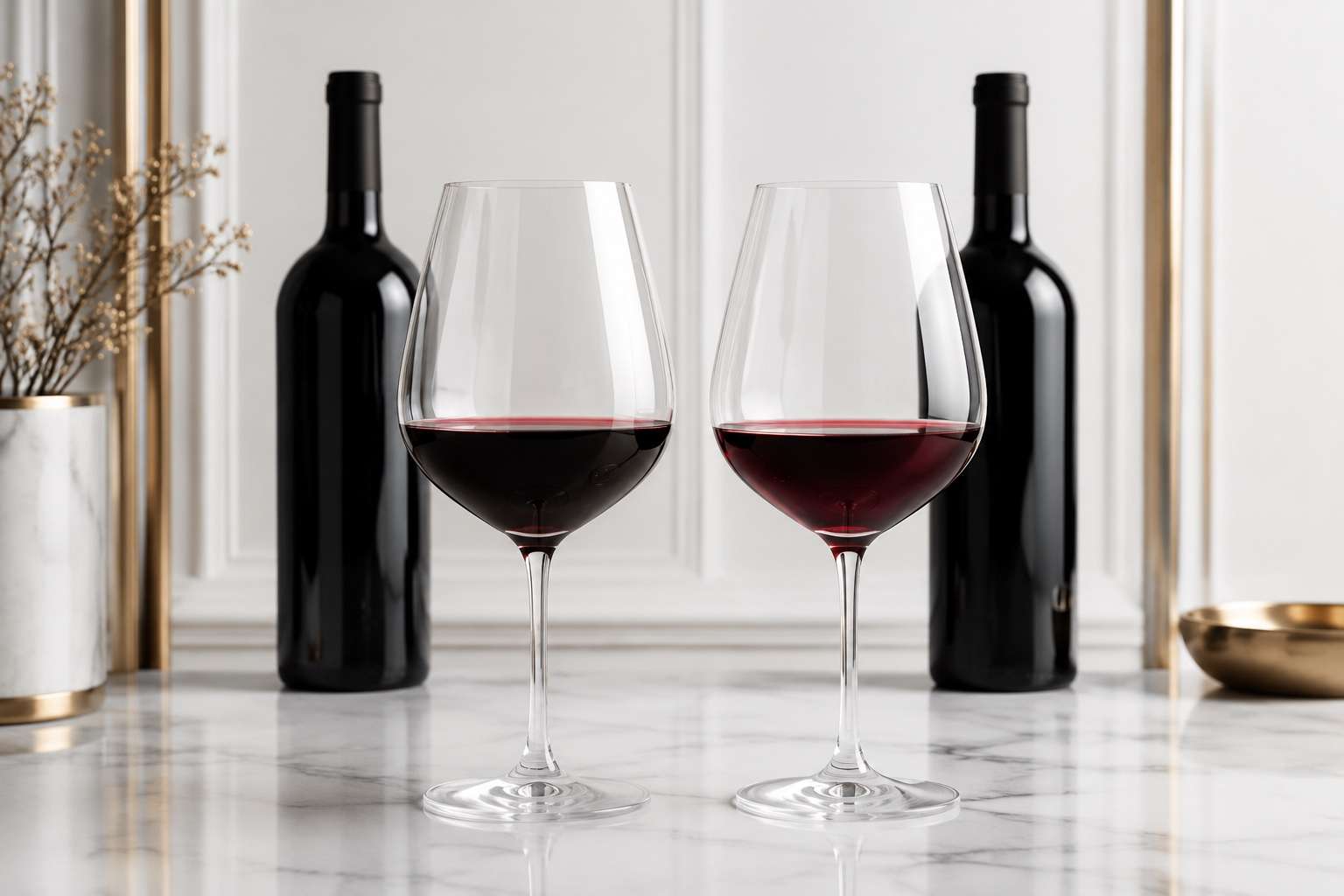
Red Burgundy is the classic Old World pick: elegant Pinot Noir with bright acidity and earthy depth. Oregon Pinot Noir from the Willamette Valley offers similar finesse with a touch more fruit, and California Pinot is riper still. For Merlot, Right Bank Bordeaux from Saint-Émilion or Pomerol is the benchmark, with plum, truffle, and soft, fine tannins. Washington State Merlot is a great New World option. Cabernet Franc from Chinon in the Loire Valley is a lighter, herbal choice with red fruit and gentle grip. Rioja Reserva, made mainly from Tempranillo, brings softened, oak-aged tannins and dried cherry notes. Even Cabernet Sauvignon can work if it is older, with tannins that have mellowed over years in the bottle.
Because filet is mild, the sauce often decides the wine. Mushroom or red-wine sauce brings earthy, savory depth that loves Pinot Noir and Burgundy. Bordelaise, made with red wine, shallots, and bone marrow, is named after Bordeaux and pairs naturally with a Bordeaux blend. Béarnaise or garlic butter adds rich fat, which suits Merlot or a structured, barrel-aged Chardonnay. Peppercorn sauce points toward Syrah, whose black-pepper notes echo the sauce. Bacon-wrapped filet gains smoke, salt, and fat, so it can handle bolder reds such as Cabernet Sauvignon, Syrah, or Malbec. Blue-cheese crusted filet is rich and pungent; a ripe Cabernet or Zinfandel stands up to it. Beef Wellington, filet wrapped in mushroom duxelles and pastry, is a showpiece pairing for a fine red Burgundy or a mature Bordeaux.
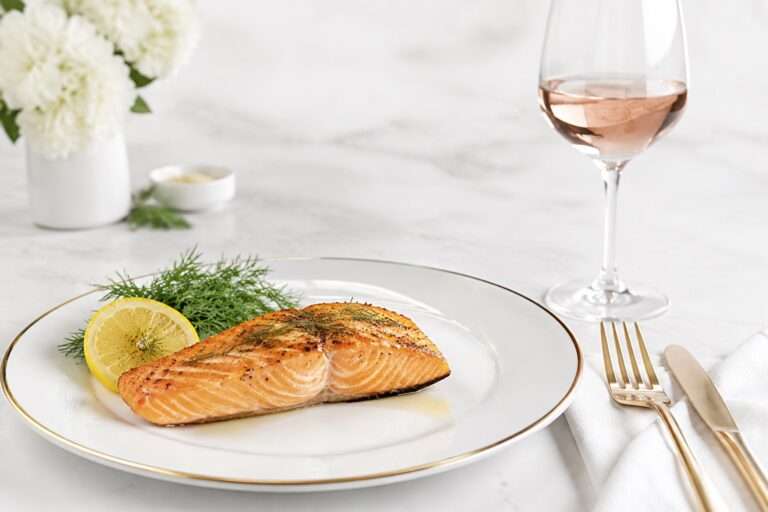
Filet mignon is the one steak where white wine truly works. Its lean, tender texture welcomes a full-bodied, barrel-aged Chardonnay, especially when the steak is finished with butter or served with béarnaise. White Burgundy from Meursault or a balanced California Chardonnay brings creamy texture, toasty oak, and citrus freshness. Champagne is another elegant choice; vintage or Blanc de Noirs styles, made from red grapes, have the weight for beef, and their bubbles refresh the palate. Surf and turf, filet with lobster tail, is a classic dilemma. A rich Chardonnay bridges both, since it loves lobster and butter-basted beef. If you prefer red, choose a light, silky Pinot Noir, which will not clash with shellfish the way a tannic Cabernet can. A fuller dry rosé is a crowd-pleasing middle ground.
The most common mistake is pouring the biggest red in the house. A young, powerful Cabernet Sauvignon, Tannat, or Petite Sirah has tannins built for fatty ribeye; with lean filet, they can taste drying and bitter and cover the meat’s subtle flavor. Very high-alcohol, jammy reds can feel heavy and sweet next to such a delicate cut. Heavily oaked wines can turn the plate into a vanilla-and-toast show. On the white side, light and neutral wines like Pinot Grigio lack the body to keep up. Sweet wines clash with savory beef. If you love Cabernet, pick an older bottle or wrap the filet in bacon to add fat. For marbled cuts that suit bolder reds, see our full guide to wine with steak.
Serve Pinot Noir slightly cool, at 55–60°F, and Merlot or Bordeaux at 60–65°F. Pinot Noir shows its aromas best in a wide, balloon-shaped glass, while Merlot suits a standard red wine glass. Most Pinot Noir and Merlot need little or no decanting; 15 to 20 minutes of air is enough for young bottles. Filet mignon is often cooked medium-rare, which keeps it juicy and flatters silky reds. Cooked past medium, filet dries out, so pick an even softer, fruitier wine. For value, look to Chilean or New Zealand Pinot Noir, Bourgogne Rouge, Washington Merlot, Bordeaux Supérieur, and Chinon, many often under $25. For an anniversary or date night, a Premier Cru Burgundy or a Pomerol makes the dinner unforgettable.
| Filet Mignon Style | Best Wine | Why It Works |
|---|---|---|
| Simply seared, medium-rare | Pinot Noir or red Burgundy | Silky tannins flatter lean, tender beef |
| With béarnaise or butter | Merlot or barrel-aged Chardonnay | Round texture matches rich sauce |
| Mushroom or red-wine sauce | Pinot Noir | Earthy notes echo mushrooms and reduction |
| Bacon-wrapped | Cabernet Sauvignon or Syrah | Added fat and smoke can handle more tannin |
| Beef Wellington | Fine Burgundy or mature Bordeaux | Elegance and complexity suit a showpiece dish |
| Surf and turf | Rich Chardonnay or light Pinot Noir | Bridges lobster and beef |
Pick reds with soft tannins; lean filet cannot tame a big Cabernet.
Mild filet takes its cue from béarnaise, peppercorn, or red wine sauce, so match the wine to it.
A bacon wrap adds fat that lets Cabernet or Syrah work.
Learn Your Taste
Answer a few simple questions and discover styles that fit your palate.
Take the Wine QuizPinot Noir is the top pick, followed closely by Merlot. Both have silky tannins and moderate body that complement lean, tender filet without overpowering its mild, buttery flavor.
Sometimes. Young, tannic Cabernet can overwhelm lean filet. It works better with an older, mellowed Cabernet, or when the filet is bacon-wrapped or served with a rich sauce that adds fat.
A full-bodied, barrel-aged Chardonnay is the best white choice, especially with butter or béarnaise. White Burgundy from Meursault is a classic. Vintage Champagne also pairs beautifully.
The bacon adds fat, salt, and smoke, so you can choose a bolder red. Cabernet Sauvignon, Syrah, and Malbec all work, as does a ripe Merlot.
Fine red Burgundy is the classic match, because its earthy notes echo the mushroom duxelles. A mature Bordeaux or a Right Bank Merlot blend is another elegant choice.
A rich Chardonnay bridges lobster and filet best, since it loves butter and shellfish. If you want red, choose a light, silky Pinot Noir that will not clash with the seafood.