Go Golden
Honeyed dessert wines like Sauternes and Tokaji echo vanilla custard best.

Understand Wine. Enjoy Every Glass.
Wine Pairings
Crème brûlée pairs silky vanilla custard with a crackly caramel crust. It calls for a golden, honeyed dessert wine. Here is what to pour with classic and flavored versions.
Start Learning
Crème brûlée is a rich baked custard of cream, egg yolks, sugar, and vanilla, topped with a thin layer of sugar caramelized until it cracks like glass. The dessert combines creamy, sweet, and slightly bitter caramel flavors. The best wine with crème brûlée must be at least as sweet as the custard, or it will taste sour. It also needs bright acidity to cut through the cream and refresh your palate. Golden dessert wines made from late-harvested or botrytized grapes are ideal. Botrytis, also called noble rot, is a beneficial mold that concentrates grape sugars and adds honey, apricot, and saffron notes. Those flavors echo crème brûlée’s vanilla and caramel. Aged golden wines often develop toffee and nutty notes too, which mirror the burnt-sugar crust. The result is harmony rather than contrast.
Sauternes, from Bordeaux, is the classic choice. Made mainly from Sémillon affected by noble rot, it has honey, apricot, vanilla, and citrus flavors and a creamy texture that mirrors the custard. Neighboring Barsac offers a similar style. Tokaji Aszú, from Tokaj in Hungary and made mostly from Furmint, has vivid acidity, apricot, orange marmalade, and honey notes. Late-harvest Riesling is lighter, with bright acidity and peach and honey flavors that refresh the palate. Ice wine, made from grapes frozen on the vine, is intensely sweet and luscious with high acidity, a luxurious match. Muscat de Beaumes-de-Venise, a fortified sweet Muscat from the southern Rhône, offers orange-blossom and apricot notes at a gentler price.
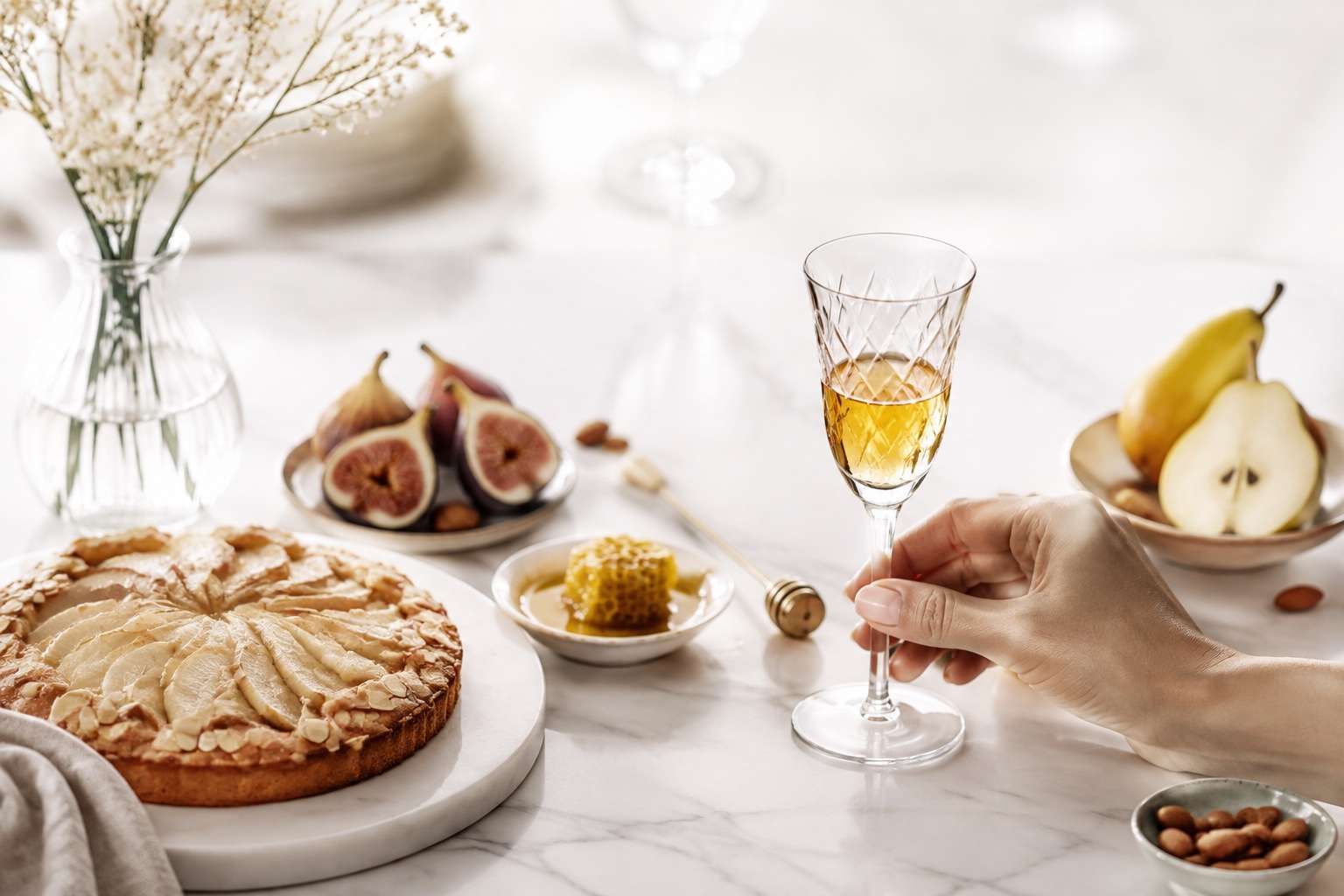
Many crème brûlée recipes add flavors, and each shifts the pairing. Vanilla bean, the classic, pairs best with Sauternes or Tokaji. Espresso or coffee crème brûlée suits tawny Port or Pedro Ximénez sherry, whose coffee and raisin notes echo the flavor. Chocolate crème brûlée pairs with ruby Port or Banyuls. Lavender crème brûlée is floral and works with Moscato d’Asti or late-harvest Riesling. Lemon or orange crème brûlée suits Tokaji, whose orange marmalade notes are a natural match. Raspberry crème brûlée pairs with Brachetto d’Acqui or a sweet sparkling rosé. Pumpkin or chai-spiced crème brûlée loves tawny Port or Madeira. Salted caramel crème brûlée suits tawny Port. Coconut crème brûlée pairs with late-harvest Riesling or Moscato.
Fortified wines work well with crème brûlée, especially when the dessert features caramel, coffee, or spice. Tawny Port has caramel, toffee, and toasted nut notes that echo the burnt-sugar crust. Sweet Madeira (Bual or Malmsey) brings tangy acidity that cuts the cream. Muscat de Beaumes-de-Venise and other fortified Muscats are fragrant and fruity. Sparkling wine is a lighter option. Moscato d’Asti is lightly sweet and fizzy with low alcohol, refreshing after a rich meal. Demi-sec Champagne also works. Dry brut sparkling wine tastes sour next to sweet custard. If you prefer something lighter overall, a late-harvest white is less rich than Sauternes or Tokaji but still sweet enough to match the dessert.
Dry wines are the biggest mistake; dry whites, reds, and rosé all taste sour and thin next to sweet custard. Tannic reds are especially harsh with cream and caramel. Dry brut Champagne and Prosecco taste acidic and bitter. Low-acid sweet wines can feel heavy and cloying with such a rich dessert. Very dark, syrupy wines like Pedro Ximénez can overpower a delicate vanilla crème brûlée, though they suit coffee versions. The best wine for crème brûlée is sweet, golden, and fresh, with enough acidity to keep each spoonful light.
Serve golden dessert wines like Sauternes, Tokaji, late-harvest Riesling, and ice wine chilled, around 45–50°F. Moscato d’Asti is best colder, about 40–45°F, and tawny Port slightly cool at 55–60°F. Pour two to three ounces per person in a small white wine glass. Many dessert wines come in half bottles (375 ml), perfect for a dessert course for four to six. Opened sweet wines often keep for a week or more in the refrigerator. For value, Monbazillac and Loupiac offer Sauternes-like flavors for less, and late-harvest Riesling and Muscat de Beaumes-de-Venise are affordable. For more, see ice wine vs. dessert wine and wine with dessert.
| Crème Brûlée Flavor | Best Wine | Why It Works |
|---|---|---|
| Classic vanilla | Sauternes or Barsac | Honey and vanilla notes echo the custard |
| Lemon or orange | Tokaji Aszú | Orange marmalade notes and acidity match citrus |
| Espresso or coffee | Tawny Port or Pedro Ximénez | Coffee and caramel notes suit the flavor |
| Chocolate | Ruby Port or Banyuls | Dark fruit stands up to cocoa |
| Lavender | Moscato d'Asti or late-harvest Riesling | Floral notes echo lavender |
| Pumpkin or chai spice | Tawny Port or Madeira | Nutty, spicy flavors match warm spices |
Honeyed dessert wines like Sauternes and Tokaji echo vanilla custard best.
Tawny Port's toffee notes mirror the burnt-sugar top beautifully.
A 375 ml bottle of Sauternes or Tokaji serves four to six small custard-course pours.
Learn Your Taste
Answer a few simple questions and discover styles that fit your palate.
Take the Wine QuizGolden dessert wines with bright acidity, such as Sauternes, Tokaji Aszú, and late-harvest Riesling. Their honey, apricot, and vanilla notes echo the custard, while acidity cuts its richness.
Yes, it is a classic pairing. Sauternes' honey, apricot, and vanilla flavors and creamy texture mirror the custard, while its acidity keeps the pairing from feeling heavy.
Only sweeter styles. Demi-sec or doux Champagne can work, especially with fruit-flavored versions. Dry brut Champagne tastes sour and thin next to sweet custard and caramel.
Ruby Port or Banyuls. Chocolate adds richness and bitterness, so it needs a sweet red wine with dark fruit flavors. Tawny Port also works if the dessert includes caramel or coffee.
Yes, Moscato d'Asti is a lighter, refreshing match. Its gentle sweetness, fizz, and peach and orange-blossom notes suit vanilla, lavender, and fruit-flavored crème brûlée, especially after a big meal.
Tawny Port does. Its caramel, toffee, and toasted nut flavors echo the burnt-sugar crust, especially in coffee, caramel, or spiced versions. Ruby Port suits chocolate crème brûlée.