Make the Wine Sweeter Than the Dessert
Always choose a wine at least as sweet as the dessert, or it will taste sour.

Understand Wine. Enjoy Every Glass.
Wine Pairings
Dessert and wine can be a perfect finish or a sour surprise. One simple rule, plus a few classic pairings, makes it easy to get right.
Start Learning
The most important rule for wine with dessert is simple: the wine must be sweeter than the dessert. When a dessert is sweeter than the wine, the sugar strips away the wine’s fruit, leaving it tasting sour, thin, and bitter. That is why a dry red or a brut Champagne often disappoints with cake. Sweet wines solve the problem by matching sugar with sugar. Good dessert wines also need bright acidity, which keeps them refreshing rather than syrupy and cuts through cream and butter. A second rule is to match intensity and color. Light, fruity desserts suit lighter, fresher sweet wines, while rich, dark, caramelized desserts suit darker, richer wines. A third guide is flavor: echo the dessert’s main flavor in the wine, such as nutty with nutty or berry with berry. Learn more about the styles on our dessert wine page.
Fruit desserts call for fresh, aromatic sweet wines. Peach, apricot, and stone-fruit desserts love Moscato d’Asti, whose peach and orange-blossom notes echo the fruit, or a late-harvest Riesling. Apple pie and apple tart pair with late-harvest Riesling, Tokaji, or a sweet Vouvray from Chenin Blanc, which shares the apple and honey notes. Lemon tart and lemon bars are very tart, so they need a sweet wine with high acidity, such as ice wine or a late-harvest Riesling. Berry desserts like raspberry tart or summer pudding suit Brachetto d’Acqui or ruby Port. Strawberry shortcake works with Moscato d’Asti or a sweet sparkling rosé; see wine with strawberries. Pumpkin pie, with warm spices, pairs with tawny Port or a late-harvest Gewürztraminer.
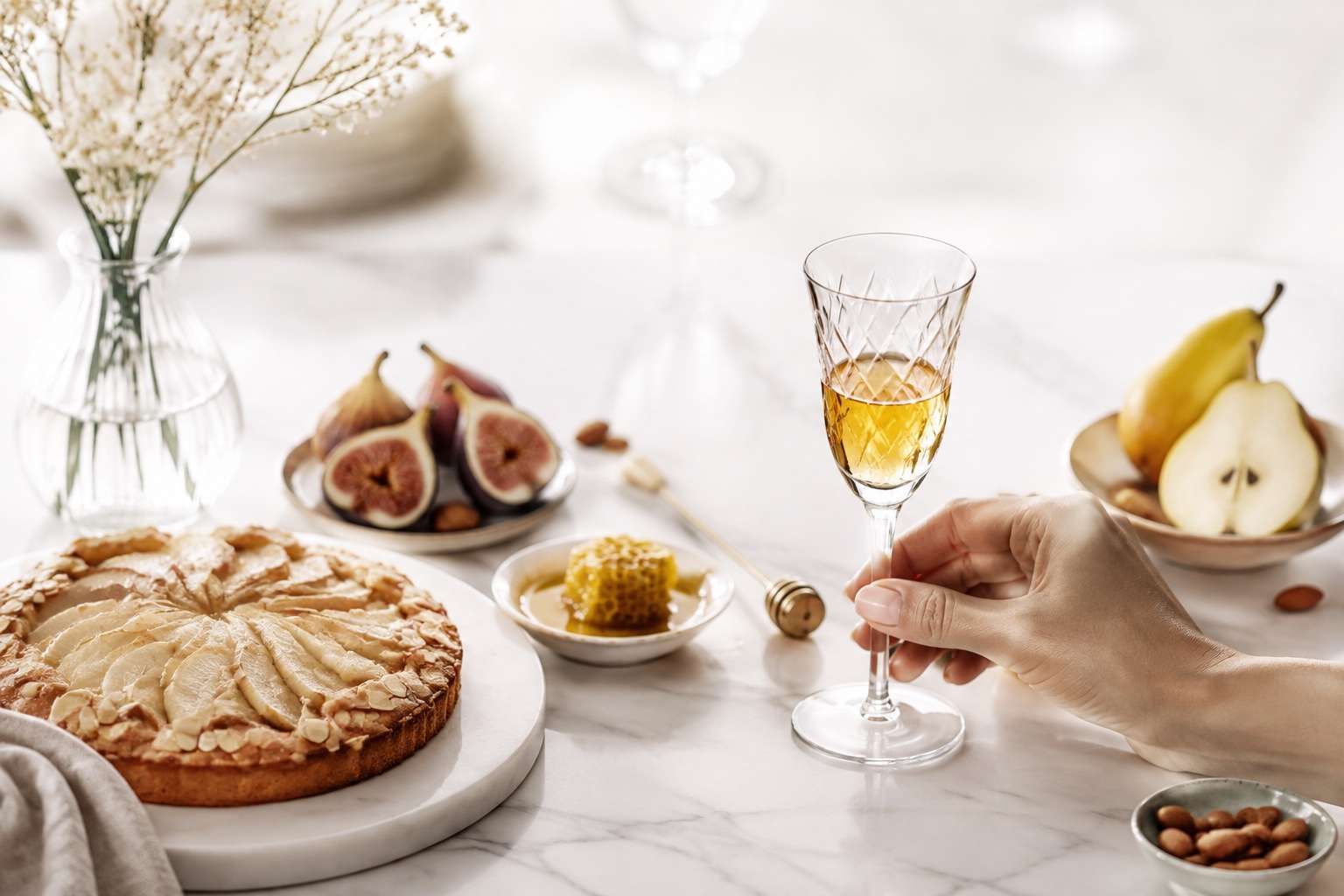
Creamy desserts want rich, honeyed sweet wines with bright acidity. Crème brûlée, with vanilla custard and burnt sugar, is a classic with Sauternes or Hungarian Tokaji Aszú; see wine with crème brûlée. Cheesecake, tangy and rich, works with late-harvest Riesling, Sauternes, or Moscato d’Asti; our wine with cheesecake guide covers flavored versions. Panna cotta is lighter and suits Moscato d’Asti. Flan and dulce de leche love tawny Port or a sweet Pedro Ximénez Sherry. Tiramisu, with coffee and mascarpone, is traditionally served with Vin Santo or Marsala; see wine with tiramisu. Rice pudding and bread pudding pair with tawny Port, Madeira, or late-harvest wine. Vanilla ice cream is wonderful with Pedro Ximénez Sherry poured right over the top.
Dark, rich desserts need dark, rich wines. Chocolate cake and brownies pair with ruby Port, Banyuls, or Pedro Ximénez Sherry; our wine with chocolate guide covers dark, milk, and white chocolate in detail. Pecan pie, with its toasted nuts and caramel, is perfect with tawny Port, sweet Madeira, or Pedro Ximénez Sherry. Sticky toffee pudding loves tawny Port or Malmsey Madeira. Caramel desserts and salted caramel pair with tawny Port or an aged sweet Madeira. Baklava, with honey, nuts, and phyllo, suits a sweet Muscat or Tokaji. Biscotti are classically dipped in Vin Santo, Tuscany’s amber dessert wine. Carrot cake with cream cheese frosting works with late-harvest Riesling or tawny Port. Learn how these fortified styles compare in Port vs Madeira.
Dry wines are the main mistake. A dry red like Cabernet Sauvignon or Merlot turns sour and bitter next to sweet cake, and its tannin clashes with sugar. Brut Champagne and other dry sparkling wines are a popular toast with wedding cake, but they often taste tart with sugary frosting; a demi-sec or doux sparkling wine, or Moscato d’Asti, is a better match. Dry white wines like Sauvignon Blanc taste thin and sharp with sweets. Another mistake is pairing a delicate dessert wine with a very rich dessert; a light Moscato d’Asti will vanish next to dense chocolate cake. The reverse is also true, since a heavy Port can overwhelm a light fruit sorbet. Finally, be careful with very sweet wines that lack acidity, which can taste cloying with already-rich desserts.
Serve most white dessert wines like Sauternes, late-harvest Riesling, and ice wine chilled, at about 45–50°F, and Moscato d’Asti a bit colder. Serve tawny Port at about 55–60°F and ruby Port slightly warmer, around 60–64°F. Pour small servings of 2 to 3 ounces, since dessert wines are rich and fortified wines are higher in alcohol. Use small glasses so the aromas concentrate. Many dessert wines come in half bottles, a smart, affordable way to try a style. Ruby and tawny Port and Madeira last for weeks after opening, so a single bottle can serve many desserts. Moscato d’Asti and Brachetto are very affordable, often under $20. Sauternes, Tokaji, and ice wine are splurges, but a little goes a long way. Learn how the sweet styles differ in ice wine vs dessert wine.
| Dessert | Best Wine | Why It Works |
|---|---|---|
| Fruit tart or peach cobbler | Moscato d'Asti or late-harvest Riesling | Fresh fruit notes and acidity echo the fruit |
| Apple pie | Late-harvest Riesling or Tokaji | Apple and honey flavors match the filling |
| Crème brûlée | Sauternes or Tokaji Aszú | Honeyed richness matches custard and caramel |
| Cheesecake | Late-harvest Riesling or Sauternes | Acidity balances tangy richness |
| Pecan pie | Tawny Port or Madeira | Nutty, caramel notes echo the pie |
| Chocolate cake | Ruby Port or Banyuls | Dark fruit and sweetness balance cocoa |
| Tiramisu | Vin Santo or Marsala | Nutty, caramel tones suit coffee and mascarpone |
Always choose a wine at least as sweet as the dessert, or it will taste sour.
Light desserts suit pale sweet wines; dark desserts suit darker, richer wines.
Dessert wines often come in 375 ml bottles, perfect for four to six small pours.
Learn Your Taste
Answer a few simple questions and discover styles that fit your palate.
Take the Wine QuizA sweet wine that is sweeter than the dessert. Moscato d'Asti suits fruit desserts, Sauternes suits custards, tawny Port suits nut and caramel desserts, and ruby Port suits chocolate.
Sweet red wines work well, such as ruby Port, Banyuls, and Brachetto d'Acqui. Dry red wines usually taste sour and bitter with sugary desserts, so they are best saved for the main course.
Late-harvest Riesling, Sauternes, and Moscato d'Asti are excellent. Their sweetness matches the dessert, and their acidity balances the tangy cream cheese. Berry-topped cheesecake also pairs well with Brachetto d'Acqui.
Dry brut Champagne usually tastes tart with sweet desserts. Choose a sweeter style labeled demi-sec or doux, or try Moscato d'Asti, which has the sweetness to match cake and fruit desserts.
Late-harvest Riesling is a great choice, with apple and honey notes and bright acidity. Tokaji, sweet Vouvray, and ice wine also pair well. Tawny Port works if the pie has caramel.
Pour about 2 to 3 ounces per person. Dessert wines are rich and sweet, and fortified styles like Port are higher in alcohol, so a small glass is enough. A 375 ml half bottle serves about four to six people.