Pair Pesto, Curry, or Tomato Sauce
Match the wine to the sauce, like Sauvignon Blanc with pesto, not just the vegetable.

Understand Wine. Enjoy Every Glass.
Wine Pairings
Without meat on the plate, the sauce, the cooking method, and the vegetables themselves decide the wine. Once you know that, meatless pairing gets easy.
Start Learning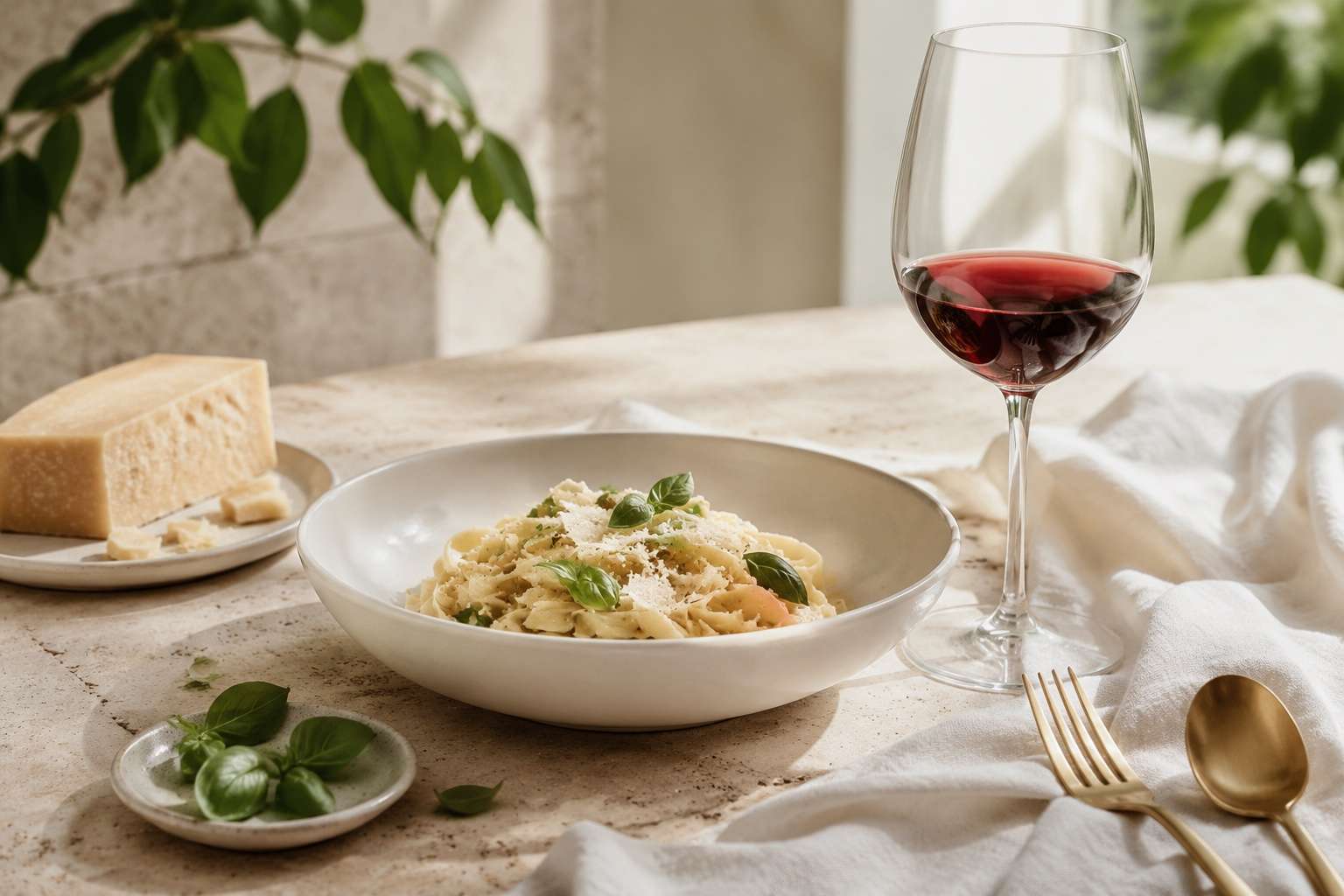
Classic pairing rules are often built around meat: red with beef, white with fish. With vegetarian food, think instead about the strongest flavor on the plate. Is it fresh and green, creamy and cheesy, earthy and savory, tomato-based, or spicy? The sauce and cooking method matter more than the vegetable itself. Roasting, grilling, and caramelizing add sweetness and smoky depth that welcome fuller wines, while steamed or raw vegetables call for light, crisp ones. One more rule helps a lot. Red-wine tannins soften when they meet protein and fat, so with lean vegetable dishes, very tannic reds can taste harsh. Cheese, beans, lentils, nuts, mushrooms, and eggs all supply richness or umami that make reds friendlier. When choosing wine with vegetarian dishes, match weight to weight and flavor to flavor.
Green vegetables like asparagus, peas, zucchini, green beans, and leafy greens have grassy, herbal flavors that clash with oaky or tannic wines. Sauvignon Blanc is the classic match, with zesty citrus and green, herbal notes that echo the vegetables; Loire Valley Sancerre and New Zealand styles both work. Austrian Grüner Veltliner is famous for handling hard-to-pair asparagus and artichokes, thanks to its peppery, green-bean character. Dishes with pesto, basil, or salsa verde love Vermentino or Sauvignon Blanc. A goat cheese and beet salad pairs well with Sancerre or dry rosé. For more on dressings and leafy dishes, see our guide to wine with salads. Spring vegetable pasta and risotto with peas also suit these crisp, herbal whites.
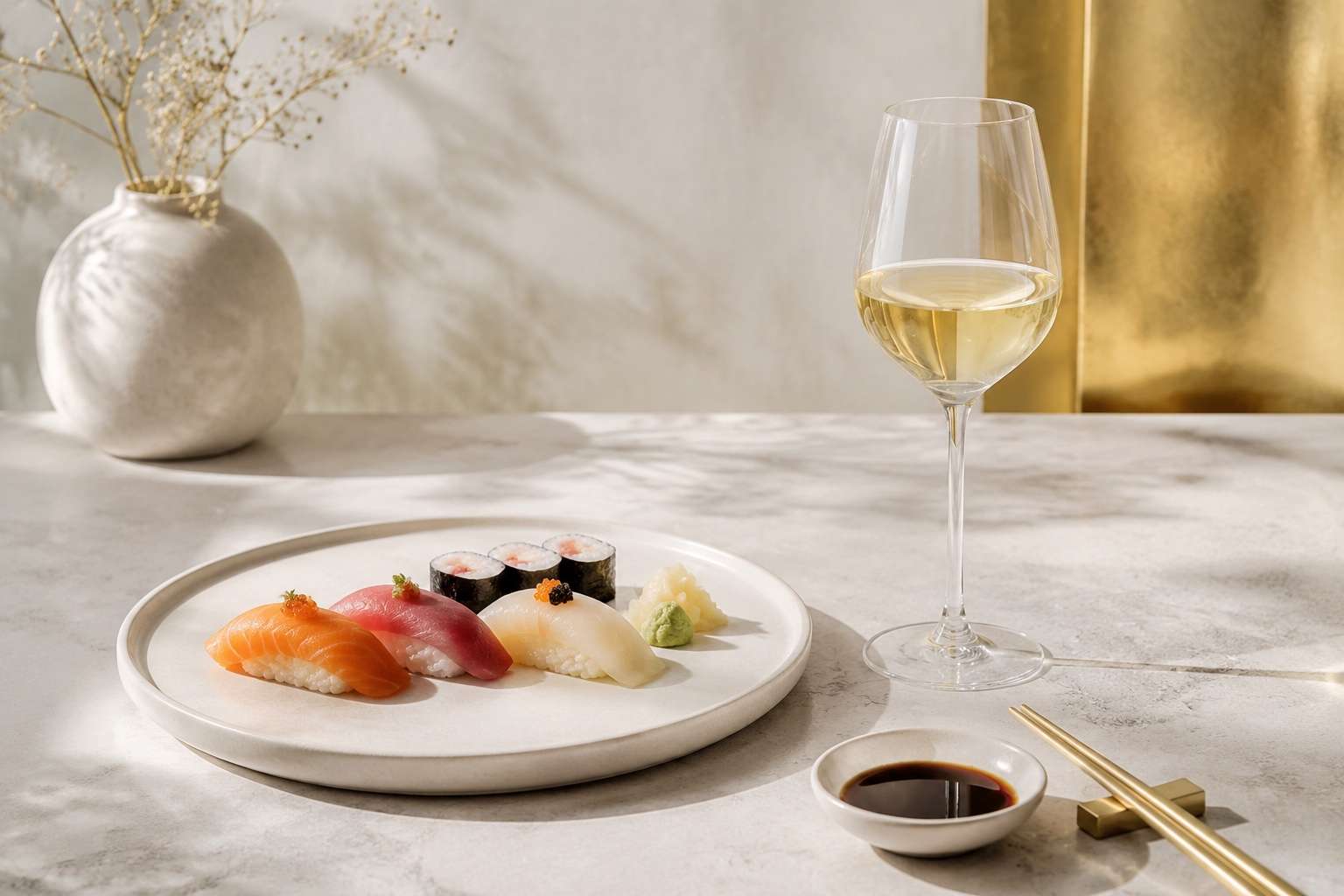
Earthy, savory dishes are where red wine shines in vegetarian cooking. Mushrooms are packed with umami, and Pinot Noir is their best friend; its forest-floor notes and silky tannins echo the mushrooms. Our guide to wine with mushroom dishes covers this in detail. Lentil stew and shepherd’s pie with lentils pair well with a Côtes du Rhône or a Grenache, which bring soft, spicy fruit. Black bean chili and veggie burgers can handle bold, fruity reds such as Zinfandel or Malbec, especially with smoky toppings. Stuffed peppers with rice, beans, and tomato suit Spanish Garnacha or Tempranillo. Mushroom stroganoff and creamy mushroom pasta work with Pinot Noir or a lightly oaked Chardonnay.
Tomato-based vegetarian dishes need wines with high acidity. Eggplant Parmesan, rich with tomato and cheese, is a perfect match for Barbera or a Chianti made from Sangiovese. Pizza Margherita and vegetable lasagna follow the same Italian-red logic. Ratatouille, the Provençal stew of eggplant, zucchini, peppers, and tomatoes, loves a Provence rosé or a light Grenache-based red. Creamy and cheesy dishes call for fuller whites. Mac and cheese, vegetable gratin, and butternut squash risotto are lovely with a round, lightly oaked Chardonnay. Quiche and vegetable tarts suit dry Riesling, Chardonnay, or a crisp sparkling wine. Roasted root vegetables such as carrots, parsnips, and sweet potatoes caramelize in the oven and pair well with Chenin Blanc, Viognier, or a fruity Grenache.
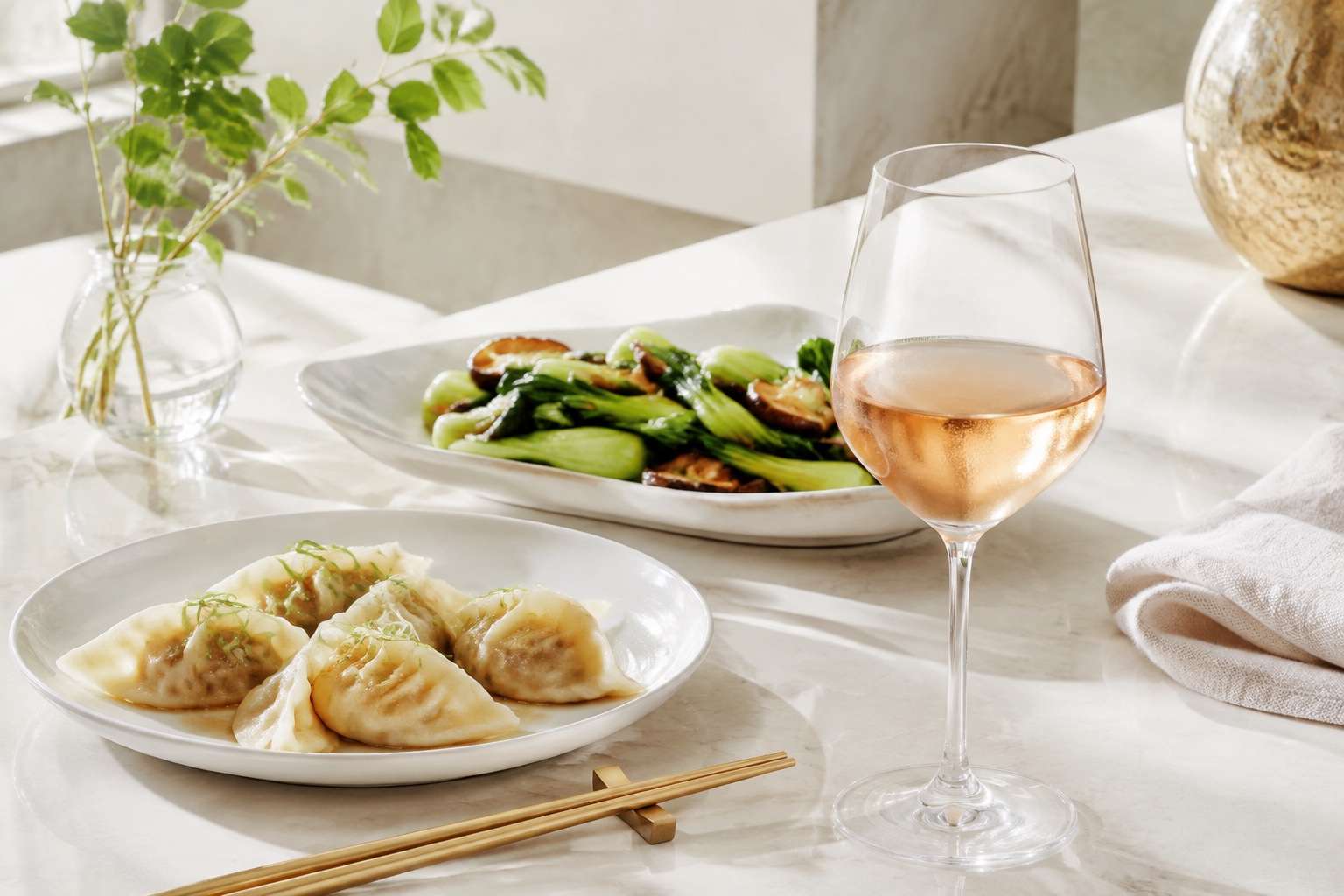
Many vegetarian dishes come from cuisines that use chili, soy, and ginger. Tofu stir-fries with soy and garlic pair well with off-dry Riesling or a light Pinot Noir. Vegetable curries, from Thai green curry to Indian chana masala, love aromatic whites with a touch of sweetness, like Riesling or Gewürztraminer, which cool the heat. Falafel and mezze with hummus and tahini suit dry rosé, Assyrtiko, or Sauvignon Blanc. Bean burritos and veggie tacos are fun with Spanish Garnacha or a fruity rosé. Plant-based meat substitutes behave much like the meat they imitate, so a plant-based burger suits the same juicy reds as a beef burger. With very spicy dishes, avoid high-alcohol and tannic reds, which make chili feel hotter.
Strict vegetarians and vegans should know that some wines are “fined” with animal products such as egg whites, gelatin, casein from milk, or isinglass from fish, which help clarify the wine. Many producers use clay (bentonite) or pea protein instead, and some wines are unfined. Look for “vegan” on the label or ask your wine shop, since fining agents usually are not listed. Wines to avoid with vegetarian food include very tannic young reds with lean vegetable dishes, and heavily oaked whites with fresh, green flavors. The good news is that vegetarian-friendly wines are often affordable: Sauvignon Blanc, Grüner Veltliner, Barbera, Côtes du Rhône, and Spanish Garnacha are reliable under $20. Serve crisp whites at 45–50°F and lighter reds at 55–60°F. Our guide to organic wine explains another popular label term.
| Vegetarian Dish | Best Wine | Why It Works |
|---|---|---|
| Asparagus, peas, and green vegetables | Sauvignon Blanc or Grüner Veltliner | Herbal notes echo green flavors |
| Mushroom risotto or stroganoff | Pinot Noir | Earthy umami matches mushrooms |
| Eggplant Parmesan | Barbera or Chianti | High acidity matches tomato and cheese |
| Lentil stew or black bean chili | Côtes du Rhône or Zinfandel | Ripe fruit and spice suit hearty legumes |
| Butternut squash or mac and cheese | Lightly oaked Chardonnay | Creamy body matches rich, sweet flavors |
| Tofu stir-fry or vegetable curry | Off-dry Riesling | Sweetness and acidity balance soy and spice |
Match the wine to the sauce, like Sauvignon Blanc with pesto, not just the vegetable.
Mushrooms, cheese, and beans help red wine tannins taste smoother.
Look for a vegan label if you avoid animal-based fining agents.
Learn Your Taste
Answer a few simple questions and discover styles that fit your palate.
Take the Wine QuizIt depends on the dish. Sauvignon Blanc suits green vegetables, Pinot Noir suits mushrooms and lentils, Chardonnay suits creamy dishes, and Barbera suits tomato sauces. Match the wine to the strongest flavor on the plate.
Yes. Red wine pairs well with hearty dishes that include mushrooms, beans, lentils, cheese, or tomato. Choose softer reds like Pinot Noir, Grenache, or Barbera for lighter dishes, and save tannic reds for rich ones.
No. Some wines are clarified with animal products such as egg whites, milk protein, gelatin, or fish-derived isinglass. Many wines use clay or pea protein instead. Look for a vegan or vegetarian label to be sure.
Roasting caramelizes vegetables and adds sweetness, so try a round white like Chardonnay or Chenin Blanc, or a fruity, soft red like Grenache. For roasted peppers and eggplant, a dry rosé is great too.
A juicy, fruity red like Zinfandel, Malbec, or Grenache works well, especially with smoky toppings or cheese. For a lighter bean or chickpea burger, a dry rosé or Pinot Noir is a good match.
It depends on the sauce. Tofu stir-fries with soy and ginger pair well with off-dry Riesling or light Pinot Noir. Spicy tofu curries suit Gewürztraminer, and crispy fried tofu loves sparkling wine.