Not Too Cold
Serve light whites at 45–50°F and rich whites at 50–55°F for the best aroma.

Understand Wine. Enjoy Every Glass.
Wine Types
This white wine guide sorts the shelf into crisp, aromatic, and rich styles, so you can find your favorite grape and serve it at its best.
Start Learning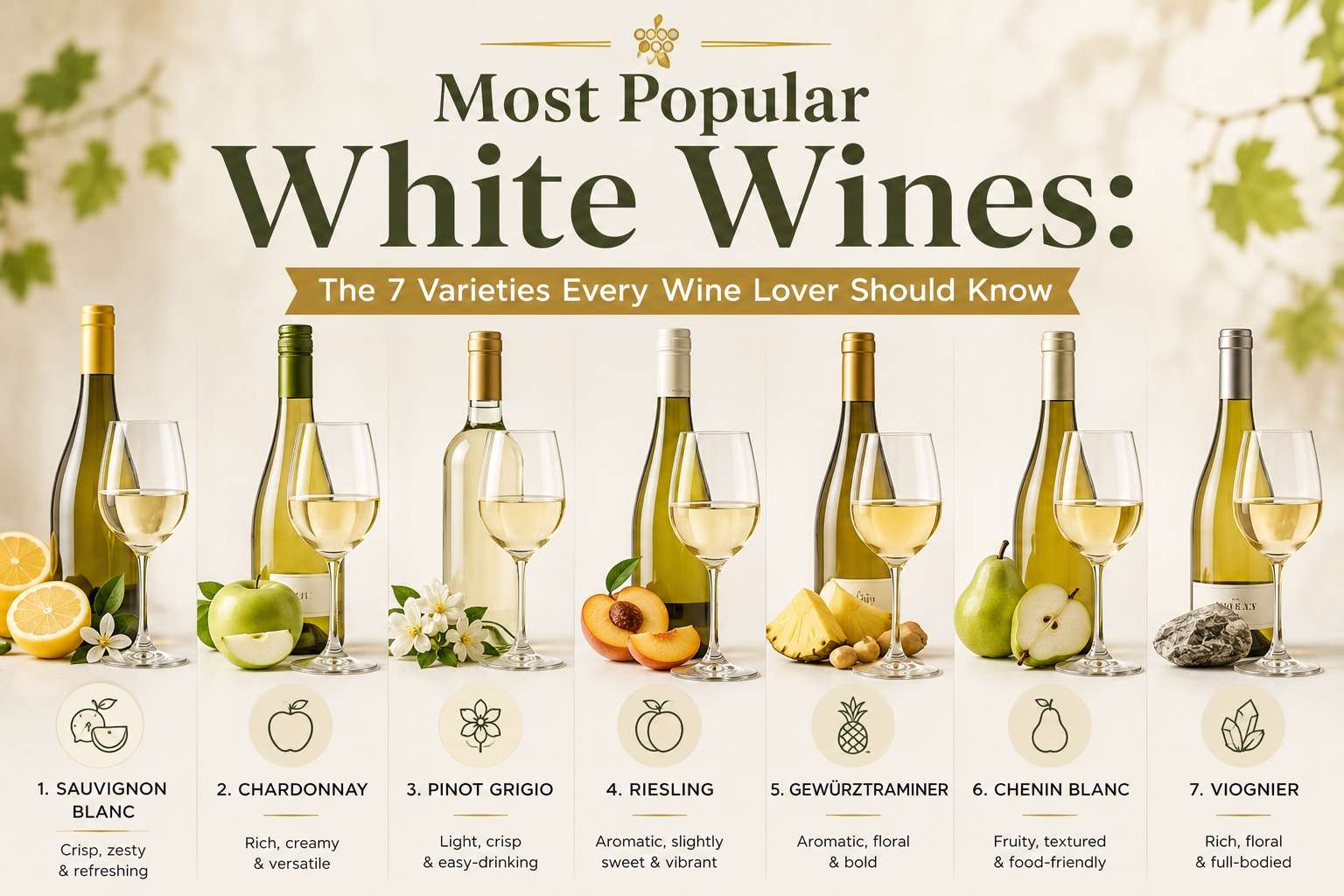
Most white wine comes from green or yellow grapes. After picking, the grapes are pressed right away, and only the juice goes into the tank. Because the skins are removed early, white wine has very little tannin and relies on acidity for structure. Winemakers usually ferment whites cool, often in stainless steel, to keep fresh fruit and floral aromas. Some whites, especially Chardonnay, ferment or age in oak barrels for vanilla and toast. Many also go through malolactic conversion, which turns sharp, apple-like acid into softer, creamy acid and gives that buttery note. A white can even be made from red grapes if the juice is separated from the skins fast, which is how Champagne uses Pinot Noir. Any white wine guide starts with that simple fact: skins off, freshness in.
Think of whites in three groups. Crisp and light whites are zesty and refreshing. Pinot Grigio is neutral and lemony, Sauvignon Blanc tastes of grapefruit, passion fruit, and cut grass, and Albariño adds a salty, peachy edge. Aromatic whites burst with perfume. Riesling smells of lime, green apple, and white flowers, Gewürztraminer of lychee and rose, and Torrontés of orange blossom. Rich and full whites feel round and creamy. Oaked Chardonnay brings ripe apple, vanilla, and butter, while Viognier offers apricot and honeysuckle. Chenin Blanc can fit any group, from bone-dry to sweet. Matching the group to your mood is the fastest way to a bottle you like.
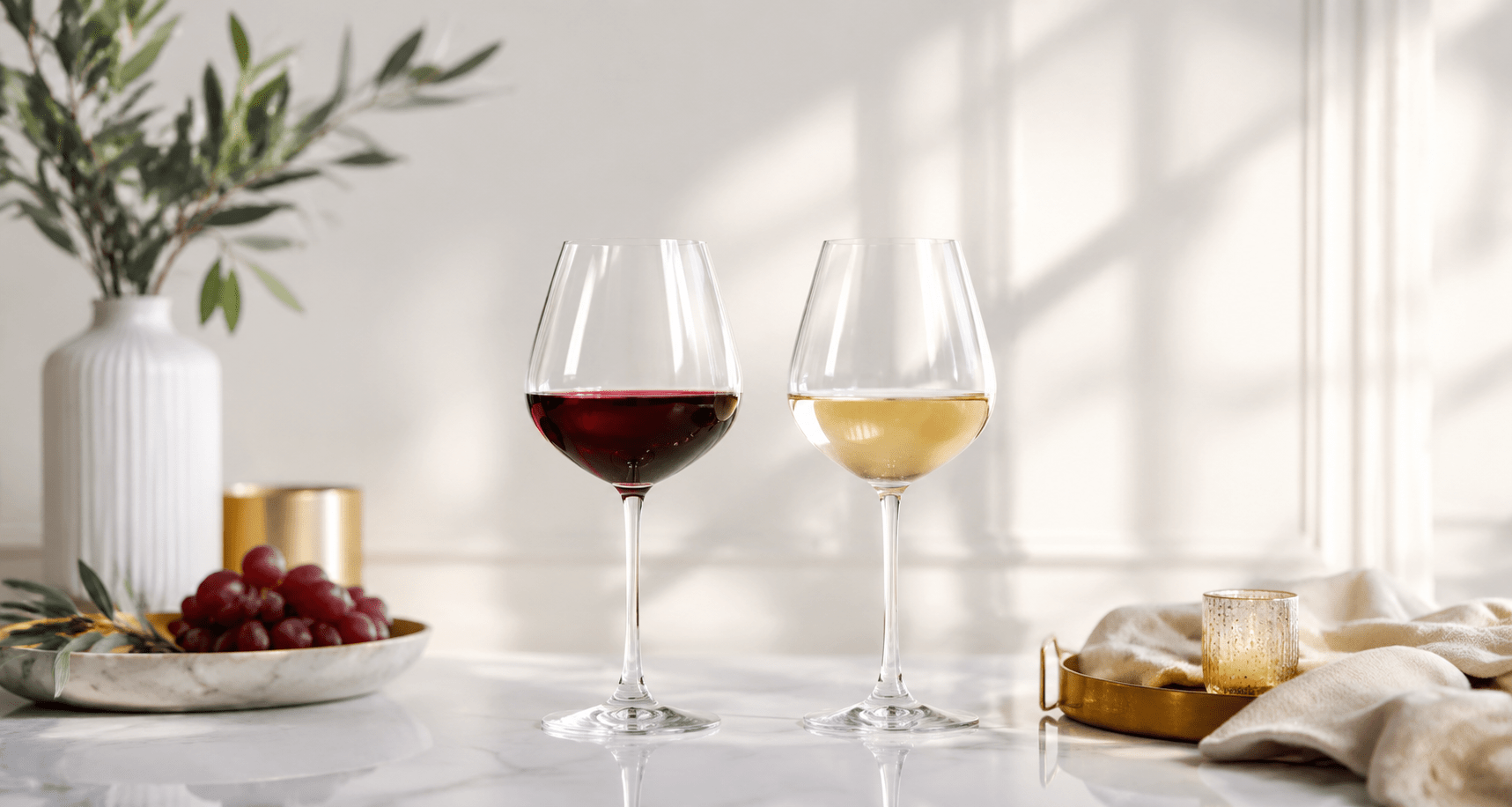
Most white wines are dry, but whites cover more of the sweetness range than reds. Sauvignon Blanc, Pinot Grigio, Albariño, and most Chardonnay are dry. Riesling, Chenin Blanc, and Gewürztraminer are often made off-dry, with a touch of sugar that balances their high acidity. German Riesling labels give clues: Trocken means dry, Kabinett is usually light and lightly sweet, and Spätlese and Auslese get progressively riper and often sweeter. Vouvray from the Loire may say sec (dry), demi-sec (off-dry), or moelleux (sweet). Fully sweet whites include Sauternes, Tokaji, and ice wine. High acidity keeps good sweet whites from tasting syrupy. Our dry vs. sweet wine guide explains how to spot sugar in the glass and on the label.
White wine is usually served too cold. Fridge temperature, around 38°F, mutes aroma. Light, crisp whites like Pinot Grigio and Sauvignon Blanc taste best at 45–50°F. Richer whites like oaked Chardonnay and Viognier show more at 50–55°F. Take the bottle out of the fridge 15–20 minutes before pouring. If you forget to chill it, an ice bucket filled with ice and water does the job in about 20 minutes; our chilling wine fast tips have other tricks. Use a glass with a slightly narrower bowl than a red-wine glass to hold the aromas. Most whites do not need decanting, though a young, rich Chardonnay can open up with a little air. Once opened, recork and refrigerate. Most whites stay fresh for three to five days.
Match the wine’s weight and acidity to the dish. Crisp whites love seafood, oysters, salads, and goat cheese, because their acid works like a squeeze of lemon. Sauvignon Blanc is a natural with herbs, asparagus, and green vegetables that make many reds taste odd. Aromatic, off-dry whites such as Riesling and Gewürztraminer are excellent with spicy food, since a little sweetness cools chili heat. Rich, oaked Chardonnay stands up to roast chicken, lobster with butter, creamy pasta, and pork. Albariño and Vermentino are perfect with grilled fish and shellfish. White wine is also the best partner for most cheese boards, especially soft and fresh cheeses. Try Chardonnay with chicken as an easy, crowd-pleasing start.
Pick by style first, then by place. Cool climates like the Loire Valley, Marlborough, Mosel, and Chablis make crisp, high-acid whites. Warmer places like California, Australia, and southern France make riper, rounder ones. That is why Chablis, an unoaked Chardonnay from northern Burgundy, tastes lean and flinty, while many California Chardonnays taste of baked apple and vanilla. Look for words like unoaked or stainless steel if you want fresh fruit, and barrel-fermented if you want creamy and toasty. Most whites are meant to drink young, within a few years of the vintage. Great value comes from Spain, Portugal, Austria, and New Zealand. Browse our best white wines under $20 or compare Chardonnay vs. Sauvignon Blanc to find your lane.
| Grape or Style | Taste and Body | Try It With |
|---|---|---|
| Pinot Grigio | Light; lemon, green apple, neutral | Light pasta, salads, shrimp |
| Sauvignon Blanc | Light to medium; grapefruit, grass, zesty | Goat cheese, herbs, asparagus |
| Riesling | Light; lime, peach, dry to sweet | Thai, Indian, pork |
| Albariño | Light to medium; peach, citrus, salty finish | Grilled fish, shellfish |
| Unoaked Chardonnay (Chablis) | Medium; apple, lemon, mineral | Oysters, roast chicken |
| Oaked Chardonnay | Full; ripe apple, vanilla, butter | Lobster, creamy sauces |
Serve light whites at 45–50°F and rich whites at 50–55°F for the best aroma.
Unoaked means fresh and fruity. Barrel-fermented usually means creamy, toasty, and fuller.
Most whites taste best within two or three years of the vintage; oaked Chardonnay and top Riesling can age longer.
Learn Your Taste
Answer a few simple questions and discover styles that fit your palate.
Take the Wine QuizPinot Grigio and Sauvignon Blanc are easy, dry, and refreshing. If you like a touch of sweetness, try an off-dry Riesling or Moscato. Unoaked Chardonnay is a good middle ground with more body but no heavy oak flavors.
Sauvignon Blanc, Pinot Grigio, Albariño, Muscadet, and Chablis are reliably dry. Brut Nature sparkling wines and fino sherry are even drier. On German labels, look for Trocken, which means dry.
Unopened bottles can be stored at cool room temperature, ideally 50–60°F, away from light. Chill before serving, and refrigerate any opened bottle. Long-term fridge storage can dry out corks, so do not keep bottles there for months.
Residual sugar. In dry whites, yeast ferments nearly all the grape sugar into alcohol. Sweet whites keep some sugar, either because fermentation was stopped or because the grapes were extremely ripe. High acidity can make sweet wines taste less sugary.
Oaked white wine was fermented or aged in oak barrels. The wood adds vanilla, toast, and spice flavors and a rounder, creamier texture. Oaked Chardonnay is the classic example, along with some white Rioja and white Bordeaux. Unoaked whites are usually made in steel tanks and taste fresher and fruitier.
Yes. Grape juice is nearly colorless, so pressing red grapes gently and removing the skins quickly gives a white wine. Blanc de Noirs Champagne, made from Pinot Noir and Pinot Meunier, is the best-known example.