Alcohol Matters Most
Every extra point of ABV adds calories, so a 12% wine beats a 15% wine.

Understand Wine. Enjoy Every Glass.
Wine Basics
A glass of wine has calories, but the number depends far more on alcohol than on color. Here is where they come from and how to choose a lighter pour.
Start Learning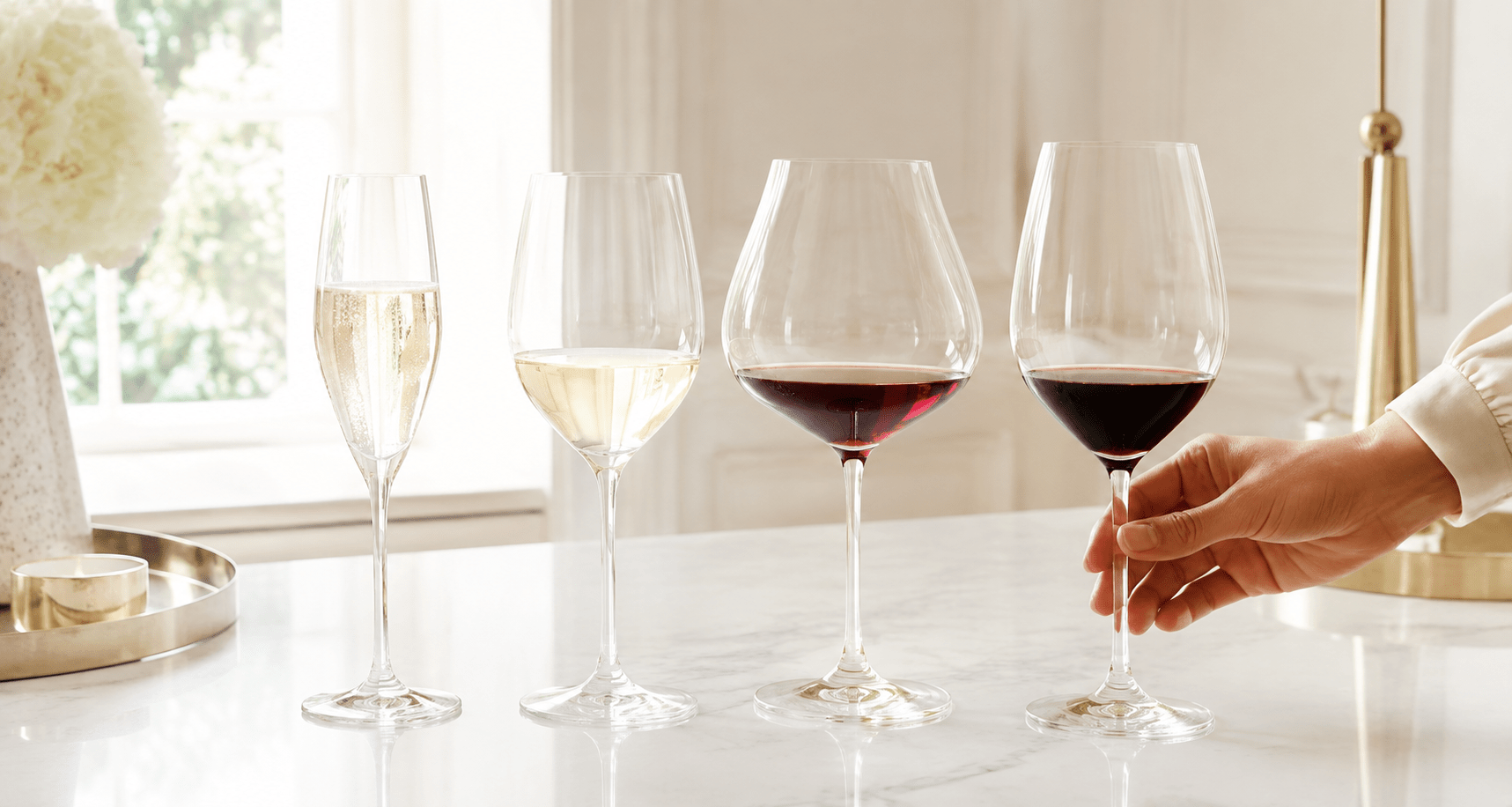
Almost all the calories in wine come from two sources: alcohol and sugar. Wine has no fat and almost no protein. Alcohol is the big one, at about 7 calories per gram, nearly as dense as fat. Sugar and other carbohydrates add about 4 calories per gram. In a dry wine, fermentation has turned nearly all the grape sugar into alcohol, so alcohol supplies the large majority of the calories. In a sweet wine, leftover sugar adds a meaningful amount on top. This is the key insight for anyone counting calories in wine: the alcohol content on the label is the best predictor of how many calories are in the glass. A 14.5% red will almost always carry more calories than an 11% white, regardless of color.
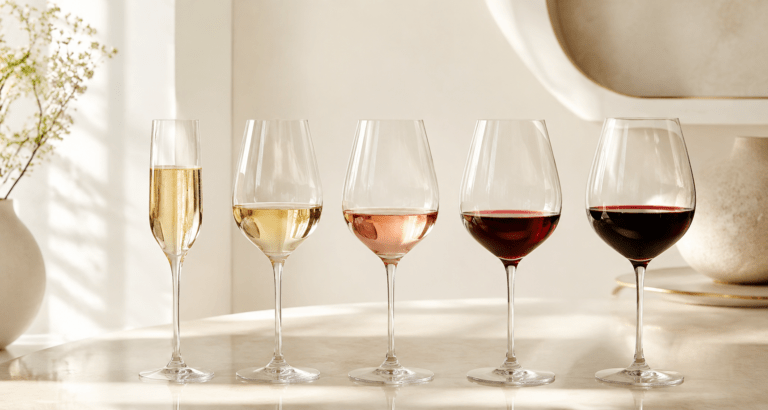
These are typical ranges for a 5-ounce pour, not exact counts. Light, dry whites such as Pinot Grigio, Muscadet, and Vinho Verde often land around 105–120 calories. Fuller whites such as oaked Chardonnay or Viognier tend to run 120–135. Dry rosé sits in the same 110–125 range as light whites. Medium reds like Pinot Noir and Merlot usually come in around 120–130, and big reds like Zinfandel, Shiraz, and ripe Cabernet Sauvignon can reach 130–150. Brut sparkling wine is often the lightest choice at roughly 90–110 for a 4–5 ounce flute. Sweet and fortified wines are the richest; a 3-ounce pour of Port or Sauternes can come close to a full glass of dry table wine. Our red vs. white wine comparison explains why color alone does not decide the count.
Sugar matters most at the extremes. A truly dry wine has only a gram or two of sugar per glass, adding just a handful of calories. An off-dry Riesling or a fruity Moscato carries more, and a dessert wine can carry a lot. Interestingly, some sweet wines are lower in calories than you might expect because they are low in alcohol. Moscato d’Asti, at around 5–6% ABV, can have fewer calories than a 14.5% dry red, even though it tastes much sweeter. For sparkling wine, the label tells you the sugar level directly. Brut Nature and Extra Brut are the driest, Brut is dry, and confusingly Extra Dry is actually a little sweeter than Brut. Learn more in our guide to dry vs. sweet wine.
In the United States, most wine bottles are not required to list calories or nutrition facts, so you usually have to estimate. Some brands add a voluntary serving-facts panel, but many do not. Because the numbers are not on the bottle, the alcohol percentage is your best clue. A quick estimate works well: multiply the ABV by about 1.6 to get calories per ounce from alcohol, then multiply by your pour size. For a 13% wine, that is roughly 21 calories per ounce, or about 105 calories for 5 ounces before any sugar. Add a few more for a dry wine and more for an off-dry one. It is a rough method, but it gets you close. Our page on how to read a wine label shows where to find the ABV.
If you want fewer calories without giving up wine, focus on alcohol and pour size. Pick wines from cooler regions, which tend to be lower in alcohol: German Riesling, Vinho Verde, Muscadet, Loire Valley whites, and Beaujolais are good places to start. Choose Brut or Brut Nature sparkling wine over sweeter styles. Measure your pour, because a generous restaurant glass can be 7 or 8 ounces, adding 50 or more calories without you noticing. A wine spritzer, half wine and half sparkling water, cuts the calories per glass roughly in half. Our low-alcohol wine guide lists more lighter styles worth exploring.
Calories are only one part of the picture. A glass of wine with dinner is a modest addition for many people, but those numbers add up quickly over several glasses, and alcohol can also nudge you to snack more. Treat wine as an occasional pleasure rather than a health food, whatever you may read about red wine. If you are managing your weight, blood sugar, or a medical condition, a doctor or registered dietitian can give you advice that fits your situation. For an option with far fewer calories, non-alcoholic wine typically contains a fraction of the calories of regular wine, though sugar content varies by brand.
Find the alcohol percentage on the label. Higher alcohol means more calories in every glass.
Look for dry styles, or Brut and Brut Nature on sparkling wine, to keep sugar calories low.
Multiply ABV by 1.6 for calories per ounce from alcohol, then multiply by your pour size.
Pour 5 ounces into your usual glass once so you can see what a standard serving looks like.
Try a lower-alcohol cool-climate white or mix a spritzer with sparkling water for fewer calories.
| Wine Style | Typical Pour | Approximate Calories |
|---|---|---|
| Brut sparkling wine | 5 oz | 90–110 |
| Light dry white or dry rosé | 5 oz | 105–125 |
| Full-bodied white | 5 oz | 120–135 |
| Medium-bodied red | 5 oz | 120–130 |
| High-alcohol red | 5 oz | 130–150 |
| Port or dessert wine | 3 oz | 110–160 |
Every extra point of ABV adds calories, so a 12% wine beats a 15% wine.
Brut and Brut Nature sparkling wines are among the lowest-calorie wines you can pour.
Large bowls invite 7–8 ounce pours. Pour to about one-third full.
Learn Your Taste
Answer a few simple questions and discover styles that fit your palate.
Take the Wine QuizRed wine usually has slightly more, but only because reds tend to be higher in alcohol. A light, dry red like Beaujolais can have fewer calories than a rich oaked Chardonnay. Alcohol content decides more than color.
A 750 ml bottle of dry table wine usually holds about 550–700 calories, depending on its alcohol and sugar. That is roughly five 5-ounce glasses. Sweet or high-alcohol bottles land at the top of that range or above.
Brut Nature or Brut sparkling wine and light, dry whites under 12% ABV are usually the lowest. Good examples include Vinho Verde, Muscadet, and dry German Riesling. A wine spritzer with soda water cuts calories further.
Brut Prosecco is often slightly lower per glass, partly because flutes hold smaller pours. Extra Dry and Dry Prosecco contain more sugar, so they can match a glass of still white wine. Check the sweetness term on the label.
Yes, but dry wine has few, typically a few grams per 5-ounce glass. Sweet wines and dessert wines contain much more because of their leftover grape sugar. Most of a dry wine's calories come from alcohol rather than carbohydrates.
Usually, yes. Removing alcohol takes away the biggest source of calories, so many non-alcoholic wines have a fraction of the calories of regular wine. Some add grape juice or sugar for body, so check the nutrition label.