Keep Pours Small
About 2 ounces per taste lets everyone try every wine without overdoing it.

Understand Wine. Enjoy Every Glass.
Wine Basics
Hosting a wine tasting at home is one of the most fun ways to learn about wine. You need a theme, a few bottles, some glasses, and friends who are curious.
Start Learning
A theme turns a wine tasting at home from random sipping into a real lesson. The best themes compare wines that share one thing and differ in another. Try one grape, different places: Chardonnay from Chablis, California, and Australia shows how climate and oak change a wine. Try Old World vs. New World: Pinot Noir from Burgundy against one from Oregon. Try one region, such as a tour of Spanish wines from Albariño to Rioja. Or try a price challenge, putting an inexpensive bottle against a pricier one of the same style and seeing whether anyone can tell. Beginners often love a simple red-versus-white or light-to-full lineup that teaches wine body. Keep the theme narrow; four to six wines with a clear thread teaches more than ten unrelated bottles.

Plan on about 2 ounces per taste, so one 750 ml bottle gives roughly 12 tasting pours. For a group of 8 to 10 people, one bottle of each wine is plenty for tasting, though you may want extra of the favorites for after. Ideally, give each guest one glass per wine so they can go back and compare. If that is not practical, one all-purpose glass per person works fine; rinse with water between wines. Set out a pitcher of water, a spit cup or dump bucket for each pair of guests, plain crackers or bread to reset the palate, and white napkins or paper so people can check the wine’s color. Simple tasting sheets and pens help guests record impressions. Our guide on how to write wine tasting notes includes an easy format to print.
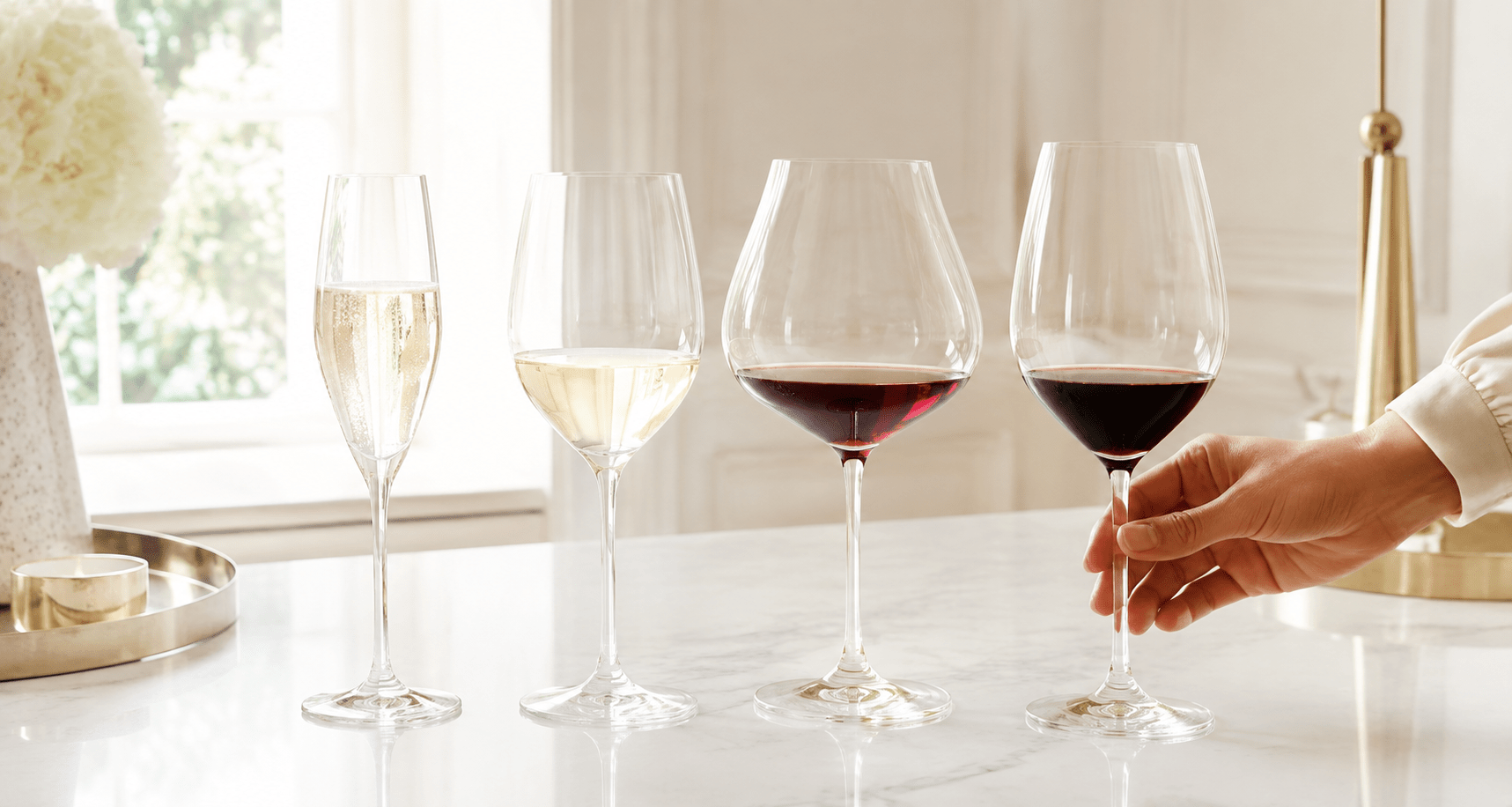
Order matters because a bold wine can make the next delicate one taste thin. Follow these rules: sparkling before still, white before red, light before full, dry before sweet, and young before old. A classic sequence might run from Prosecco to Sauvignon Blanc, oaked Chardonnay, dry rosé, Pinot Noir, Cabernet Sauvignon, and finally a dessert wine or Port. Temperature matters too. Chill sparkling wine to 40–45°F, whites and rosé to 45–55°F, and serve reds slightly cool at 60–65°F. Our wine serving temperature chart lists each style. Open reds 20 to 30 minutes before guests arrive so they have time to breathe, and keep whites in an ice bucket between pours.
Walk everyone through the same simple routine for each wine. Look at the color against a white background. Swirl to release aromas. Smell and name anything that comes to mind, from lemon to cherry to vanilla. Sip and notice sweetness, acidity, tannin, and body. Savor the finish and how long it lasts. These are the five S’s covered in our guide on how to taste wine. Encourage people to share what they notice before anyone reads a back label, because there are no wrong answers. A quick score from one to five for each wine makes it easy to see the group’s favorites. If a guest says this one smells like a pencil or like green bell pepper, that is real tasting, and it often matches classic grape descriptors.
Blind tasting removes label bias and makes the night more playful. Before guests arrive, slip each bottle into a paper bag or wrap it in foil, remove the capsule if it gives away the producer, and number the bags. Keep a private list of which number is which. Guests taste and score without knowing what they are drinking, then you reveal the bottles at the end. Blind tastings are especially fun with a price challenge or a mix of regions, since people are often surprised by which wine they preferred. Ask guests to guess one fact about each wine, such as the grape, the country, or whether it is the expensive one. The reveal always sparks conversation, and it is a painless way to learn the difference between Old World and New World wine.
Keep food simple during the tasting itself: plain crackers, bread, and mild cheese reset the palate without overpowering the wine. Save stronger flavors for after, when you can bring out a cheese board, charcuterie, or a full meal. Our page on hosting a wine and cheese party has board ideas. Encourage guests to spit or pour out what they do not finish; even 2-ounce pours add up across six wines. Offer plenty of water and non-alcoholic options throughout. Plan for safe rides home and make sure everyone is 21 or older. Finally, keep it relaxed. The goal is curiosity and conversation, not right answers, so the best hosts ask questions rather than lecture.
Choose one clear idea, such as one grape from three countries or a light-to-full red lineup.
One bottle per wine serves 8 to 10 tasters at about 2 ounces each.
Lay out glasses, water, spit cups, plain crackers, white napkins, and tasting sheets.
Chill sparkling and whites, open reds 20 to 30 minutes early, and bag bottles for a blind tasting.
Pour sparkling, then whites, rosé, reds, and sweet wines, discussing each before moving on.
Unveil the labels, compare scores, and bring out heartier food and favorite bottles.
| Theme | Wines to Pour | What Guests Learn |
|---|---|---|
| One grape, three places | Chardonnay from Chablis, California, and Australia | How climate and oak shape flavor |
| Old World vs. New World | Red Burgundy vs. Oregon Pinot Noir | Earthy vs. fruit-forward styles |
| Light to full reds | Gamay, Merlot, Cabernet Sauvignon | What body and tannin feel like |
| Bubbles around the world | Prosecco, Cava, Champagne | How sparkling methods differ |
| Price challenge | A budget bottle and a splurge of the same style | Whether price predicts preference |
| Dry to sweet Riesling | Dry, off-dry, and late-harvest Riesling | How sweetness and acidity balance |
About 2 ounces per taste lets everyone try every wine without overdoing it.
Bagging and numbering bottles makes any tasting a fun, unbiased blind challenge.
Serve plain crackers during tasting and the cheese board afterward.
Learn Your Taste
Answer a few simple questions and discover styles that fit your palate.
Take the Wine QuizFour to six wines is ideal. That is enough to compare styles without tiring anyone's palate or serving too much alcohol. With more than eight, wines start to blur together and guests lose interest.
About 2 ounces per wine is standard, or a little less for large groups. A 750 ml bottle gives roughly 12 tasting pours. Guests can always come back for more of the wines they like best.
During the tasting, stick to neutral foods like plain crackers, baguette, and mild cheese, which reset the palate. After tasting, serve a cheese board, charcuterie, or a meal that matches your favorite wines from the lineup.
No. One all-purpose wine glass per person works well; rinse it with a little water between wines. If you have enough glasses, giving each guest a glass per wine makes side-by-side comparisons easier.
A light-to-full red lineup, such as Gamay, Merlot, and Cabernet Sauvignon, is a great first theme. It clearly shows how body and tannin change. One grape from three countries is another easy, eye-opening choice.
It is optional, but offering spit cups is considerate. Spitting lets guests taste every wine clearly without drinking much alcohol, which is especially helpful for anyone who is driving. Make it feel normal by doing it yourself.