
Chill Pinot a Bit
Twenty minutes in the fridge brings Pinot Noir to 55–60°F and keeps it fresh.

Understand Wine. Enjoy Every Glass.
Wine Comparisons
Pinot Noir vs Cabernet Sauvignon is the clearest contrast in red wine: one is light, silky, and earthy, the other bold and structured. Here is how to choose.
Start Learning
These two grapes sit at opposite ends of the red wine spectrum. Pinot Noir has thin skins and tight bunches. It ripens early, prefers cool climates, and makes pale, translucent wine with gentle tannin and lively acidity. Cabernet Sauvignon has small, thick-skinned berries, ripens late, and needs warmth. It makes dark, opaque wine with firm tannins and a full body. In body terms, Pinot Noir feels like skim or 2% milk on your tongue, while Cabernet feels like whole milk or cream. That difference in weight shapes everything else: the food each one suits, the glass you pour it into, the temperature you serve it, and how long it can age.

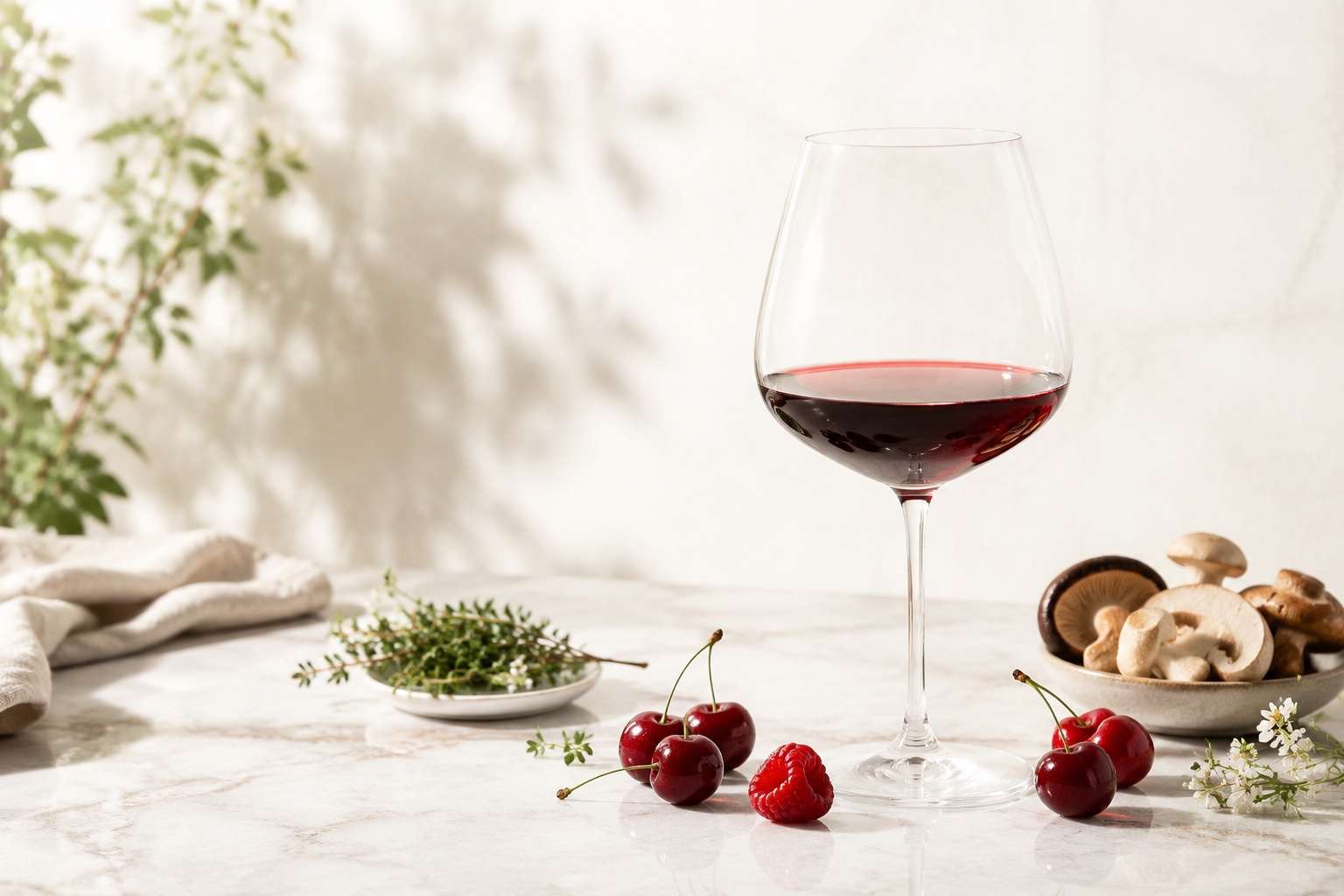
Pinot Noir is all about red fruit and earth: cherry, raspberry, strawberry, and cranberry, with notes of mushroom, forest floor, rose petal, and baking spice. Its acidity is high, so it tastes fresh and juicy. With age, it develops savory, leathery, and truffle-like flavors. Cabernet Sauvignon tastes of black fruit: blackcurrant, blackberry, and black cherry, with cedar, tobacco, graphite, mint, and sometimes green bell pepper. Oak aging is common and adds vanilla, mocha, and toast. Its tannin grips your gums and gives a long, drying finish. Alcohol is often a bit higher in Cabernet, commonly 13.5–15%, compared with roughly 12.5–14% for Pinot Noir. Both are almost always dry.
Pinot Noir is famously fussy. Its benchmark is Burgundy, especially the Côte de Nuits and Côte de Beaune, where it makes earthy, perfumed wines. Oregon’s Willamette Valley offers a similar balance of fruit and earth. California’s Russian River Valley and Sonoma Coast give riper, plusher versions, and New Zealand’s Central Otago makes vibrant, dark-cherry styles. Cabernet Sauvignon is hardier. It leads the blends of Bordeaux’s Left Bank, including Pauillac and Margaux, and became a superstar in Napa Valley, where it is ripe, polished, and powerful. Chile’s Maipo Valley, Australia’s Coonawarra and Margaret River, and Washington State all make excellent Cabernet.
Pinot Noir is one of the most food-friendly reds. Its low tannin means it will not clash with fish, so it is the go-to red for salmon and tuna. It also loves duck, roast chicken, pork, turkey, and anything with mushrooms or herbs. Its acidity cuts through rich sauces without overwhelming them. Cabernet Sauvignon needs something substantial. Its tannins bind with protein and fat, so it shines with ribeye, prime rib, braised beef, lamb, and aged cheddar or Gouda. Try it next to a juicy burger with blue cheese. Avoid pairing Cabernet with delicate fish, which can taste metallic, and avoid very spicy dishes with either wine, since heat amplifies alcohol and tannin.
Serve Pinot Noir slightly cooler, at 55–60°F, in a wide, balloon-shaped Burgundy glass that collects its delicate aromas. Serve Cabernet at 60–65°F in a tall Bordeaux glass, and decant young bottles for 30 to 60 minutes to soften the tannins. Pinot Noir rarely needs decanting. Price follows difficulty. Because Pinot Noir is hard to grow, good examples under $20 are scarcer, though Chile, Germany (where it is called Spätburgunder), and California offer some. Top Burgundy is among the most expensive wine on earth. Cabernet offers solid value from Chile, Washington, and Australia, and prestige Napa or Bordeaux bottles can age for decades, longer than most Pinot Noir.
Pick Pinot Noir if you prefer lighter, fresher reds, are serving fish, poultry, or vegetarian dishes, or need one bottle to please a varied table, such as at Thanksgiving. It is also a good bridge for white wine drinkers. Pick Cabernet Sauvignon for steak night, winter braises, and anyone who loves big, bold flavor or wants a bottle to cellar. If you want something in between, try Merlot, which is softer than Cabernet but fuller than Pinot. Explore more matchups with Pinot Noir vs Merlot, Pinot Noir vs Syrah, and Cabernet Sauvignon vs Merlot.
| Attribute | Pinot Noir | Cabernet Sauvignon |
|---|---|---|
| Body | Light to medium | Full |
| Tannin | Low and silky | High and firm |
| Acidity | High | Medium to medium-plus |
| Main flavors | Cherry, raspberry, mushroom, rose | Blackcurrant, cedar, tobacco, mint |
| Climate | Cool: Burgundy, Oregon, Central Otago | Warm: Bordeaux Left Bank, Napa, Chile |
| Best food | Salmon, duck, mushrooms, turkey | Steak, lamb, braised beef |
| Serving temp | 55–60°F | 60–65°F |
Twenty minutes in the fridge brings Pinot Noir to 55–60°F and keeps it fresh.
Young, tannic Cabernet softens noticeably after 30–60 minutes in a decanter.
Wide bowl for Pinot Noir, tall Bordeaux glass for Cabernet.
Learn Your Taste
Answer a few simple questions and discover styles that fit your palate.
Take the Wine QuizYes. Pinot Noir is light to medium-bodied with low tannin, while Cabernet Sauvignon is full-bodied with firm tannin. You can often see it in the glass: Pinot Noir is pale and translucent, Cabernet is deep and opaque.
Pinot Noir. Its thin skins give much less tannin, so it feels silky rather than drying. Cabernet's tannins can feel grippy, especially in young bottles, until food or time softens them.
Both are dry. Pinot Noir's bright red fruit can seem a little sweeter, and ripe, oaky Cabernet from warm regions can taste jammy, but neither normally contains noticeable residual sugar.
Yes, especially lean cuts like filet mignon or steak with mushroom sauce. For fatty ribeye, a more tannic red such as Cabernet Sauvignon usually works better, because it cuts through the marbling.
Many beginners find Pinot Noir easier because it is light, fruity, and low in tannin. If you already enjoy strong coffee or dark chocolate, you may take to Cabernet's bold, drying style quickly.
Usually a little. Pinot Noir often lands around 12.5–14% ABV, while Cabernet Sauvignon frequently reaches 13.5–15%. Warm-climate Pinot Noir can be higher, so check the label.

