Start with Cabernet Franc
It is one of New Jersey's most consistent reds and pairs with almost any meal.

Understand Wine. Enjoy Every Glass.
Wine Regions
The Garden State is quietly making some of the East Coast's most interesting wine. Here is where New Jersey grapes grow, what to pour, and how to plan a visit.
Start Learning
Yes, and many people are surprised. New Jersey has made wine since colonial times, but modern quality took off once growers matched the right grapes to the right places and planted more European varieties. Today, the best New Jersey wineries make balanced, food-friendly wines that hold their own against other East Coast regions. Bordeaux grapes such as Cabernet Franc and Merlot do well in the warm south, and crisp whites thrive near the coast. In a widely reported 2012 blind tasting held in Princeton, some New Jersey reds and whites scored close to famous French wines, which helped change the state’s reputation. The climate is not easy: humid summers bring disease pressure, and storms can hit at harvest. Quality varies from winery to winery, so tasting before buying is the best approach.
New Jersey has four main AVAs. The Outer Coastal Plain covers much of the southern half of the state. Its sandy, well-drained soils and long, warm growing season, moderated by the Atlantic Ocean and Delaware Bay, suit Bordeaux grapes, Chambourcin, and coastal whites. Inside it, the Cape May Peninsula AVA sits at the state’s southern tip, surrounded by water on three sides, so sea breezes cool summer heat and extend the fall. In the northwest, the Warren Hills AVA has a cooler, more continental climate with hilly ground, better for aromatic whites and earlier-ripening reds. The Central Delaware Valley AVA, shared with Pennsylvania along the Delaware River, is a small area of rolling farmland. In short, south means warmer and fuller; north means cooler and crisper.
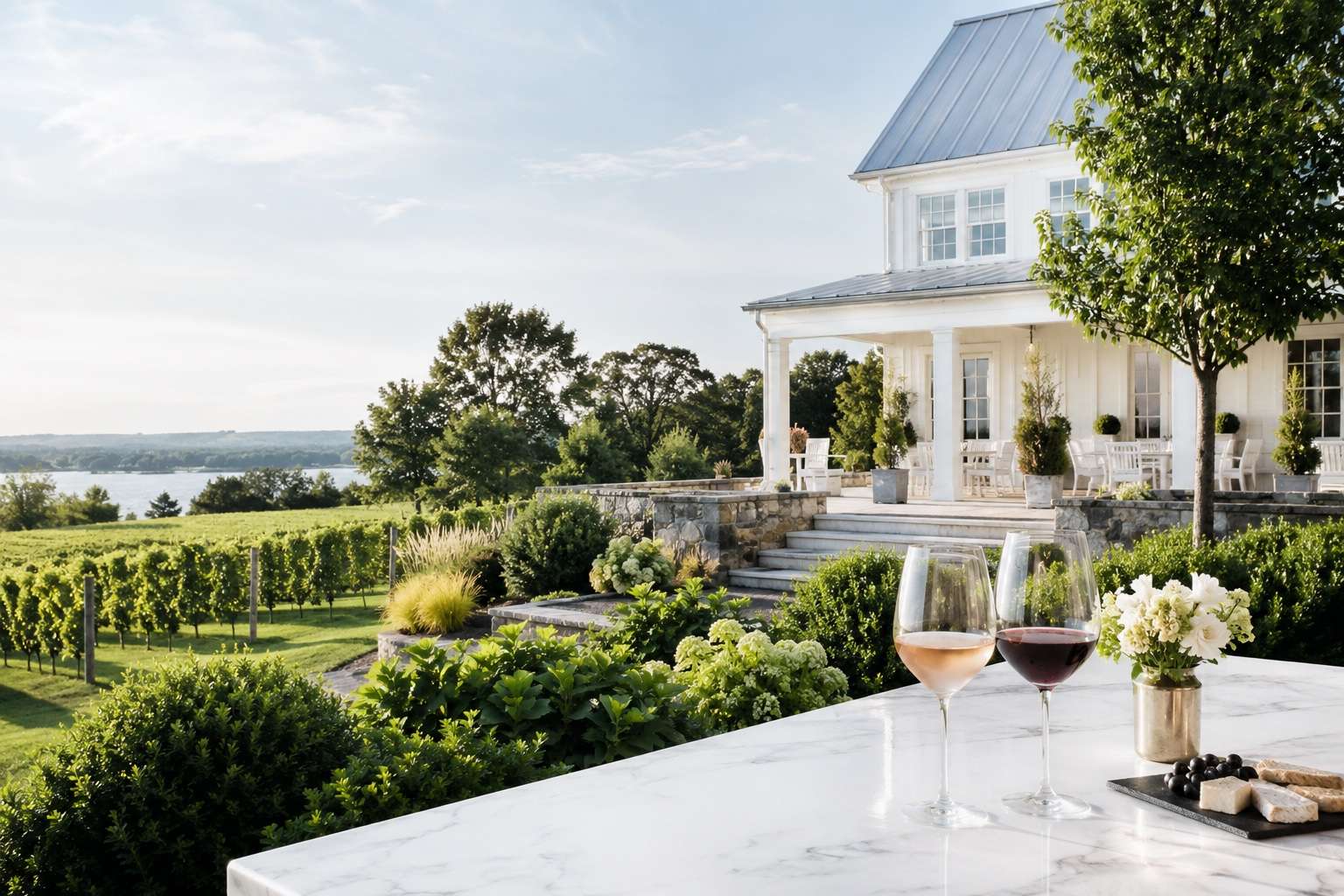
Cabernet Franc is one of the state’s most reliable reds, with red cherry, raspberry, and a peppery, herbal edge. Merlot, Cabernet Sauvignon, and Petit Verdot often appear in Bordeaux-style blends with surprising depth, a nod to Bordeaux. Chambourcin, a French-American hybrid, is a local favorite, with juicy cherry fruit, low tannin, and bright acidity; it resists disease well in the humid climate. Chardonnay appears in both crisp unoaked and richer barrel-aged styles. Albariño has taken off in the south, where its citrus and salty freshness suit the coastal climate. Cooler northern sites grow Riesling and Grüner Veltliner. As a top blueberry and cranberry state, New Jersey also makes plenty of fruit wines, plus sparkling and dessert styles.
Start with a New Jersey Cabernet Franc or a Bordeaux-style red blend from the Outer Coastal Plain. These show the state at its best: ripe red and dark fruit, medium body, and fresh acidity that makes them easy to pair. Next, try a Chambourcin for a fruity, low-tannin red that is easy to enjoy slightly chilled. For white, look for an Albariño from the south or a Grüner Veltliner or Riesling from the Warren Hills. A dry rosé is also a smart pick for summer. Most bottles sell at the winery, often in the $20 to $40 range, and many are made in small amounts, so visiting is the best way to explore. If you enjoy these wines, compare them with other East Coast regions such as Long Island and Virginia’s Shenandoah Valley.
Jersey’s farms and shoreline make pairing easy. Albariño and crisp Chardonnay suit clams, scallops, and other seafood from the Jersey Shore; a blue crab feast is perfect with an unoaked white, and our guide to wine with crab has more ideas. Cabernet Franc loves summer tomatoes, grilled sausages, roast chicken, and pizza, because its acidity matches tomato and herbs. Bordeaux-style blends work with grilled steak, lamb, and burgers. Chambourcin, served a little cool, is great with barbecue, burgers, and charcuterie. Riesling and Grüner Veltliner handle salads, sweet corn, and lightly spiced dishes. Blueberry wines pair with summer desserts, and a cranberry wine is a fun match for holiday turkey. Serve reds at 55–65°F, lighter styles at the cooler end.
New Jersey wineries are spread across the state, so plan by region. The southern Outer Coastal Plain has the most wineries, and Cape May makes a great weekend that combines beaches with tastings. The northwest offers rolling farmland and hilltop views close to the Pennsylvania border. Many wineries are family farms with relaxed tasting rooms, live music on weekends, food trucks, and seasonal festivals, so check event calendars and hours before you go, since many are open mainly Thursday through Sunday. Summer and fall are peak seasons, with harvest from about late August into October. Reservations help for groups. Review our tips on winery tasting etiquette and plan a designated driver.
| Grape or Style | Character | Try It With |
|---|---|---|
| Cabernet Franc | Red cherry, raspberry, pepper, herbal | Tomato pizza or roast chicken |
| Bordeaux-style red blend | Dark fruit, cedar, medium-full body | Grilled steak or lamb |
| Chambourcin | Juicy cherry, low tannin, bright acidity | Barbecue or charcuterie |
| Albariño | Citrus, peach, salty freshness | Clams, scallops, or crab |
| Chardonnay | Apple and citrus, crisp or creamy | Roast chicken or seafood pasta |
| Riesling or Grüner Veltliner | Lime, white pepper, crisp | Salads or lightly spiced dishes |
It is one of New Jersey's most consistent reds and pairs with almost any meal.
Many wineries host weekend music and festivals, and some open only a few days a week.
Cape May pairs coastal tastings with beaches and fresh seafood for an easy weekend.
Learn Your Taste
Answer a few simple questions and discover styles that fit your palate.
Take the Wine QuizYes. New Jersey makes well-regarded Cabernet Franc, Bordeaux-style blends, Chambourcin, Chardonnay, and Albariño. Quality has improved greatly as growers matched grapes to the climate, though it still varies by producer, so taste before you buy.
New Jersey has four main AVAs: the Outer Coastal Plain in the south, the Cape May Peninsula within it, Warren Hills in the northwest, and the Central Delaware Valley, which it shares with Pennsylvania along the Delaware River.
Cabernet Franc is often considered the most reliable red, while Albariño has become a standout white in the south. Chambourcin, a disease-resistant hybrid, is a popular local specialty that handles the humid climate well.
Most are in the southern half of the state, in the Outer Coastal Plain AVA, including the Cape May area. Others are clustered in the northwest hills of the Warren Hills AVA and along the Delaware River.
Chambourcin is a French-American hybrid red grape that grows well in humid East Coast climates. It makes juicy, deeply colored wine with cherry and berry flavors, low tannin, and bright acidity, best served slightly chilled.
Late spring through fall is best, with outdoor seating, live music, and festivals. Harvest season, from about late August into October, is especially lively. Many wineries keep shorter hours in winter, so check before visiting.