Match Age to Intensity
Young Parmesan suits lighter wines; long-aged wedges can handle Barolo or Amarone.

Understand Wine. Enjoy Every Glass.
Wine Pairings
Parmesan is nutty, salty, and packed with savory flavor. It is one of the most wine-friendly cheeses there is. Here is what to pour with wedges, grated Parmesan, and Parmesan dishes.
Start Learning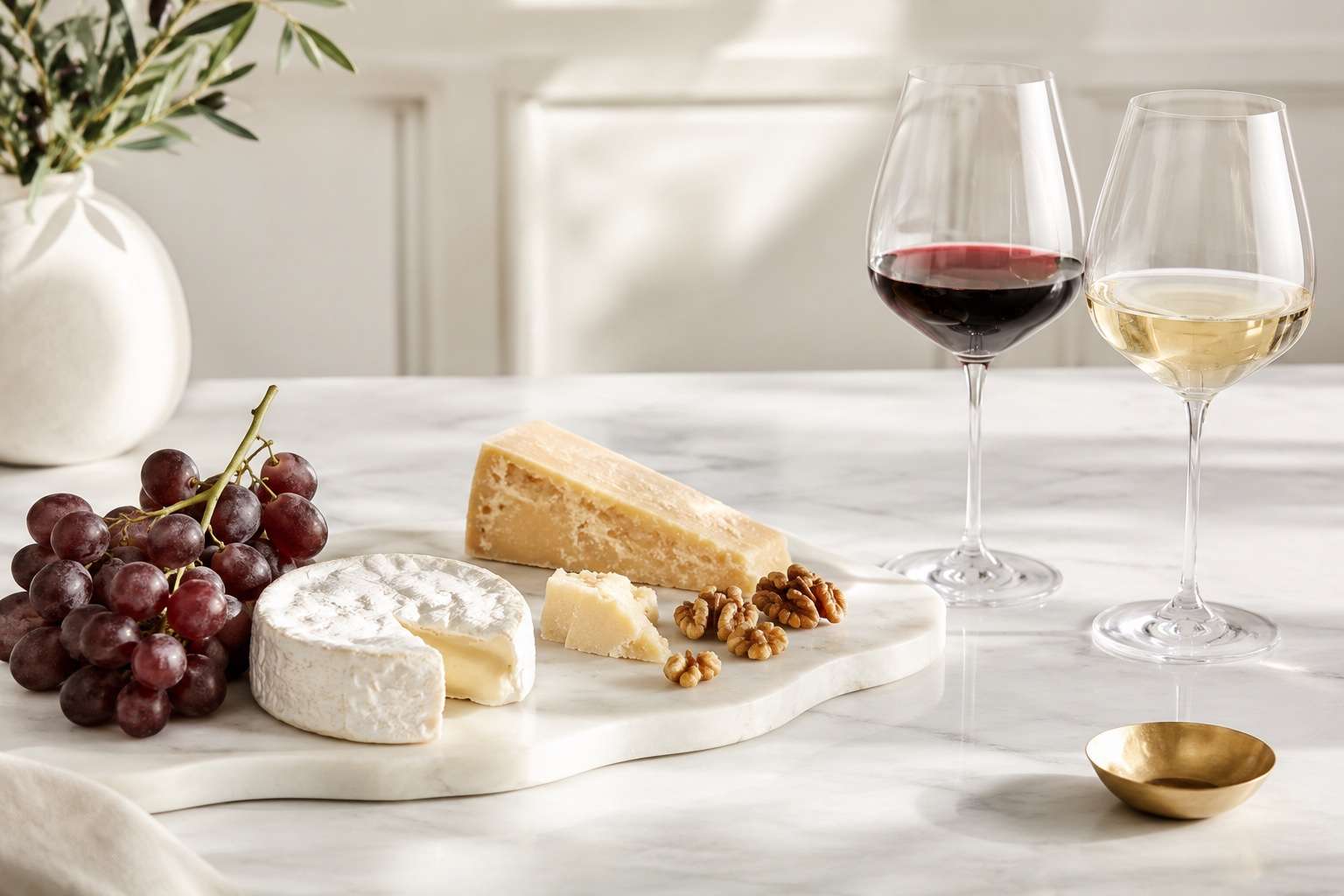
True Parmesan, called Parmigiano-Reggiano, is a hard cow’s milk cheese from a specific area of northern Italy around Parma, Reggio Emilia, and Modena. It is aged for at least 12 months and often much longer, developing nutty, savory, and slightly sweet flavors and those crunchy little crystals that form in older cheese. Two qualities make wine with Parmesan easy. First, salt. It softens tannins and makes a wine’s fruit taste rounder. Second, umami, the savory taste of aged cheese, which flatters wines with good acidity and fruit. Parmesan is firm and low in moisture, so it does not coat your mouth the way brie does, and it works with both red and white wines. The main rule is to match the cheese’s age with the wine’s intensity: young cheese with lighter wines, aged cheese with bigger ones.
Young Parmesan, aged 12 to 18 months, is milder, milky, and slightly tangy. It pairs beautifully with Lambrusco, the fizzy red from the same Emilia-Romagna region; its bubbles and acidity scrub away salt and fat. Franciacorta or Champagne also work. Medium-aged Parmesan, around 24 months, is the classic version: nutty, savory, and crumbly. It loves Chianti Classico, made from Sangiovese, or Barbera. Long-aged Parmesan, 30 months and older, is intense, crystalline, and complex, with notes of nuts, broth, and dried fruit. It can stand up to powerful reds like Barolo, made from Nebbiolo, or Amarone. Grana Padano, a similar but generally milder cheese, follows the same logic with lighter wines.
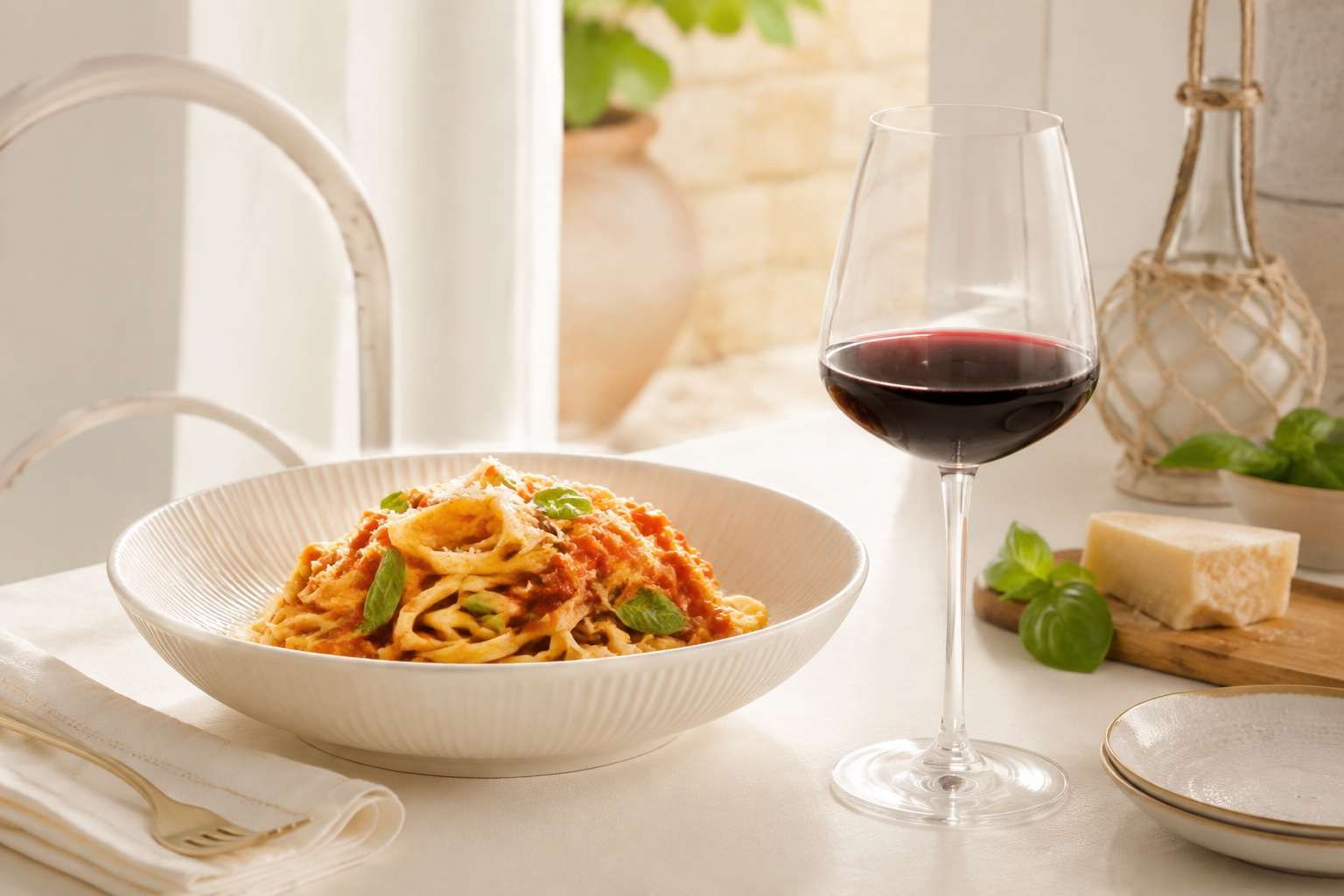
Parmesan often plays a supporting role, and the main dish should guide the wine. Chicken or eggplant Parmesan is all about tomato sauce and melted cheese, so pair it with a high-acid Italian red like Chianti or Montepulciano d’Abruzzo. Fettuccine Alfredo is creamy and rich, calling for a round white like Chardonnay or Soave. Caesar salad, with its anchovy, garlic, and lemon dressing, pairs well with a crisp Sauvignon Blanc, Vermentino, or dry sparkling wine. Risotto with Parmesan suits Italian whites or a medium-bodied red, depending on what else is in the pot. Parmesan crisps and grated cheese on popcorn are perfect with bubbles. Pasta cacio e pepe or aglio e olio finished with Parmesan works with Verdicchio or a light red.
Red is the classic choice, but whites and sparkling wines pair beautifully with Parmesan too. Dry sparkling wine is a standout: the bubbles and acidity cut through salt, and the toasty, nutty notes of traditional-method bubbles echo aged cheese. Franciacorta, Champagne, and Cava are all great. Among still whites, choose wines with body and acidity. Lightly oaked Chardonnay, Soave, and Verdicchio complement Parmesan’s nuttiness without being overwhelmed. Fortified wines offer some of the most exciting matches. Dry amontillado or oloroso sherry share Parmesan’s nutty, savory character, and tawny Port works well with long-aged cheese and walnuts. Parmesan drizzled with aged balsamic vinegar pairs well with Lambrusco or Amarone, both of which have rich, ripe fruit.
Parmesan is forgiving, but a few styles fall short. Very light, delicate whites like Pinot Grigio can taste thin and watery next to aged cheese. Low-acid wines struggle with Parmesan’s salt and with the tomato sauce of dishes like chicken Parm. Very sweet dessert wines can be too much for young Parmesan, though they work better with long-aged wedges and honey. Extremely oaky, high-alcohol reds can overwhelm young cheese. Finally, avoid pre-grated Parmesan-style cheese in a can for tastings; it lacks the nutty complexity of a real wedge and makes it hard to taste how the wine and cheese interact.
Break Parmesan into rough chunks with a short, pointed knife instead of slicing it; the craggy pieces taste better and show off the crystals. Let it sit out for 30 minutes before serving. Serve Lambrusco and sparkling wines chilled, around 45–50°F, and Italian reds slightly cool at 60–65°F. For value, dry Lambrusco, Chianti, Barbera d’Asti, and Montepulciano d’Abruzzo are often under $20. Langhe Nebbiolo offers a taste of Barolo for less. Save Barolo and Amarone for a special cheese course. For more ideas, see our guides to wine with Italian food and wine with cheese.
| Parmesan Style | Best Wine | Why It Works |
|---|---|---|
| Young (12–18 months) | Lambrusco or Franciacorta | Bubbles and acid cut salt and fat |
| Classic (around 24 months) | Chianti Classico or Barbera | Bright acidity suits nutty, savory cheese |
| Long-aged (30+ months) | Barolo or Amarone | Powerful wines match intense, crystalline cheese |
| With aged balsamic | Lambrusco or Amarone | Ripe fruit echoes sweet-tart vinegar |
| Chicken or eggplant Parmesan | Montepulciano d'Abruzzo or Chianti | High acidity matches tomato sauce |
| Caesar salad | Sauvignon Blanc or dry sparkling | Crisp acid suits lemony, garlicky dressing |
Young Parmesan suits lighter wines; long-aged wedges can handle Barolo or Amarone.
Chunk Parmesan with a short knife for craggy, crystal-studded pieces.
Lambrusco comes from Parmesan's home region and is a natural match.
Learn Your Taste
Answer a few simple questions and discover styles that fit your palate.
Take the Wine QuizItalian reds with bright acidity, such as Lambrusco, Chianti Classico, and Barbera, are the best matches. For aged Parmesan, try Barolo or Amarone. Dry sparkling wine and amontillado sherry are also excellent.
Yes. Lightly oaked Chardonnay, Soave, Verdicchio, and dry sparkling wine pair well. They have the body and acidity to stand up to Parmesan's salty, nutty flavor. Avoid very light, delicate whites.
A high-acid Italian red like Chianti or Montepulciano d'Abruzzo. The wine needs enough acidity to match the tomato sauce and enough fruit to handle the melted cheese and breading.
Yes, it is a classic pairing. Both come from Emilia-Romagna, and Lambrusco's bubbles, acidity, and fruity flavor cut through Parmesan's salt and richness. Choose a dry or off-dry style.
Powerful reds like Barolo, Barbaresco, or Amarone. Long-aged Parmesan is intense and complex, so it can stand up to structured wines. Tawny Port and oloroso sherry are excellent non-red options.
Lambrusco or Amarone. Aged balsamic vinegar adds sweet-tart richness, and these wines have ripe, dark fruit that echoes it. A tawny Port is another good choice for a cheese course.