Try a Color Test
Hold each glass over white paper; you can read through Pinot Noir but not Syrah.

Understand Wine. Enjoy Every Glass.
Wine Comparisons
Pinot Noir vs Syrah pits one of the lightest classic reds against one of the darkest. Knowing the difference helps you match the wine to your meal and mood.
Start Learning
Pinot Noir and Syrah sit at opposite ends of the red spectrum. Pinot Noir has thin skins and makes pale, translucent wine that is light to medium-bodied, with low tannin and high acidity. It loves cool climates and shows elegance more than power. Syrah has thicker, dark skins and makes deep purple, nearly opaque wine with full body, medium-plus tannin, and bold, savory flavors. It handles warmer climates and can be powerful or peppery-elegant depending on where it grows. If wine body were a scale from water to cream, Pinot Noir would sit near the light end and Syrah near the heavy end. That single difference decides which one fits your dinner.
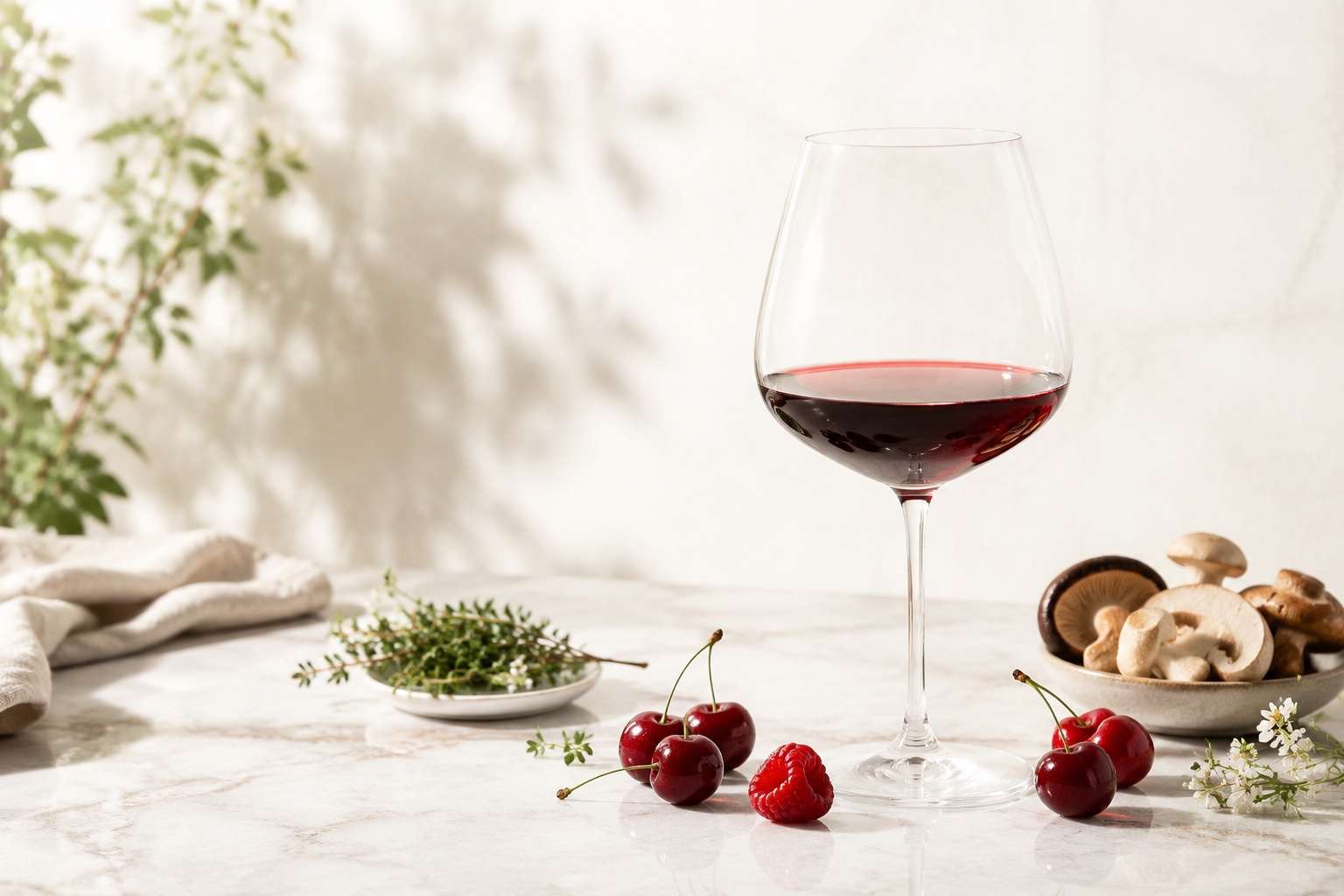
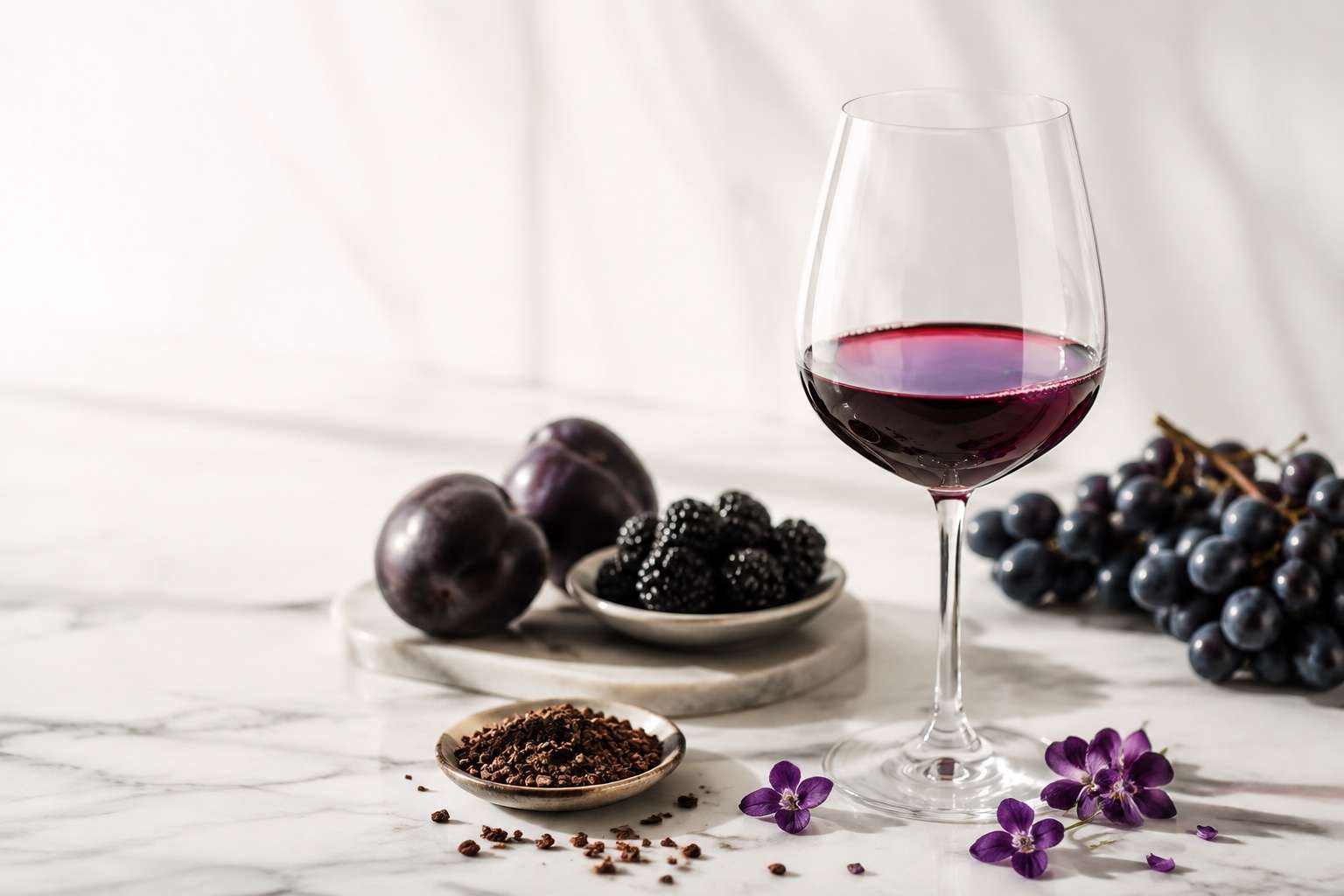
Pinot Noir is about red fruit and earth. Expect cherry, raspberry, strawberry, and cranberry, with mushroom, forest floor, rose petal, and gentle baking spice. Its texture is silky, its acidity mouthwatering, and its finish fresh. Syrah is about dark fruit and spice. Expect blackberry, blueberry, and plum, with cracked black pepper, violet, olive, smoked bacon, and leather. Cool-climate Syrah, such as from France’s northern Rhône, leans savory and peppery. Warm-climate versions, often labeled Shiraz, taste riper and jammier, with chocolate and licorice. Syrah’s tannins are firmer, and its finish longer and more grippy. Alcohol tends to be about 12.5–14% for Pinot Noir and 13.5–15% for Syrah.
Pinot Noir’s benchmark is Burgundy, where tiny vineyard plots make perfumed, earthy reds. Oregon’s Willamette Valley and California’s Sonoma Coast and Santa Barbara County offer excellent New World versions, and New Zealand’s Central Otago makes bright, dark-cherry Pinot. Syrah’s home is the Rhône Valley. In the north, Hermitage, Côte-Rôtie, and Cornas make savory, long-lived Syrah; in the south, it blends with Grenache. Australia’s Barossa Valley makes rich Shiraz, while Washington’s Walla Walla and California’s Central Coast produce balanced Syrah. Interestingly, Santa Barbara grows both grapes, with Pinot Noir in cooler, foggier spots and Syrah in warmer inland ones.
Pinot Noir is the go-to red for lighter dishes. Its soft tannin will not turn fish metallic, so it pairs beautifully with salmon and tuna. It also flatters roast chicken, duck, pork, turkey, and anything with mushrooms. Its acidity cuts through creamy sauces. Syrah needs richer partners. Its tannin and spice match lamb, especially with rosemary and garlic, plus beef short ribs, venison, sausages, pepper steak, and smoky barbecue. Its olive and herb notes also suit Mediterranean stews and grilled eggplant. Avoid serving Syrah with delicate fish or light salads, and avoid pairing Pinot Noir with heavily spiced or charred red meat, which will overpower it.
Serve Pinot Noir at 55–60°F in a wide, balloon-shaped glass to capture its delicate aromas. Serve Syrah slightly warmer, at 60–65°F, in a large red wine glass. Young Syrah benefits from 30 to 60 minutes of air; Pinot Noir rarely needs it. On price, Syrah often gives more for less. Côtes du Rhône, Crozes-Hermitage, and Australian Shiraz deliver serious flavor for under $20. Pinot Noir is harder to grow, so quality usually costs a bit more, though California, Chile, and German Spätburgunder have good options. At the top, Grand Cru Burgundy and Hermitage are both pricey, and fine Syrah tends to age longer thanks to its tannin.
Pick Pinot Noir if you prefer lighter, fresher, more delicate reds, are serving fish, poultry, or vegetarian dishes, or are moving from white wine into reds. It is a great spring wine and a natural for holiday tables. Pick Syrah if you like bold, savory, peppery reds, are grilling or braising red meat, or want a wine that warms up a cold night. If you are curious about Syrah’s two personalities, read Syrah vs Shiraz. For more Pinot Noir matchups, see Pinot Noir vs Merlot and Pinot Noir vs Cabernet Sauvignon.
| Attribute | Pinot Noir | Syrah |
|---|---|---|
| Body | Light to medium | Full |
| Color | Pale ruby, translucent | Deep purple, nearly opaque |
| Tannin | Low, silky | Medium-plus, firm |
| Main flavors | Cherry, raspberry, mushroom | Blackberry, black pepper, olive, smoked meat |
| Classic regions | Burgundy, Oregon, Central Otago | Northern Rhône, Barossa, Washington |
| Best food | Salmon, duck, mushrooms | Lamb, short ribs, barbecue |
| Serving temp | 55–60°F | 60–65°F |
Hold each glass over white paper; you can read through Pinot Noir but not Syrah.
A young Syrah opens up after 30–60 minutes in a decanter.
Pepper-crusted meats echo Syrah's spicy notes and make the wine taste fruitier.
Learn Your Taste
Answer a few simple questions and discover styles that fit your palate.
Take the Wine QuizYes. Syrah is full-bodied with firm tannin and deep color, while Pinot Noir is light to medium-bodied with soft tannin. They are close to opposite ends of the red wine weight scale.
Pinot Noir. Its thin skins give little tannin, so it feels silky. Syrah has more tannin and can feel grippy when young, though ripe Australian Shiraz can also feel plush and smooth.
Often, yes. Black pepper is one of Syrah's signature aromas, especially in cooler regions like the northern Rhône. It comes from a natural aroma compound called rotundone, also found in peppercorns.
Yes. Pour Pinot Noir first with lighter courses like salmon or salads, then move to Syrah with the main course of lamb or beef. Going from light to bold keeps each wine tasting its best.
Pinot Noir is usually easier for beginners because it is light, fruity, and low in tannin. Syrah is a great next step for anyone who already enjoys bolder flavors like dark chocolate.
Syrah is the better match, especially for grilled or peppered burgers. Its dark fruit, spice, and tannin stand up to charred beef. Pinot Noir works with turkey or mushroom burgers.