Use the Label Shortcut
Syrah usually means peppery and savory; Shiraz usually means ripe and jammy.

Understand Wine. Enjoy Every Glass.
Wine Comparisons
Syrah vs Shiraz is not a battle of two grapes. It is one grape with two names, and the name a winemaker picks usually tells you which style is inside the bottle.
Start Learning
Syrah and Shiraz are the same dark-skinned grape. Syrah is the original French name, from the Rhône Valley. Shiraz is the name Australians adopted when the grape became their signature red. Over time, the two names came to suggest two styles. Wines labeled Syrah tend to be made in a more restrained, European way: moderate alcohol, firm acidity, and savory flavors. Wines labeled Shiraz tend to be riper and fruitier, with more alcohol, softer acidity, and plush texture. Winemakers in places like California, Washington, Chile, and South Africa choose the name that matches their style, so the label works as a shortcut. It is not a strict rule, but it is right most of the time.
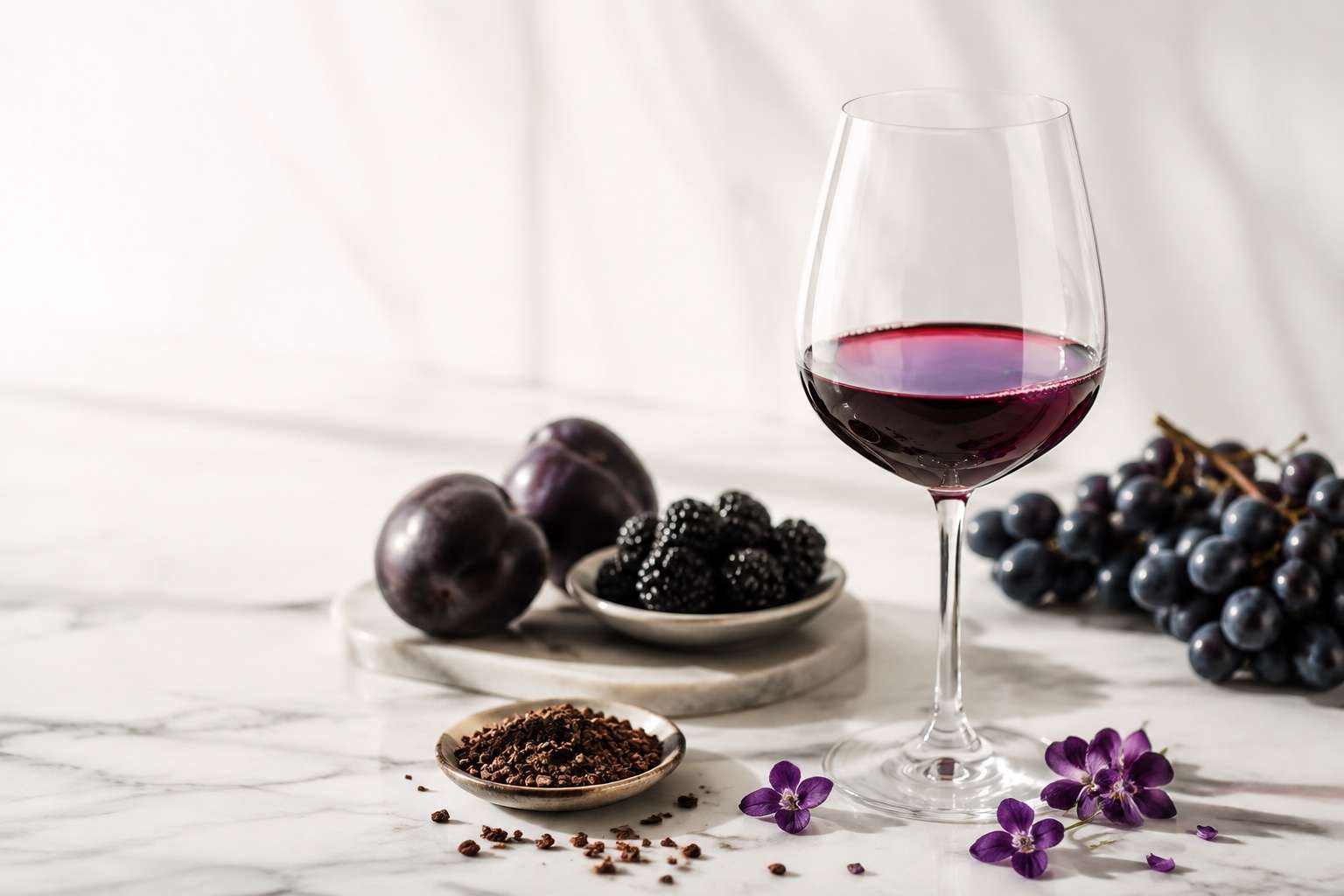
Classic Syrah is savory and peppery. Expect blackberry, blueberry, and plum alongside cracked black pepper, green and black olive, violet, smoked meat, bacon fat, and a meaty, earthy finish. It is medium-plus to full-bodied, with fresh acidity and firm but fine tannins. Alcohol often sits around 13–14%. Classic Shiraz is bolder and sweeter-tasting, though still dry. It shows ripe blackberry, black cherry jam, plum, licorice, dark chocolate, and mocha, with vanilla and coconut when aged in American oak. It is full-bodied, plush, and generous, and alcohol frequently reaches 14.5–15% or more. Both share that peppery spice and deep purple color, which is the family resemblance. Sipped side by side, Syrah tastes like a pepper-crusted steak, Shiraz like a blackberry pie.
The northern Rhône is Syrah’s home. Hermitage and Cornas make powerful, long-lived wines. Côte-Rôtie often adds a small amount of the white grape Viognier for perfume. Crozes-Hermitage and Saint-Joseph offer more affordable versions. In the southern Rhône, Syrah is a key blending partner with Grenache in Châteauneuf-du-Pape and Côtes du Rhône. Australia’s Barossa Valley is the heartland of rich Shiraz, much of it from old vines, while McLaren Vale makes similarly bold wines and cooler spots like the Yarra Valley make fresher ones. Washington State, especially Walla Walla, California’s Central Coast, and Chile make excellent Syrah that sits between the two styles.
Both love meat cooked over fire. Savory Syrah is a classic match for lamb, especially with rosemary and garlic, plus duck, venison, pepper-crusted steak, sausages, and French stews. Its olive and herb notes echo Mediterranean cooking, so try it with ratatouille or olive tapenade. Plush Shiraz stands up to bigger, sweeter, smokier flavors. It is excellent with barbecue ribs and brisket, burgers, and sticky glazed meats, because its ripe fruit matches sweet sauces. Both work with hard aged cheeses. Avoid pairing either with delicate fish or very spicy food. High alcohol in Shiraz can make chili heat burn more, and Syrah’s tannin can taste metallic next to light seafood.
Both cover a wide price range. Australian Shiraz is famous for value, with plenty of good bottles under $20. Côtes du Rhône and Crozes-Hermitage give you savory Syrah at a friendly price. Top Hermitage, Côte-Rôtie, and old-vine Barossa Shiraz are serious splurges that can age for decades. Serve both at 60–65°F. Big Shiraz can feel hot and heavy if served too warm, so a short chill helps. Young, tannic Syrah benefits from 30 to 60 minutes of aeration. Use a large-bowled red wine glass to gather the peppery aromas. Australia also makes a fun specialty: sparkling red Shiraz, often served lightly chilled with roasted meats and at holiday tables.
Choose a Syrah-labeled wine if you like savory, peppery, earthy reds with fresh acidity, or if you enjoy Old World wines such as Bordeaux and Rioja. Choose Shiraz if you prefer rich, fruit-forward, smooth reds with lots of flavor, or if you are firing up the grill. One trap to avoid: Petite Sirah is a different grape (also called Durif), not a small Syrah. It is even darker and more tannic. Keep exploring with Merlot vs Shiraz and Pinot Noir vs Syrah, or see how French and New World styles differ in our Old World vs New World wine guide.
| Attribute | Syrah | Shiraz |
|---|---|---|
| Grape | Same grape, French name | Same grape, Australian name |
| Typical style | Savory, peppery, restrained | Ripe, jammy, plush |
| Main flavors | Blackberry, black pepper, olive, smoked meat | Blackberry jam, plum, chocolate, licorice |
| Alcohol | Often 13–14% | Often 14.5–15% or more |
| Classic regions | Northern Rhône, Washington | Barossa Valley, McLaren Vale |
| Best food | Herb-crusted lamb, duck, stews | BBQ ribs, brisket, burgers |
Syrah usually means peppery and savory; Shiraz usually means ripe and jammy.
It is an affordable way to taste classic northern Rhône Syrah.
Petite Sirah is a separate grape, darker and more tannic than Syrah.
Learn Your Taste
Answer a few simple questions and discover styles that fit your palate.
Take the Wine QuizYes. The name is a style hint, not a law. A warm-climate Syrah from Paso Robles or Washington can be just as ripe and jammy as Barossa Shiraz, and cool-climate Australian Shiraz can taste peppery and lean. Check the region and alcohol level for a better clue.
Not in sugar, since both are usually dry. Shiraz tastes sweeter because warm climates give riper, jammier fruit and more alcohol, and American oak adds vanilla. Syrah tastes more savory and peppery.
Australian growers used the name Shiraz, a variant of an older spelling, from the 1800s on, and it stuck. Despite a popular story, the grape did not come from the Iranian city of Shiraz; DNA shows French origins.
Both can age very well at the top end. Northern Rhône Syrah from Hermitage or Côte-Rôtie and old-vine Barossa Shiraz can improve for 20 years or more. Everyday bottles of either are made to drink within three to five years, while the fruit is fresh.
Classic Syrah tastes of blackberry and blueberry with black pepper, olive, violet, and smoked meat. It is medium-plus to full-bodied with firm tannin and fresh acidity, and it often has a savory, almost meaty finish.
Yes. Shiraz's ripe fruit and moderate tannin pair well with grilled steak, especially with smoky char or a peppercorn sauce. For lean cuts, pick a cooler-climate Syrah so the wine does not overpower the meat.