
Sort by Weight
Think light, medium, or full body first. It predicts food matches better than color alone.

Understand Wine. Enjoy Every Glass.
Wine Types
Every bottle on the shelf fits into a handful of wine types. Learn the big families, how each one is made, and which page to read next for the style you love.
Start Learning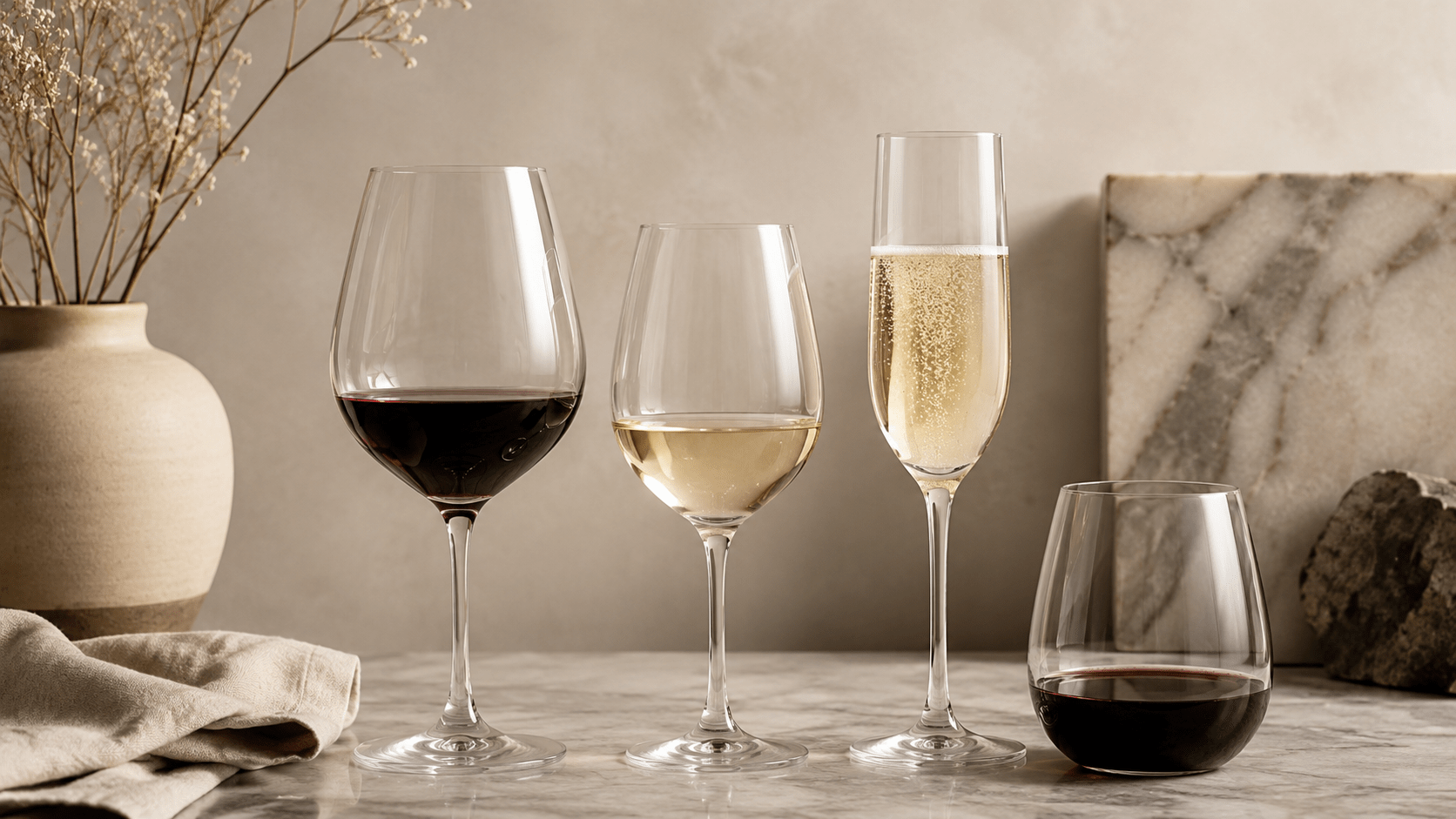
Nearly every wine fits into six families. Red wine is made from dark grapes fermented with their skins, which give color and tannin. White wine is usually pressed off the skins right away, so it tastes fresher and has little or no tannin. Rosé gets just a few hours of skin contact for its pink color. Sparkling wine traps carbon dioxide from a second fermentation. Dessert wine keeps a lot of natural grape sugar. Fortified wine has grape spirit added, which raises alcohol to roughly 15–22%. Once you know which family a bottle belongs to, you can predict a lot about its taste before you pull the cork. For a deeper primer on how all of these start in the vineyard, read what wine actually is.
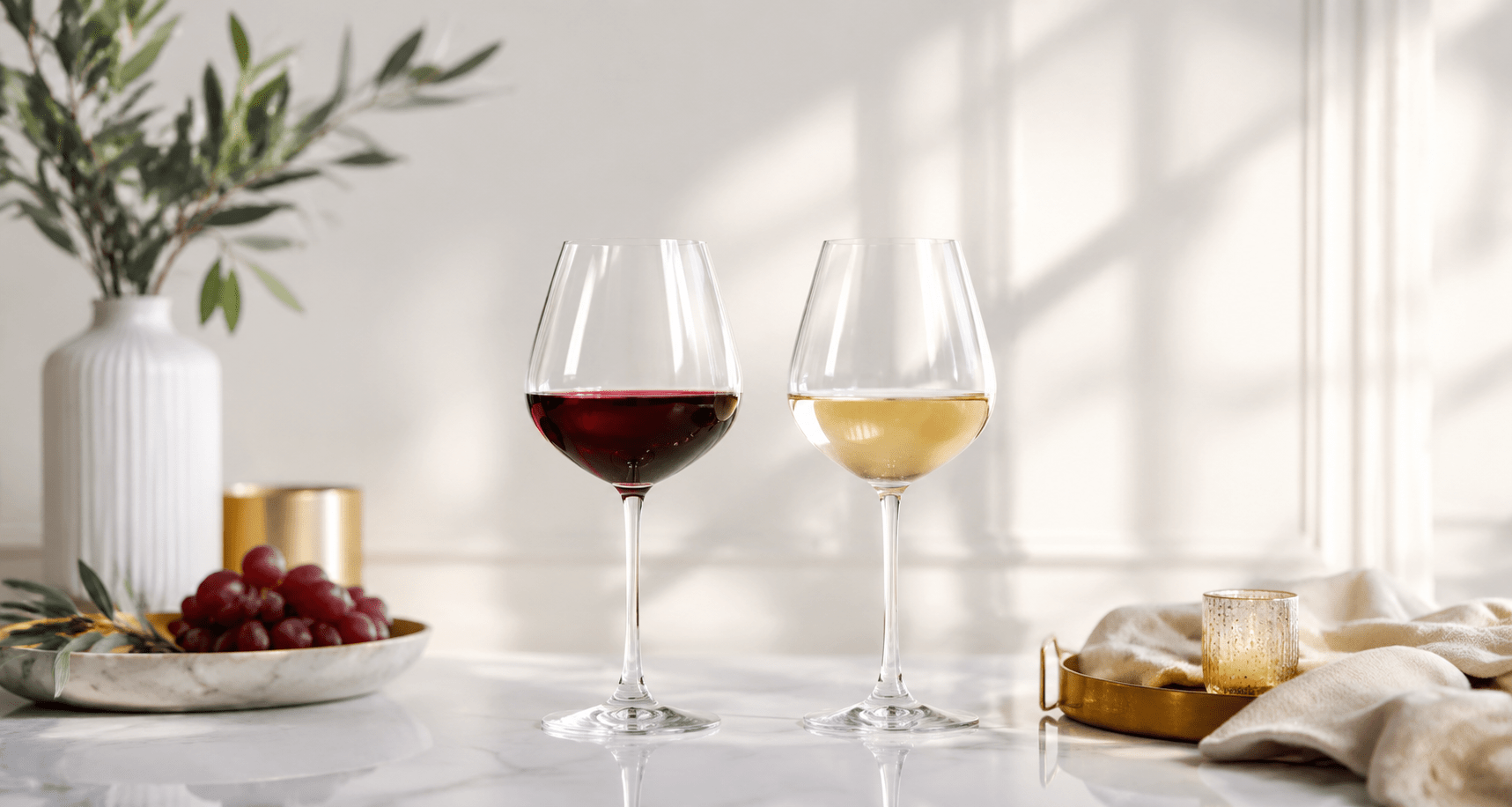
Still wines are the everyday bottles with no bubbles. Reds range from light and juicy, like Pinot Noir and Gamay, to bold and tannic, like Cabernet Sauvignon and Syrah. Whites run from crisp and zesty, like Sauvignon Blanc, to round and creamy, like oak-aged Chardonnay. Rosé sits in between, with red-berry flavor and white-wine freshness. Serve reds at 60–65°F, whites at 45–50°F, and rosé on the cold side of that. If you are not sure where to begin, our red vs. white wine comparison breaks down the real differences in taste, tannin, and food.
These are the special-occasion families, but they are easier to drink every day than you might think. Sparkling wine includes Champagne, Prosecco, Cava, and Crémant, and it ranges from bone-dry Brut Nature to sweet Doux. Sweet wines get their sugar in different ways: late harvest wine comes from grapes left to shrivel on the vine, ice wine from grapes frozen on the vine, and Sauternes from grapes touched by noble rot. Fortified wines add grape spirit. Port from Portugal is fortified during fermentation, so it stays sweet. Sherry from southern Spain is usually fortified after fermentation, so many styles are bone dry. Vermouth is a fortified wine flavored with herbs and spices.
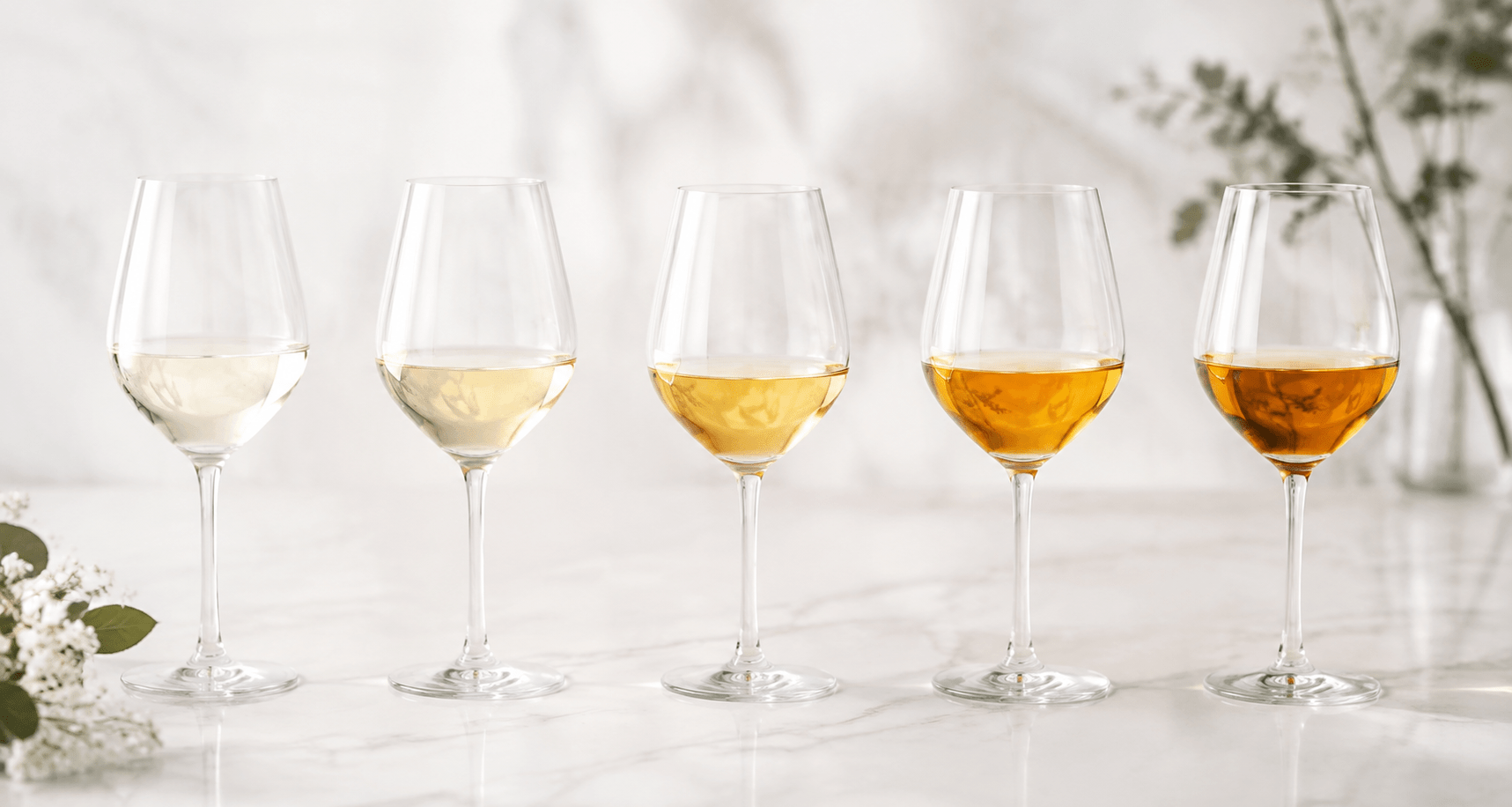
Some wine types describe how a wine is made rather than its color. Organic wine comes from grapes grown without synthetic pesticides or fertilizers, and the rules on additives differ by country. Biodynamic wine goes further, treating the vineyard as a whole farm with its own compost preparations and planting calendar. Natural wine is not legally defined, but it usually means native yeasts, little or no added sulfites, and minimal handling, which can make it taste wild or cloudy. Orange wine is white wine made like a red, with the juice left on the skins for days or months. That gives it an amber color, a little tannin, and nutty, tea-like flavors.
Two more ways to sort wine are sugar and alcohol. A dry wine has almost no sugar left after fermentation, and that covers most reds and many whites. A sweet wine keeps some sugar, from slightly off-dry Riesling to syrupy Pedro Ximénez sherry. Our guide to dry vs. sweet wine explains why fruity does not always mean sweet. Alcohol varies too. German Kabinett Riesling and Moscato d’Asti often sit around 5–9%, while ripe Zinfandel can top 15%. If you want lighter options, read about low-alcohol wine and non-alcoholic wine. On labels, table wine is a broad category for everyday wine without a specific regional rule behind it.
Start with what you already like to drink. If you enjoy fruit juice or sweet tea, try an off-dry Riesling or a Moscato d’Asti. If you drink black coffee or dark chocolate, a smooth Merlot or Malbec is a friendly first red. If you like lemonade or sparkling water, reach for a crisp Sauvignon Blanc or a dry Prosecco. A pale dry rosé is a safe bet for a crowd. Buy two contrasting bottles, taste them side by side, and notice body, sweetness, and acidity. Our best wines for beginners list and how to taste wine lesson make that first comparison easy. When you find a type you love, explore its grapes in our grape varieties hub.
| Wine Type | How It's Made | Typical Taste |
|---|---|---|
| Red | Dark grapes fermented on their skins | Red and dark fruit, tannin, medium to full body |
| White | Juice pressed off the skins before fermenting | Citrus, orchard fruit, crisp acidity, no tannin |
| Rosé | Dark grapes with a few hours of skin contact | Strawberry, watermelon, dry and refreshing |
| Sparkling | Second fermentation traps carbon dioxide | Bubbly, high acidity, citrus, apple, toast |
| Dessert | Grapes picked very ripe, frozen, or rotted | Honey, apricot, rich sweetness balanced by acid |
| Fortified | Grape spirit added during or after fermentation | Strong, nutty or dried fruit, dry or sweet |
Think light, medium, or full body first. It predicts food matches better than color alone.
Fridge-cold whites lose aroma. Take them out 15–20 minutes before pouring.
Open two different wine types together. Contrast teaches you faster than any chart.
Choose Your Path
Choose the question that interests you and follow the connections to your next useful lesson.

Red wine is made by fermenting dark-skinned grapes with their skins, which add color, tannin, and flavor. Styles run from light (Pinot Noir, Gamay) to medium (Merlot, Sangiovese) to full-bodied (Cabernet Sauvignon, Syrah, Malbec). Serve most reds at 60–65°F, and match lighter reds to lighter food and bold reds to rich, fatty dishes.
Start Learning →
Rosé is a pink wine made from red grapes whose skins touch the juice for only a few hours, just long enough to tint it. Most rosé is dry and crisp, with strawberry, watermelon, and citrus flavors. Classic styles include pale Provence rosé from Grenache and Cinsault, Spanish rosado, and deeper Tavel. Serve it at 45–50°F.
Start Learning →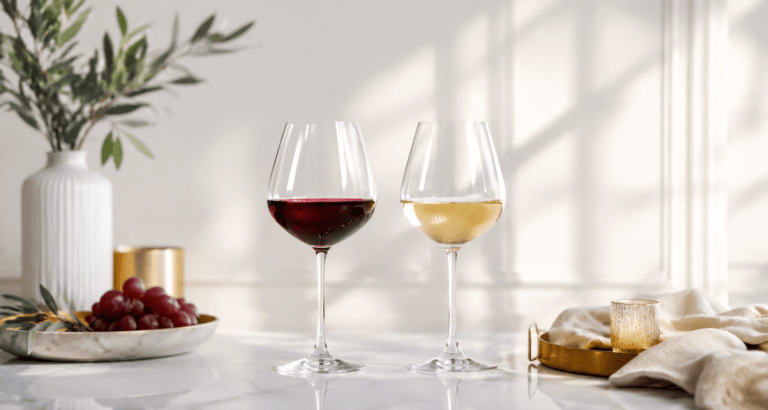
The main sparkling wine types are Champagne from France, Prosecco from Italy, Cava from Spain, Crémant from other French regions, and pétillant naturel. Champagne, Cava, and Crémant get their bubbles from a second fermentation in the bottle, giving toasty, fine bubbles. Prosecco ferments in a tank for fresh, fruity flavor. Sweetness runs from Brut Nature (driest) to Doux (sweetest).
Start Learning →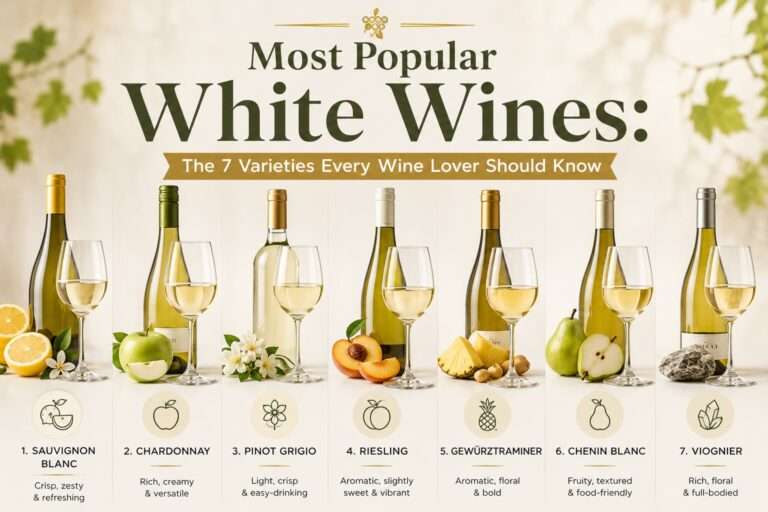
White wine is usually made by pressing grapes and fermenting only the juice, without the skins, so it has little or no tannin. Styles range from crisp and light (Pinot Grigio, Sauvignon Blanc) to aromatic (Riesling, Gewürztraminer) to rich and creamy (oaked Chardonnay, Viognier). Serve most whites at 45–50°F and pair them with seafood, chicken, salads, and cheese.
Start Learning →Dessert wine is any wine sweet enough to serve with or as dessert. The sweetness comes from concentrated grape sugar: late-harvest grapes, grapes shriveled by noble rot (Sauternes, Tokaji), frozen grapes (ice wine), dried grapes (Vin Santo, Pedro Ximénez), or fortification that stops fermentation (port). Serve it lightly chilled in 2–3 ounce pours, and choose a wine sweeter than your dessert.
Start Learning →A dry wine is one with little or no sugar left after fermentation, because yeast converted nearly all the grape sugar into alcohol. Most reds, such as Cabernet Sauvignon and Merlot, are dry, as are whites like Sauvignon Blanc, Pinot Grigio, and Albariño. Dry does not mean tannic or sour; a dry wine can still taste very fruity.
Start Learning →Fortified wine is wine with added grape spirit, usually raising alcohol to about 15–22%. Adding the spirit during fermentation stops the yeast and keeps sugar, creating sweet styles like port and French vin doux naturel. Adding it after fermentation makes dry styles like fino sherry. Madeira, Marsala, and vermouth are other well-known fortified wines.
Start Learning →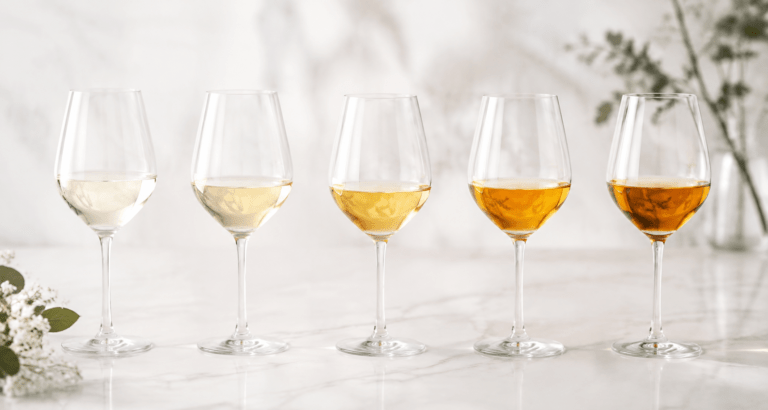
Natural wine is wine made from organically or biodynamically farmed grapes, usually hand-picked, fermented with native yeasts, and bottled with nothing added or removed, apart from small amounts of sulfites at most. It is often unfined and unfiltered, so it may look cloudy and taste fresh, funky, or tangy. There is no single legal definition in most countries.
Start Learning →Non-alcoholic wine can be very good, especially sparkling, rosé, and aromatic white styles. It starts as real wine, then the alcohol is gently removed by vacuum distillation, spinning cone, or reverse osmosis, leaving under 0.5% ABV. Because alcohol adds body, de-alcoholized reds often taste thinner. Serve these wines well chilled and drink them within a few days of opening.
Start Learning →Orange wine is a white wine made by fermenting white grapes with their skins for days, weeks, or even months, the way red wine is made. The skins add an amber to orange color, gentle tannin, and flavors of dried apricot, orange peel, bruised apple, nuts, and tea. Georgia has made it in clay qvevri for thousands of years.
Start Learning →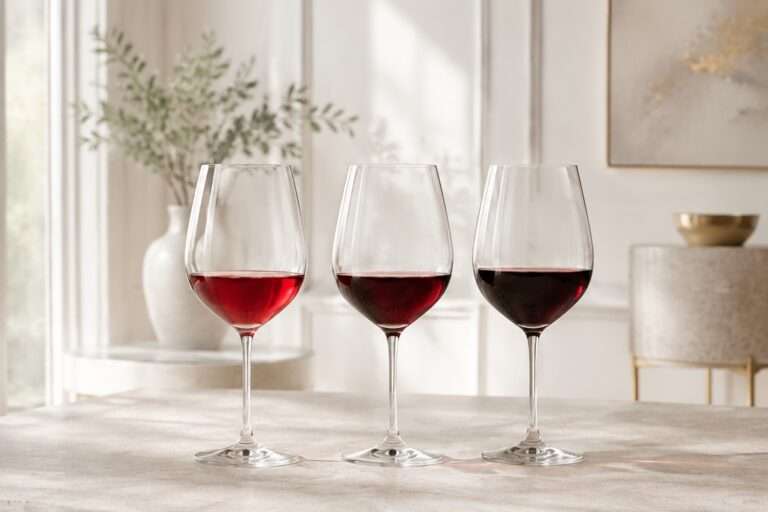
A wine is organic when its grapes are grown without synthetic pesticides, herbicides, or fertilizers and the farm is certified by an approved body. Rules differ by country. In the US, wine labeled organic cannot have added sulfites, while made with organic grapes allows some. EU organic wine permits sulfites at lower limits than conventional wine.
Start Learning →Port wine is a sweet fortified wine from Portugal's Douro Valley. Grape spirit is added partway through fermentation, which stops the yeast, keeps natural sugar, and raises alcohol to about 19–20%. Ruby ports are young, fruity, and deep red; tawny ports age in barrels for nutty, caramel flavors; vintage port is the age-worthy top tier. Serve it in 3-ounce pours.
Start Learning →The best sweet wines for most people are Moscato d'Asti, off-dry German Riesling (Kabinett or Spätlese), demi-sec Vouvray, and Gewürztraminer for whites, and Lambrusco Amabile or Brachetto d'Acqui for reds. For richer, dessert-level sweetness, try Sauternes, Tokaji, ice wine, or ruby port. Look for wines with bright acidity, which keeps sweetness fresh instead of syrupy.
Start Learning →
Biodynamic wine is made from grapes grown under biodynamic farming, an approach that goes beyond organic. Growers avoid synthetic chemicals, treat the vineyard as a whole farm with animals and diverse plants, apply special herbal and mineral preparations, and time work by a lunar and astronomical calendar. Certified biodynamic wines also limit additives, including sulfites, in the cellar.
Start Learning →Ice wine is a sweet dessert wine made from grapes left on the vine until they freeze naturally, around 17°F or colder, then picked and pressed while still frozen. Most water stays behind as ice, leaving a tiny amount of intensely sweet, high-acid juice. It is expensive because of the risk, labor, and very low yield. Canada and Germany are the leading producers.
Start Learning →Late harvest means the grapes were picked weeks after the normal harvest, so they lost water and gained sugar on the vine. The extra-ripe juice makes sweet or off-dry wines with flavors of honey, apricot, and candied citrus. Look for Late Harvest, Vendanges Tardives in Alsace, Spätlese or Auslese in Germany, and Vendemmia Tardiva in Italy. Riesling and Gewürztraminer are classics.
Start Learning →Good low-alcohol wines include Moscato d'Asti (about 5–6%), German Kabinett Riesling from the Mosel (often 7–9%), Brachetto d'Acqui, Lambrusco, Vinho Verde, and Hunter Valley Semillon (usually 10–11.5%). Cool climates, earlier picking, and stopping fermentation with some sugar left all keep alcohol down. Check the ABV on the label; most wines fall between 12% and 15%.
Start Learning →Sherry wine is a fortified wine from the Jerez region of Andalusia in southern Spain, made mostly from the Palomino grape. Most sherry is dry. Fino and manzanilla age under a layer of yeast called flor, staying pale and tangy, while oloroso ages with air for nutty richness. Sweet styles include Pedro Ximénez and cream sherry. All are blended through a solera system.
Start Learning →
Table wine generally means everyday still wine meant to drink with meals. In the US, it is a legal term for non-sparkling wine with 14% alcohol or less, as opposed to stronger dessert or fortified wines. In Europe, table wine (vin de table, vino da tavola) was the most basic category, with no stated region; today it is usually labeled simply as wine.
Start Learning →Vermouth is made from wine, usually a neutral white, that is flavored with botanicals such as wormwood, citrus peel, gentian, and baking spices, sweetened with sugar or caramel, and fortified with grape spirit to about 15–18% alcohol. Dry vermouth is pale and herbal; sweet red vermouth is rich and spiced. Store opened bottles in the fridge.
Start Learning →Learn Your Taste
Answer a few simple questions and discover styles that fit your palate.
Take the Wine QuizSparkling wine and dry rosé are the easiest crowd-pleasers. Both suit a wide range of snacks, feel festive, and appeal to red and white drinkers alike. Add a soft, fruity red such as Merlot and a crisp white like Pinot Grigio, and nearly every guest is covered.
The five most commonly listed are red, white, rosé, sparkling, and dessert or fortified wine. Many guides combine dessert and fortified because both are often sweet and served in small pours, though sherry and some fortified wines are dry.
Lightly sweet or fruit-forward wines are usually easiest. Try Moscato d'Asti, off-dry Riesling, a dry rosé, or a soft red like Merlot. These have gentle tannin and plenty of fruit, so they are pleasant even before you learn to taste critically.
Dessert wine is defined by sweetness, while fortified wine is defined by added grape spirit. Some wines are both, like ruby port. Others are only one: Sauternes is sweet but unfortified, and fino sherry is fortified but completely dry.
Fortified wines like vintage Port and Madeira, sweet wines like Sauternes and Tokaji, and structured reds such as Bordeaux and Barolo age the longest, often for decades. High sugar, acidity, tannin, or alcohol protects them. Most rosé, everyday whites, and Prosecco are made to drink within a year or two.
Lightly sparkling Moscato d'Asti and German Kabinett Riesling are among the lowest, often around 5–9% alcohol. Most still table wines fall between 11% and 14.5%, while fortified wines usually range from about 15% to 22%.